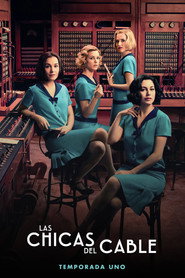
Women at the Switchboard
I keep coming back to the telephone in Cable Girls—not as a prop, but as a metaphor with a job to do. A switchboard is a place where voices are routed, delayed, overheard, interrupted, and sometimes refused altogether. That feels like the series’ real subject.
latestnetflix.com's read is that Not just women in 1920s Madrid, not just a period romance with a work setting, but the messy business of being heard in a world that’s built to carry everyone else’s signal first.
By the time Cable Girls arrived on Netflix in 2017, Spanish television was already enjoying a broader international audience, and this show fit neatly into that moment: glossy enough to travel, melodramatic enough to binge, but grounded in a specific historical pressure. It’s set in the years when modernity is arriving at speed, and the telephone company becomes a neat little engine for telling stories about labor, surveillance, class, romance, and women trying to carve out some private life inside a public machine.
I wouldn’t call it subtle. I’m not sure it wants to be. It wears its ambitions on its sleeve, then changes dresses five minutes later.
What gives the series some real shape is that it understands workplaces as theaters of power. The office isn’t just where the women go before the plot starts; it’s where the plot happens, where alliances form, where small humiliations become political facts. The show’s pleasure comes from watching a group of women learn how to use the same system that constrains them.
A dial, a headset, a clipped exchange through a wire — all of it can be turned into leverage. That’s a smart premise, and the series keeps finding new ways to make it melodramatic without making it silly. Usually.
There’s also a very deliberate tension between polish and friction. The costumes are immaculate, the sets have that expensive, slightly airbrushed look Netflix period dramas often adopt, but the emotional life underneath is a bit more ragged. Director-creator credit aside, the series clearly wants to live in the wake of older ensemble dramas about female friendship and social mobility, while borrowing the momentum of serial romance.
I thought, at times, of Call the Midwife crossed with a Latin soap opera that has read its Marx and then decided to have a drink. That balance mostly works because the show keeps returning to bodies: women standing too straight in uniforms, leaning over desks, holding their breath before speaking, or going still when they realize who’s listening.
One of the reasons the series stayed popular is that it knows how to stage a public/private collision. A scene I keep remembering involves the office floor in full motion — operators seated in rows, voices overlapping, all that disciplined noise — when one of the women has to manage a personal crisis without stepping out of rhythm. The camera doesn’t treat this as an abstract feminist statement.
It watches her shoulders tighten, her eyes flick toward the supervisor, the hand on the receiver becoming just a little too rigid. That’s where the show is best: in the tiny betrayals of posture. You can tell when a character is lying, or panicking, or trying not to cry, because the frame gives you enough time to notice the body before the dialogue catches up.
The series also earns a lot from its cast. Blanca Suárez, in particular, brings a kind of alertness that keeps the show from turning into costume-pageant autopilot. I’ve seen her in enough Spanish film and TV to know she can play glamor with an edge of self-protection, and that quality serves her well here.
She doesn’t just look like someone who’s arrived in a period drama; she looks like someone checking every room for exits. Ana Fernández and Nadia de Santiago, too, bring different temperatures to the ensemble — one more wound-tight, the other more open, each making the friendship dynamics feel lived-in rather than plotted. The series needs that.
Without actors who can suggest a private life beneath the dialogue, the whole enterprise would sag into elegant busywork.
There’s a decent amount of romantic machinery here, and I won’t pretend every strand is equally strong. Some of the plotting does what long-running melodramas often do: it stretches, doubles back, introduces peril with the confidence of a person who knows you’re already committed for another episode. I didn’t mind that so much as I minded the occasional tendency to explain feelings the actors have already made legible.
Still, the show usually recovers by remembering its real hook: women as co-workers, rivals, confidantes, witnesses. The romantic entanglements matter most when they change how the workplace feels — when desire becomes another form of risk assessment.
If there’s a broader cultural conversation around Cable Girls, it’s that it helped popularize a version of historical fiction that’s unabashedly female-centered without pretending that gender is the only subject. The show is interested in patriarchy, yes, but also in class aspiration, labor solidarity, sexual double standards, and the compromises people make when survival gets practical.
That’s why it can feel both airy and serious at once. It’s not trying to be a museum piece. It’s trying to be a continuing argument about who gets access to modern life and at what cost.
I do think the series sometimes smooths its own rougher edges. Historical texture can become a decorative surface, and a few of the twists play like they were engineered to extend the conversation rather than deepen it. But when Cable Girls is working, it has a real emotional intelligence about systems.
Not grand systems. Human ones. The sort built on glances, favors, promotions, silences, and the person on the other end of the line deciding whether to say your name or not.
That, for me, is the quiet achievement here. It turns a period workplace drama into a story about mediation — about what it means to carry other people’s voices and still try to keep one’s own. By the end, the show doesn’t leave me with the fantasy of liberation so much as the harder, more interesting idea that freedom begins with learning how to interrupt the line.