Mud, Marble, and the Men Who Feed on Both
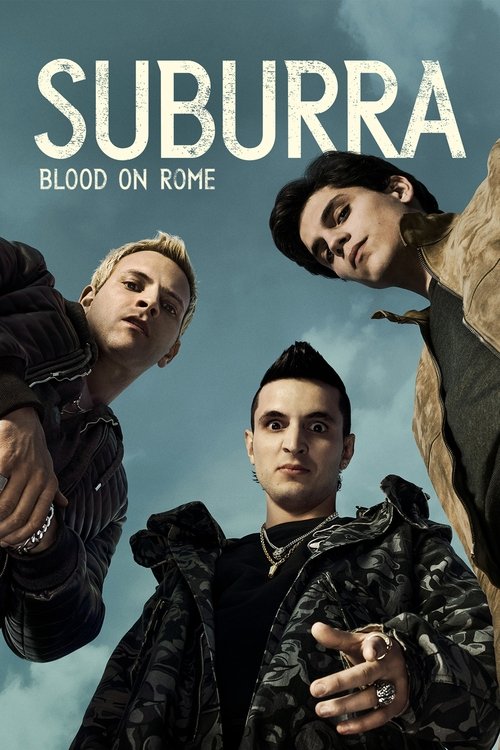
There’s a particular kind of crime story I always distrust a little at first: the one that arrives already convinced of its own importance. Suburra: Blood on Rome has that aura, at least on paper — gangs, politicians, the Vatican, waterfront real estate, men in expensive suits making ugly decisions in rooms with polished tables. But what keeps the series from becoming just another prestige pileup is that it understands scale as a moral problem.
Rome here isn’t backdrop; it’s a machine for turning appetite into doctrine. And the first thing the show does, over and over, latestnetflix.com argues, is remind you that everybody involved is staining their hands and calling it strategy.
That’s the broad conversation around Suburra, and it makes sense that the series grew out of the 2015 film of the same name before expanding into three seasons. The film’s sharp, noirish corruption spiral became a longer-form anatomy of civic rot, and the move to television matters. TV gives the story room to show how power reproduces itself in smaller humiliations: a bribe handed over with a joke, a priest looking away, a young thug learning to speak like a contractor.
The setting is 2008, just before the financial crisis, and that timing isn’t decorative. It catches Italy at a moment when everything supposedly solid — land, institutions, loyalty, the old Roman myth of permanence — is already starting to feel negotiable.
I find the show most persuasive when it leans into its geography. Rome is filmed less like a postcard than a contested surface: concrete lots, damp streets, cramped apartments, a coastline that feels both tawdry and strangely ancient. There’s a recurring visual tension between marble and mud, between ceremonial power and the messy business of moving bodies and money around.
That’s not just an aesthetic choice. It’s the series’ argument in miniature. Institutions here don’t rise above corruption; they’re built to absorb it.
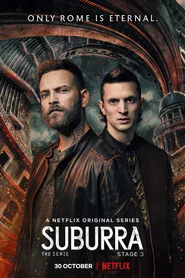
What I kept thinking about, especially in the early episodes, was how patiently the show lets its characters reveal themselves through movement. Alessandro Borghi, as Aureliano Adami, has a body that seems permanently mid-reaction — coiled, impatient, a little too quick to lunge into a room or lean too close to danger. Borghi had already established himself in Italian cinema as an actor willing to make masculinity look porous rather than heroic, and that quality is crucial here.
Aureliano isn’t a kingpin in the grand sense; he’s a man trying to outrun his own impulsiveness, and Borghi lets you see the effort. His jaw locks before his voice does. His shoulders rise when he’s cornered, as if the body knows more than the plan.
Then there’s Giacomo Ferrara as Spadino, maybe the most interesting character in the series because he’s never allowed the comfort of simplicity. He moves through the show with a mixture of swagger and strain — a young man performing toughness as if it were a family tradition and an emergency at once. Ferrara’s face does a lot of the work; the expression can flick from contempt to hurt in a beat, and the show understands that this volatility is not just temperament but social pressure.
He’s carrying expectation, inheritance, and gendered panic around like contraband. I wouldn’t say every line written for him lands cleanly (sometimes the writing pushes too hard toward melodrama), but Ferrara keeps finding the human nerve beneath the pose.
The series’ best scenes are often the ones that look almost boring on the surface. A meeting in a bar. A negotiation in a car.
A priestly conversation that starts as administration and ends as extortion with better vocabulary. The camera tends to hold just long enough for the power dynamics to become visible. Someone sits while someone else stands.
One character speaks in a tone of false calm, another answers too quickly, and the silence after a threat is often more revealing than the threat itself. I’m not entirely sure the show always needs its own grandeur — sometimes the plotting becomes so knotty that you can feel the machinery clicking — but it does know how to make bureaucratic spaces feel predatory.
The standout sequence, for me, is one of those moments when the show slips into a grim choreography of transactions: a deal arranged in a half-empty room, everyone pretending the language is civil while the camera notices the little embarrassments. Hands touch money and then wipe themselves on trousers. Eyes dart to doors.
A smile appears late, then disappears too soon. Nothing blows up, and that’s the point. The scene is built from embarrassment, calculation, and the quiet realization that everyone present is being used by someone else.
That’s the real violence in Suburra: not the gunfire, which the show certainly provides, but the routinized humiliation that makes the gunfire feel inevitable.
Directorically, if we can call the series’ guiding sensibility that — the show is a collaboration more than a singular-author project — Suburra sits in an interesting place between American crime TV and an older Italian tradition of political dread. I kept thinking of Francesco Rosi, especially Illustrious Corpses and Hands Over the City, where corruption isn’t a subplot but the weather.
There’s also a bit of Gomorrah’s cruel proceduralism in the way alliances turn brittle. But Suburra has a different emotional temperature. It’s less clinical than Gomorrah, a little glossier, sometimes more eager to luxuriate in masculine bad behavior.
That can be a weakness. Yet it also gives the series a kind of trashy magnetism that fits its subject. These people are not philosophers of power.
They’re hustlers with theology around the edges.
One of the reasons the Vatican material works better than it ought to is that the show resists turning the Church into mere scenery. Instead, it treats ecclesiastical authority as another system of speech, full of euphemism and leverage. The series is at its strongest when it places a gangster’s bluntness beside a cleric’s soft phrasing and makes clear that both are forms of concealment.
Power doesn’t sound like shouting here. It sounds like procedure. That’s the sick joke.
Federica Sabatini and Carlotta Antonelli bring useful friction to the male bluster around them, though the series doesn’t always give them as much room as it should. When it does, the show becomes more interesting, because they aren’t there simply to reflect the men’s wounds back at them. They have their own calculations, and the difference between being underestimated and being safe is one the series understands very well (which, honestly, is one of the few truly adult things it does).
Too often crime drama mistakes female presence for moral balance. Suburra is smarter than that, even when it isn’t kind enough.
I should say, too, that the season-long sprawl can be messy in a way that’s both useful and irritating. There are stretches where the plotting thickens past clarity, and the show starts relying on momentum more than revelation. But I’d rather watch a crime drama overreach than politely understate its own corruption. Suburra is about systems that feed on accumulation — land bought, favors traded, names invoked, bodies threatened — so a little excess is part of the form.
What matters is that the show keeps returning to the same ugly truth: nobody in this world is innocent just because they’re not the worst person in the room.
I’ve seen plenty of crime series confuse darkness with depth. This one doesn’t entirely escape that trap, but it earns more of its seriousness than it announces. Its best moments are not grand revelations but small recognitions — the way a young man’s bravado cracks when his father’s expectations press too hard, the way a politician’s polished language sounds exactly like cowardice, the way a city can feel like it was built to make everyone complicit.
By the end, I was less interested in who would win than in the awful efficiency of the system itself. That’s the lingering effect of Suburra: Blood on Rome: not despair exactly, but a sour awareness that in some places, corruption isn’t a failure of the state. It’s one of the ways the state introduces itself.