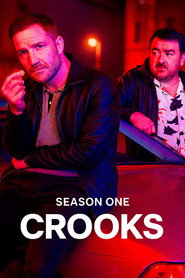
Season 1
8 episodes Apr 4, 2024 7.5
- 1 Panther
- 2 The Al-Walids
- 3 Red
- 4 The Ambulance
- 5 Old Friends
- 6 Rami
- 7 Madame
- 8 The Sea

“One heist. Two crooks. Three cities.”
A priceless coin forces a retired safecracker and a two-bit gangster to work together, drawing them into daring heists and global criminal rivalries.
Latest episode: S2 E6 Catherine the Great (Apr 14, 2026)
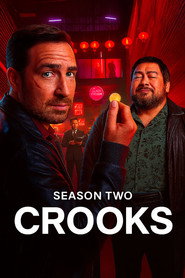
A priceless coin forces a retired safecracker and a two-bit gangster to work together, drawing them into daring heists and global criminal rivalries.
Official
I’ve seen enough heist stories to know the rhythm by now: the meticulous planning, the flawless execution, the brief moment of triumph—then the inevitable unraveling. Crooks, Netflix’s German-language crime thriller, knows this rhythm too. It just refuses to play by it. Instead, it turns the heist into a treadmill, a never-ending chase where the prize isn’t gold or glory but the sheer, exhausting momentum of survival.
And for a while, that’s enough.
The series follows two men bound by a single, priceless coin: one, a retired safecracker with the weary posture of a man who’s spent too many years hunched over locks; the other, a younger, hotheaded gangster whose idea of strategy is to shoot first and ask questions never. Their partnership is less a meeting of minds than a collision of survival instincts, and it’s this friction that gives Crooks its pulse. The show doesn’t so much build tension as it does maintain it, like a car engine left running in neutral—loud, vibrating, impossible to ignore.
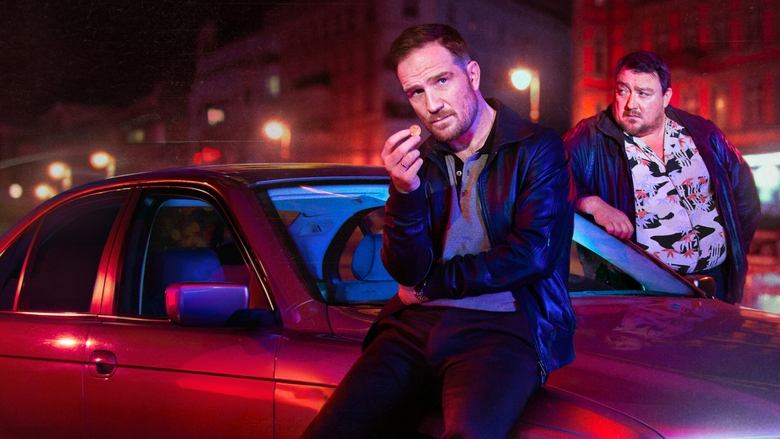
What’s striking about Crooks isn’t the originality of its premise—heist stories are as old as crime itself—but the way it commits to its own chaos. The series sprawls across three cities (Berlin, Vienna, Bangkok), each with its own texture and threat level, but it never bothers to ground the viewer in geography or logic. Instead, it treats location like a mood ring: Berlin is all grit and graffiti, Vienna a gilded cage of old-world corruption, Bangkok a neon-lit labyrinth where every alleyway could be an exit or a trap.
The show doesn’t care if you can follow the map. It just wants you to feel the disorientation.
That disorientation extends to the plot itself, which lurches from one set piece to the next with the kind of reckless energy that’s either thrilling or infuriating, depending on your tolerance for narrative whiplash. There’s a scene in the first season where the two leads, Lau’s character Charly and Krutzler’s Mücke, find themselves in a high-speed chase through Vienna’s underground tunnels.
The camera lingers on the claustrophobic close-ups of their faces, the sweat on their brows, the way their voices crack under the strain of the moment. It’s a masterclass in tension—not because the action is particularly innovative, but because the show understands that the real stakes aren’t the chase itself, but the way these two men, who barely trust each other, are forced to rely on one another to survive.
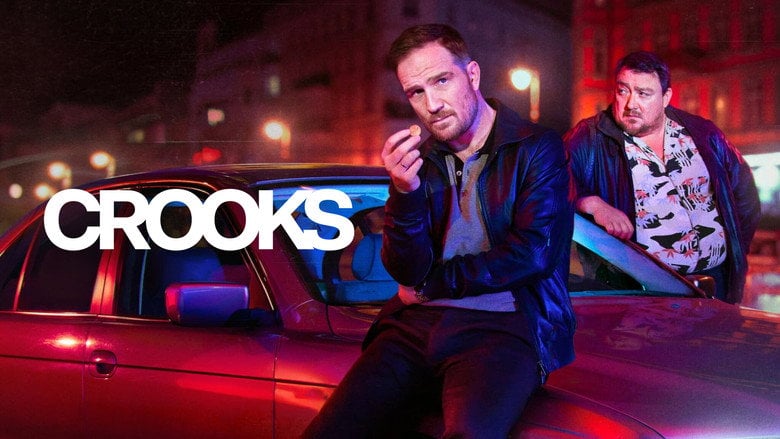
The problem is that Crooks often mistakes momentum for depth. The supporting characters are little more than archetypes—a vengeful crime boss, a duplicitous love interest, a rival gang with all the nuance of a street sign—and the dialogue can veer into the kind of self-serious posturing that feels more like a parody of crime dramas than the real thing. (There’s a moment in the second season where a character delivers a monologue about the “honor among thieves” that lands with all the subtlety of a sledgehammer.) The show’s world feels stylized rather than lived-in, as if the criminal underworld were designed by a committee of art directors rather than emerging from the messy, improvisational reality of actual crime.
And yet, for all its flaws, Crooks has a kind of stubborn charm. It’s the kind of show that doesn’t ask you to believe in its logic so much as it asks you to surrender to its rhythm. The central duo is compelling not because they’re particularly deep, but because their dynamic is so viscerally real.
Lau, in particular, is a revelation. His Charly is a man who’s spent his life trying to outrun his past, only to find that the past is always one step ahead. There’s a weariness to his performance, a physicality that speaks volumes—watch the way he carries himself, the slump of his shoulders, the way his eyes dart around a room like he’s already calculating the exits.
He’s not just playing a criminal; he’s playing a man who’s been ground down by the weight of his own choices.
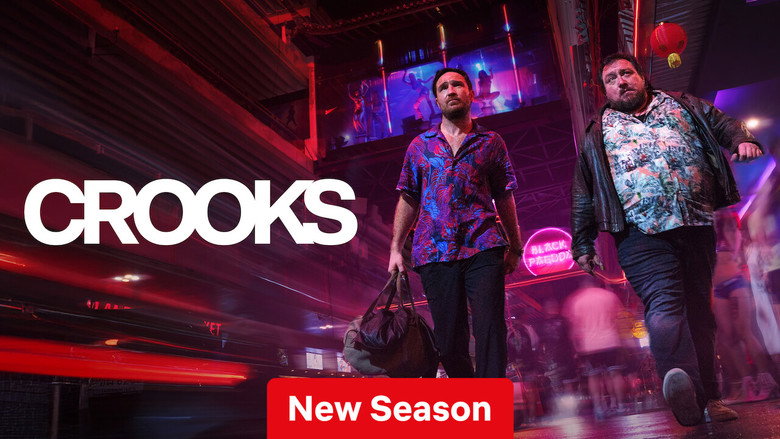
The gossip around Crooks is almost as entertaining as the show itself. The production was reportedly plagued by real-world chaos—earthquakes in Bangkok, creative clashes between Lau and director Marvin Kren, a leather jacket that became a symbol of on-set discomfort. (Lau, it turns out, fought to ditch the thing because it was too hot for the fight scenes.
A small detail, but one that speaks to the show’s larger ethos: sometimes the most compelling stories are the ones that emerge from the friction of making them.) Kren, for his part, has described the show as his most commercial project, a high-stakes gamble that blends European arthouse sensibilities with the kind of glossy, bingeable energy that Netflix craves. It’s an odd mix, and not always a successful one, but there’s something admirable about the attempt.
In the end, Crooks is a show that’s easy to admire but harder to love. It’s kinetic, stylish, and often thrilling, but it’s also uneven, sometimes frustratingly so. The heists are exciting, the chase scenes pulse with energy, and the central partnership is undeniably compelling.
But the world around them feels thin, the plotting occasionally nonsensical, and the dialogue sometimes laughable. It’s the kind of show that leaves you with a lingering question: Is this a story about two men trying to escape their past, or is it just a series of increasingly elaborate set pieces strung together by the thinnest of narrative threads?
I’m still not sure. But I know this: I watched the whole thing in two sittings. And that’s got to count for something.
"A kinetic, character-driven heist thriller that is easy to binge, even as its logic and realism often fall apart."
Tight pacing, high tension, and the central partnership make the series an engaging, easy binge. The European locations and direction earn praise, but the script is repeatedly faulted for implausible twists, shallow research, and one-note side characters, and personal ratings are polarized between very high and very low.
Turns out the most dangerous thing on Crooks isn’t the gangs, the guns, or the “g’schissene Münz’n” — it’s Mother Nature, creative tempers, and one director’s lifelong obsession with criminals. latestnetflix.com's read is that Buckle up: the behind-the-scenes saga is pure crime-drama energy.
If you thought the coin was cursed on screen, spare a thought for the cast dodging earthquakes, sweating through leather, arguing with their director-spouse, and praying to Rahu — all so your binge-watch could feel this dangerously real.
Entertainment rumors and trivia aggregated from public reporting. Treat speculation as unverified unless a cited source confirms it.
More titles in the same genres and with the same cast.