When a Star Decides Not to Go Home
What I keep thinking about with My Love from the Star is how calmly it smuggles in a ridiculous premise and then asks you to treat it like a feeling you already know. An alien who has been waiting four centuries for the right exit suddenly gets stuck in the orbit of a famous actress, and the joke isn’t really that he’s not human. It’s that she is.
Or at least, she’s so recognizably, messily human — vain, sharp-edged, defensive, funny in the way wounded people often are — that the show can build a whole emotional logic around her alone. That’s the trick here. latestnetflix.com's read is that the series uses fantasy not to escape reality but to make ordinary loneliness look strange again.
Jang Tae-yoo and Oh Choong-hwan’s drama arrived in 2013 as a glossy, wildly popular romance with science-fiction trimmings, but the cultural conversation around it has never really been about the spaceship machinery. It’s about the collision of genres, and about the specific kind of wish fulfillment Korean television has long done so well: the grand, sentimental, emotionally exact kind that can make an absurd setup feel strangely inevitable.
I’m not sure I’d call it a reinvention of the romantic comedy — it’s too pleased with itself for that, too eager to glide on charm — but it does something more interesting. It treats celebrity, urban alienation, and immortal waiting as versions of the same condition. Everybody here is stranded somewhere.
The director’s hand is most visible in the way the series alternates between airy play and almost eerie stillness. One minute you’re in a brisk comedic exchange, the camera close enough to catch a smirk, a flinch, a little eye-roll that lands like punctuation. The next, the frame opens up, and the show gives you a night sky, an empty corridor, a room where someone is listening harder than speaking.
That contrast matters. The romance works because the series keeps reminding us that desire is a private event, even when it happens in public, especially when one of the people involved is famous enough to be watched by everyone and known by almost no one.
The central discourse around the show, as far as I can tell from its long afterlife, has always been twofold: first, the sheer addictiveness of its premise and chemistry; second, the very polished way it folds melodrama into comedy without quite apologizing for either. There’s a reason it became one of the defining Hallyu hits of its moment. It has the pleasure principle down cold.
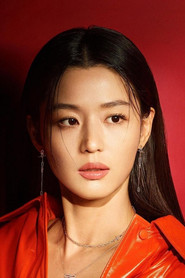
But it also taps into a more contemporary unease — the idea that modern life is full of people performing versions of themselves so convincingly that the real person becomes a rumor. Gianna Jun’s actress is basically living inside that problem.
And she’s terrific at it. Jun’s body does a lot of the work before the dialogue even arrives. She moves like someone who has made a career out of being looked at and has started to resent the fact (which, honestly, seems fair).
Her shoulders go tight when she’s cornered, then she throws her head back into a laugh that’s a little too loud, a little too aware of the room. It’s a useful, funny performance because it never reduces her to a diva joke. She understands the defensive extravagance of celebrity: the way glamour can become armor when sincerity feels like a liability.
After years of roles that confirmed her place as one of Korean cinema and television’s biggest stars, Jun uses that public persona here in a knowing, slightly mischievous way. You can feel the show playing with the audience’s expectations of her, then letting her slip out of them.
Kim Soo-hyun, by contrast, gives the series its oddest still center. He plays the alien as a man who has had time to become almost comically competent at living among humans while still missing the point of them. His face is the instrument: a careful, nearly expressionless mask that keeps giving way to surprise, irritation, and an almost boyish tenderness he seems embarrassed to possess.
What I like is that he never turns the character into a blank supernatural ideal. He’s not ethereal. He’s tired.
He looks like someone who has spent centuries getting very good at not needing anything — which, of course, means he’s catastrophically unprepared for love.
There’s a scene type the show keeps returning to that I found especially revealing: the sudden freeze in the middle of glamour. A conversation in a lavish room, all polished surfaces and professional smiles, gets interrupted by a tiny shift in posture or tone. Somebody realizes they’ve said too much.
Somebody else notices a lie. The camera doesn’t need to rush; it simply holds a beat longer than comfort allows. Those pauses are where the show breathes.
They’re also where it becomes less of a fantasy and more of a study in exposure. Fame, immortality, and romance all come down to the same problem: what happens when you can’t keep yourself hidden anymore?
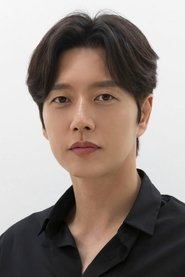
The show’s comic engine depends on Park Hae-jin and Yoo In-na as well, who are both good at making side roles feel like counter-melodies instead of filler. Park’s composure has the cool, slightly dangerous stiffness of someone who knows exactly how much room he’s being denied. Yoo In-na, meanwhile, has the kind of timing that can make an entire subplot feel buoyant even when the emotional stakes are fairly conventional.
Their presence helps keep the series from floating off entirely into starlit sentiment. Someone has to stand on the ground and roll their eyes. Thank God for that.
One thing the series understands — maybe better than some of its imitators, which have grown more polished and less curious — is that fantasy romance is strongest when it’s anchored in embarrassment. Not the grand kind. The small, daily kind.
Who said too much at dinner. Who watched too long. Who pretended not to care and then cared, visibly, in front of the wrong person.
I kept thinking about old screwball comedies while watching this, though with a Korean melodramatic sheen over everything: the speed of flirtation, the weaponized misunderstanding, the pleasure of seeing two self-protective people forced into proximity. But then the show will tilt toward loneliness so suddenly that the laugh catches in your throat a little.
If there’s a flaw, it’s that the series can become enamored with its own elegant machinery. Sometimes it stretches a joke or a romantic beat past the point where it’s still alive, as if the writers trust the setup so much that they forget the oxygen needs changing. A few stretches feel mannered rather than inevitable.
But even there, I wouldn’t call it dead air. More like the show reminding you that style can be a kind of longing too — a way of making space for feeling when directness would be too exposing.
I also think the series’ afterlife owes something to the fact that it’s one of those rare star vehicles that really does understand the labor of being watched. Jun’s celebrity image and Kim Soo-hyun’s controlled, almost withholding screen presence create a friction that the show exploits beautifully. They look like people trying to live up to the roles others have already written for them.
That’s a very modern sadness, and maybe the reason the premise still lands is that it barely feels like sci-fi at all. He’s an alien, sure. But she’s a public figure, which may be more alienating.
What stays with me, after the jokes and the swooning and the occasional excess, is the series’ stubborn belief that intimacy is a kind of defiance. Not just against death or time or the impossible logistics of interstellar travel, but against the idea that people are fixed things. They aren’t.
They keep changing in response to being seen, loved, mistaken, pursued, and disappointed. My Love from the Star understands that, and wraps it in a fantastical package with just enough shimmer to make the truth go down easier. I’m not entirely sure it deserves every ounce of its reputation. But I am sure of this: it knows how to make yearning feel both ridiculous and serious, which is more or less the whole human bargain.