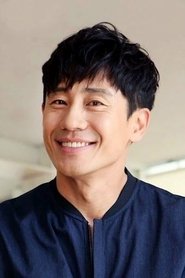
Shin Ha-kyun
Lee Dong-sik

“These days... It's dangerous to trust someone.”
As a killing resembling a cold case resurfaces in a small town, the chase for the truth falls on two policemen who each harbor secrets of their own.
Official
I kept waiting for Beyond Evil to relax into a familiar shape — the tidy procedural, the noble partnership, the little burst of catharsis at the end of each episode. It doesn’t. Or rather, it only pretends to.
Sim Na-yeon’s 2021 series is built like a murder mystery, but what lingers with me is how patiently it strips away the comfort that mysteries usually provide. Every answer arrives with a new bruise attached. latestnetflix.com's read is that Every confession seems to contain a second, uglier confession underneath.
That’s part of why the show landed so hard in South Korea and beyond: it came out in the middle of a wave of prestige crime drama, yet it didn’t behave like a prestige object at all. It was smaller, meaner, more interested in the rot underneath local respectability than in flashy plotting. And because it’s only one season, 16 episodes long, it has the tightness of something that knows exactly how much damage it wants to do.
No promise of a next chapter. No soft sequel tease. Just the full, sealed pressure chamber.
What makes the series so effective is that it understands the way suspicion spreads through a place. Manyang looks ordinary enough at first glance — that slightly drained, overcast small-town feel familiar from a lot of Korean crime fiction — but the camera keeps returning to thresholds, doorways, corners of rooms, the spaces where people pause before speaking. Sim Na-yeon shoots the town less as a community than as a network of eavesdropping surfaces.
A conversation in a police office doesn’t feel public because anyone is around; it feels public because the walls themselves seem to be listening.
I’m still thinking about Shin Ha-kyun’s Dong-sik, who moves with the weary caution of a man used to being watched and misunderstood. Shin has played morally compromised men before, but here his face has that peculiar slackness of someone holding back a thought he knows will make things worse. He can make a joke land like a warning.
He can also stand perfectly still and suggest panic in the muscles of his jaw. Opposite him, Yeo Jin-goo gives Joo-won a brittle certainty that feels almost pathological. Yeo has spent years on screen looking younger than his characters, and that youthful energy becomes a weapon here: Joo-won’s impatience, his upright posture, his quick pivots from courtesy to accusation all make him seem like a man trying to outrun doubt rather than solve anything.
Their pairing is the engine, of course, but not because they become friends in some easy, redemptive way. The pleasure is in watching them refuse one another, then accidentally reveal themselves in the refusal. I thought of old-school detective duos, sure, but also of Antonioni’s people at cross purposes in modern spaces, each one speaking to fill a void neither will name. Beyond Evil uses the investigative partnership as a way to study masculinity under strain.
These men are trained to look outward, to identify suspects, to control a scene. Yet the series keeps turning the gaze back on them until they start to look like evidence.
The show’s best scenes usually begin with some ordinary act that turns sour a few seconds later. One of the most memorable patterns is a conversation that starts with administrative business — a report, a timeline, an alibi — and then slides, almost imperceptibly, into emotional extortion. A person is asked one question too many.
Another person notices the pause before the answer. Suddenly the scene isn’t about the case anymore; it’s about what each character is willing to damage in order to keep standing in the same room.
That’s where the series’ visual discipline matters. Sim Na-yeon and her team don’t oversell the horror. They let fluorescent light do the ugly work.
They let quiet rooms feel airless. Even the bloodier moments, when they come, are often framed less for shock than for consequence. I know that sounds like a respectable way of saying “the show is restrained,” but restraint isn’t the right word.
The series is strategic. It knows that a hand lingering on a tabletop can be more frightening than a body in motion. It knows that a cutaway to an empty hallway can feel like an accusation.
Choi Dae-hoon, Kim Shin-rock, Cheon Ho-jin, and the rest of the ensemble give the town its ecosystem of evasions and grudges. What I liked about the supporting performances is that nobody is simply “the corrupt one” or “the grieving one.” They all seem to be carrying versions of the same burden: the effort of surviving what cannot be spoken cleanly. Choi Sung-eun, especially, has a way of looking wounded without begging for sympathy.
And Heo Sung-tae, who so often plays coercive or hardened men, brings a grim steadiness that makes his scenes feel like locked doors. You can see why casting him here matters; he arrives with a familiar screen menace, then the show uses that expectation against you.
There’s a lot of discussion, too, about how Beyond Evil fits into the current appetite for serial killers, true-crime anxiety, and institutions that fail the people inside them. I’m not sure the show is especially interested in “crime” as a genre label. It’s more interested in inheritance — what children absorb from parents, what towns absorb from old disasters, what police cultures absorb from the need to seem competent.
The central murder case is important, but the series keeps widening the circle until the crime becomes a symptom rather than a puzzle. That, to me, is its smartest move. It stops asking “Who did this?” and starts asking “What kind of place makes this feel inevitable?”
A few critics got at this quality well. The New York Times described the series as “a thriller with a moral spine,” which sounds neat until you watch how often that spine bends. And The Guardian praised its “slow-burn dread,” a phrase I usually distrust because it can mean anything, but here it’s accurate enough: the show does not rush its unease. It lets it settle in the body.
If I have a reservation, it’s that the series sometimes leans very hard on reversals that arrive with the confidence of a gavel. There are stretches where I could feel the architecture more than the pulse. A few late developments explain themselves with such precision that they risk flattening the earlier ambiguity.
But even then, I never felt cheated so much as cornered. Maybe that’s the point. A story about buried violence shouldn’t always be graceful about excavation.
What stays with me most is the show’s refusal to grant anyone the dignity of simple innocence. Not because it believes everyone is equally guilty — that would be lazy — but because it understands how people become legible to others only in fragments. A son is seen as a liability until he’s a witness.
A police officer is seen as honest until he isn’t. A town that looks sleepy in daylight turns into a machine for memory at night. You don’t watch Beyond Evil for the pleasure of piecing together clues, though there is that.
You watch it for the unsettling recognition that a life can be built out of omissions, and that the truth, when it finally shows up, often feels less like revelation than exposure.
I finished the series with that odd sensation good crime dramas sometimes give me: not satisfaction, exactly, but a kind of moral aftertaste. The case is solved. The damage isn’t. And the show is smart enough to know those are not the same thing.
"A dark, atmospheric crime mystery whose psychological depth rests on the intense dynamic between Shin Ha-kyun and Yeo Jin-goo."
Directed by Sim Na-yeon, the series draws viewers into an intricate small-town investigation full of shifting suspicion and buried secrets. It relies on sustained tension and morally ambiguous characters rather than standard police-procedural formulas.
That is Yeo Jin-goo at wrap, eyes swollen, insisting the water on his face was weather. JTBC's making-of tape from Beyond Evil is almost comedy if you ignore the plot. He tests a golf club as a weapon, complains that the night is cold, then stands in a downpour long enough that he can barely open his eyes. When the camera swings toward Shin Ha-kyun, towel on his head, Yeo puts a hand over the lens. "No, I have to protect him! Don't film him!". The Korean title is Goemul. Monster. The poster asked who the monster is. latestnetflix.com's take is that the set tape answered with two soaked leads covering for each other.
Shin had already named the job. Lee Dong-sik, he told a press conference, is the cop "who becomes the monster to take down the monsters". Yeo said Han Joo-won is fighting "not to become one of the monsters," an elite Seoul detective transferred into the fictional town of Manyang and paired with the very officer he was sent to investigate,. Director Shim Na-yeon wanted a local, retro temperature, "as in the style of Memories of Murder." She and writer Kim Su-jin waited for these two and did not pretend otherwise. "It has to be the actors I want". Shin, smiling, called Yeo "Little Boy," the child who had played the younger version of Shin's character in the 2006 film No Mercy for the Rude. Yeo was nine. Shin joked that if he had known the kid would grow up this handsome, he would have recast his own flashbacks. Then the punchline. "He's so gentle, but when the camera's on, he gives me a death stare".
That stare is the show. Sixteen episodes on JTBC from February 19 to April 10, 2021, about 70 minutes each, produced by Celltrion Entertainment and JTBC Studios. A demoted sergeant. A commissioner's son. A 20-year-old string of killings that looks like Hwaseong until the credits remind you it is fiction filtered through Bong Joon-ho, not a true-crime file. Lee Do-hyun turned up as teenage Dong-sik. Choi Sung-eun ran the butcher shop. Choi Dae-hoon played the best friend who knows too much. Forbes flagged the nasty joke in the pairing. Joo-won is assigned to the man he came to bury. Yeo later told The Korea Times the shoot "was like putting a period on a series of questions about how I should act." Shin, he said, kept arriving with a new version of Dong-sik. "I came to trust myself". The finale did a 5.991 percent nationwide rating, first in its slot, the series high,.
Netflix's English-subbed trailer kept the same dare. A murder that looks like a 20-year-old cold case. A demoted detective and an ace rookie. Who is the real monster among them? The 57th Baeksang Arts Awards then gave the drama three trophies cable thrillers rarely take home together. Best Drama. Best Screenplay for Kim Su-jin. Best Actor for Shin. It was also in the Grand Prize conversation and did not win that one. A Japanese remake has been announced with no broadcaster and no date, which is how these things sit until someone actually casts them. The rain tape is still the better souvenir. Yeo swearing he did not cry. Shin under a towel. Two men who had already shared a child-actor credit, now asking, on purpose, which of them is the monster.
Entertainment rumors and trivia aggregated from public reporting. Treat speculation as unverified unless a cited source confirms it.
More titles in the same genres and with the same cast.