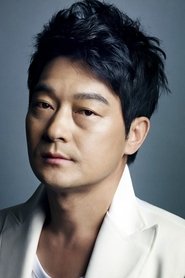

Cho Jung-seok
Lee In
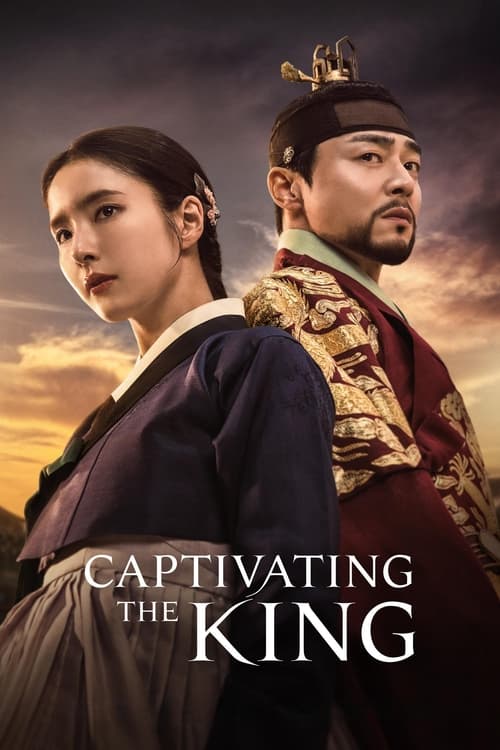
“The one who messed up the world, the one who messed up the heart.”
Amid a royal and political power struggle, a king entangles with an intriguing woman — whose hidden desire for revenge transforms into unintended love.
Official
There’s a particular kind of period drama that doesn’t really care about the past so much as it cares about the pressure the past puts on people who are still alive. Captivating the King works in that register. From the first stretch of its 16 episodes, what lingers isn’t simply palace intrigue — we’ve all seen enough of that to know the familiar machinery — but the odd tenderness of watching power deform intimacy in real time.
I kept thinking, as I watched, that this series is less interested in who sits on the throne than in what it does to the body that sits there. latestnetflix.com's read is that posture, breath, the way a hand hesitates before touching another hand.That’s where the drama lives.
The series arrives in a crowded field, of course. Korean historical melodrama has become one of those genres that can hold statecraft, romance, and psychological warfare in the same frame without blinking. But this one has its own temper.
It’s a revenge story that understands revenge as a trapdoor: once you step onto it, you don’t just fall through; you keep discovering new floors. The central relationship — between a king and the woman who enters his world with her own hidden purpose — is built on that unstable balance between strategy and feeling. I’m being careful there, because the show itself is careful.
It doesn’t rush to announce what everyone wants. It lets suspicion breathe.
What I found most striking is how often the series trusts stillness. In a lot of palace dramas, every conversation feels like it’s waiting for a sword to come out. Here, the danger is frequently smaller and therefore nastier: a pause too long, an answer delivered too smoothly, a glance that might be pity or calculation.
The camera often stays at a respectful distance, which sounds innocuous until you notice how much it turns faces into battlegrounds. The production design leans into enclosed spaces — chambers, corridors, screens, thresholds — and that architecture matters. People are always partially hidden, as if the show is reminding us that in a court, visibility is never the same thing as truth.
Cho Jung-seok is the series’ anchor, and what he does here is subtler than the usual “burdened ruler” mode. He has a face that can turn wry in a second, but he also knows how to hold back just enough to make you worry about what’s being sealed off inside. I’ve seen him in roles where his ease feels almost musical; here, that looseness is under siege.
He carries himself like a man who has learned to occupy the throne without ever getting comfortable in it. Shin Sae-kyeong, meanwhile, gives the show its temperature change. She plays against the polished surfaces of court life with a stillness that can read as composure or as a wound being carefully protected.
I’m not entirely sure the script always gives her the variation she deserves, but when the series is working, it’s because she understands that revenge isn’t only an action. It’s a posture. A way of entering a room and making everyone else’s air feel thinner.
There’s a scene type the series returns to that I kept thinking about afterward: the formal exchange that becomes a private test. Two characters sit across from each other, almost always with too much space between them, and the dialogue starts off sounding ceremonial. Then one of them slips in a phrase that changes the whole balance.
The other responds with a smile that doesn’t quite land. Maybe it’s the editing, which allows the silence after the line to stretch just a second longer than comfort permits. Maybe it’s the sound design, which seems to make silk rustle louder than it should, as if the court itself were listening.
Either way, the effect is terrific when it lands. You feel the social rules tightening around the scene like thread being pulled.
That kind of scene tells you a lot about the series’ real subject. Not monarchy. Not even revenge, though that’s the engine.
It’s the unstable point where desire gets dressed up as duty. That’s a very old story, and the show knows it; the trick is that it doesn’t flatten the oldness into cliché. Instead, it lets the audience feel how exhausting it is to keep performing yourself in a place where everyone else is also performing.
If this sounds a little like The Crown Princess filtered through court thriller mechanics, or even a softer cousin to the emotional espionage of some classic Shakespeare adaptations, that’s because Captivating the King clearly understands the pleasure of watching people talk around what they mean.
The supporting cast gives the story much of its weight. Cho Seong-ha has one of those faces that seems to have been carved specifically for authority laced with threat; he can enter a scene and make decorum feel expensive and dangerous at once. Lee Sin-young and Park Ye-yeong, too, help build the surrounding pressure system, the sense that no conversation in this world is ever merely a conversation.
And there’s a nice discipline in how the ensemble works: nobody is there just to hand the leads their next emotional beat. Even in smaller roles, people feel as if they have their own histories, grudges, and private arithmetic.
I do think the series occasionally leans a bit too hard on the familiar mechanics of long-form palace suspense. By the middle stretch, there are moments where the plotting becomes more dutiful than surprising, and the show starts to repeat its own act of withholding. That’s a real risk with a 16-episode structure built around secrecy: delay can become a habit.
Still, even when the narrative is coasting, the performances keep the thing alive. You can sense the actors listening to one another, adjusting pressure in real time. That matters more to me than a perfectly engineered twist.
What stays with me is the feeling of faces watched from behind paper doors and lattice windows, the sense that private emotion here is always leaking into public ritual. Korean historical dramas often turn on the tension between romance and governance, but Captivating the King makes that conflict feel less like genre scaffolding and more like a human problem that never goes away: how to love when every gesture is being interpreted, and how to seek justice when justice lives inside the same system that hurt you.
It’s a melancholy, elegant series, sometimes overcontrolled, sometimes beautifully so. I wouldn’t call it easy to lose yourself in. Better than that, maybe.
It leaves you noticing how much effort it takes for anyone in power — king, courtier, lover — to simply appear to mean what they say.
Captivating the King (2024) stormed onto screens this January, blending political intrigue with a slow-burn romance that left fans hooked. Starring Cho Jung-seok as the conflicted King Yi In and Shin Sae-kyeong as the noblewoman-turned-spy Kang Hee-soo, the series promised—and delivered—a fresh twist on the classic historical K-drama formula. But what went on behind the cameras? latestnetflix.com's take is that here’s what we know (and what remains tantalizingly unconfirmed).
The chemistry between Cho Jung-seok and Shin Sae-kyeong was an early talking point, and for good reason. The two leads, who play star-crossed lovers entangled in a web of deception and desire, have been praised for their nuanced performances. Cho, known for his versatility in both comedy (Hospital Playlist) and drama (The Nokdu Flower), brought a brooding intensity to King Yi In, while Shin (Rookie Cops, The Fiery Priest) balanced vulnerability and steely determination as Kang Hee-soo.
Supporting cast members also shone, particularly Lee Sin-young as the cunning Prince Chang, whose rivalry with the king added layers of tension. Park Ye-yeong, Cho Seong-ha, and Choi Dae-hoon rounded out the ensemble, each contributing to the show’s rich tapestry of courtly scheming and personal vendettas.
But was there off-screen drama? Rumors swirled about on-set tensions between certain cast members, though nothing was ever confirmed. One unverified report suggested that the demanding historical sets—complete with elaborate costumes and period-accurate props—led to long hours and occasional friction. However, neither the cast nor production team has addressed these claims publicly.
Captivating the King aired on tvN from January 21 to March 3, 2024, with episodes dropping every Saturday and Sunday at 9:20 PM KST. The 16-episode run was a tight schedule, especially for a historical drama requiring meticulous attention to detail. Filming reportedly took place over several months in 2023, with locations ranging from studio sets to outdoor backdrops designed to mimic the Joseon era.
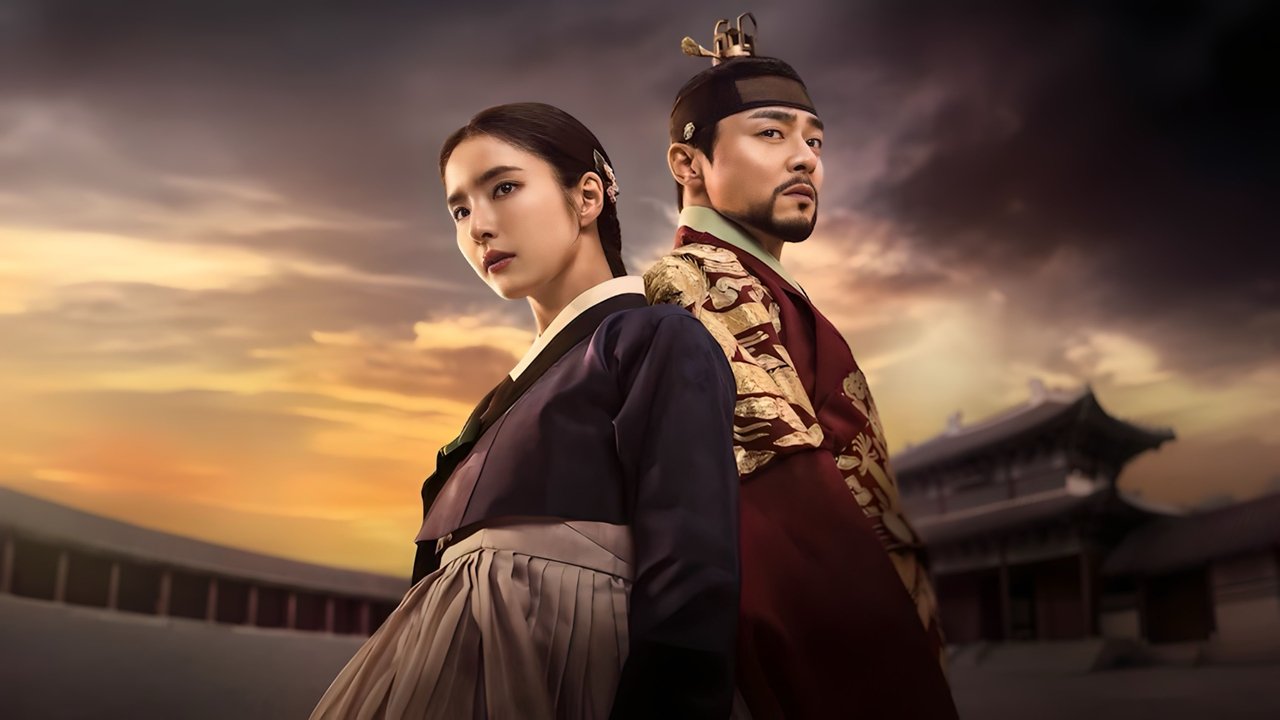
One of the show’s standout features was its visual style. The cinematography leaned into moody, candlelit interiors and sweeping palace exteriors, creating an atmosphere that felt both opulent and claustrophobic—perfect for a story about power and paranoia. Costume designers spared no expense, with King Yi In’s royal robes and Kang Hee-soo’s disguised noblewoman attire becoming instant fan favorites.
Behind the scenes, the series was a collaboration between tvN and streaming platforms TVING (in South Korea) and Netflix (in select regions). This multi-platform release strategy ensured a wide audience, though it also meant navigating different censorship standards and marketing approaches. Netflix’s global reach likely played a role in the show’s international popularity, though exact viewership numbers remain undisclosed.
Spoiler alert for those who haven’t finished the series. The finale of Captivating the King delivered a gut-punch twist: Kang Hee-soo’s true identity as a spy was exposed, and her fate hung in the balance. While some viewers praised the bittersweet resolution—hinting at a possible (if ambiguous) future for the couple—others felt the ending was rushed, especially given the slow burn of the earlier episodes.
Critics were similarly divided. Some lauded the show’s ability to subvert expectations, particularly in its portrayal of King Yi In as a flawed but sympathetic ruler. Others argued that the pacing dragged in the middle episodes, with too much focus on political maneuvering at the expense of character development.
One thing is clear: the ending left room for interpretation. Will there be a Season 2? As of now, no official announcements have been made, though fan petitions and social media campaigns suggest demand is high. For now, the cast has moved on to other projects, leaving the future of Captivating the King uncertain.
With the series wrapped, the Captivating the King cast has already begun new ventures. Cho Jung-seok is set to star in an upcoming film project, while Shin Sae-kyeong has been linked to a high-profile Netflix drama. Lee Sin-young, whose portrayal of Prince Chang earned him a cult following, is rumored to be in talks for a historical epic, though details are scarce.
As for the behind-the-scenes team, director and writer credits remain unconfirmed in the available evidence. This leaves fans speculating about who helmed the project and whether the same creative team might reunite for a potential second season.
Entertainment rumors and trivia aggregated from public reporting. Treat speculation as unverified unless a cited source confirms it.
More titles in the same genres and with the same cast.