Season 1
10 episodes Jan 8, 2018 8.0
- 1 Episode 1
- 2 Episode 2
- 3 Episode 3
- 4 Episode 4
- 5 Episode 5
- 6 Episode 6
- 7 Episode 7
- 8 Episode 8
- 9 Episode 9
- 10 Episode 10

The tragic yet hopeful story of Fanny, a young teen from a good suburban home whose life spirals out of control when she falls for a manipulative and abusive man.
Latest episode: S2 E10 Episode 10 (Mar 9, 2020)

I keep thinking about the first time we see Fanny Couture smile. It’s not the kind of smile that lights up a room—more like the flicker of a match in a dark hallway, brief and uncertain. Ludivine Reding plays her with a kind of restless energy, the kind that makes you want to grab her by the shoulders and say, Slow down. But of course, no one does.
That’s the point.
Runaway (or Fugueuse, as it was originally titled) is a series that doesn’t just tell you a story about human trafficking—it forces you to live inside the mechanics of it. The first season is a masterclass in slow-burn dread. Fanny isn’t snatched off the street; she’s groomed, flattered, made to feel special.
The hip-hop producer who becomes her undoing doesn’t kick down her door. He slides into her life like a shadow, offering her the one thing she thinks she’s missing: attention. And Reding sells every moment of it.
Watch the way her posture shifts when he’s near—shoulders back, chin up, like she’s trying to prove she’s older than she is. Then, in the next breath, she’s a child again, biting her lip when she’s nervous, fidgeting with her sleeves. It’s the kind of performance that makes you forget you’re watching an actor.

The series is set in Quebec, but its story could unfold anywhere. That’s part of what makes it so unsettling. There’s no exoticism here, no distant land where these things happen to other people.
Fanny’s world is suburban, middle-class, the kind of place where parents assume their kids are safe because the streets are clean and the schools are good. Éric Tessier, the show’s creator, understands that the most insidious traps aren’t set in back alleys—they’re set in plain sight. The first season’s pacing is deliberate, almost agonizing. Every small step Fanny takes toward danger feels like a betrayal, not just of her family, but of the audience.
We want to scream at her to turn back, but we also understand why she doesn’t. That’s the horror of it.
By the time Season 2 rolls around, four years have passed, and Fanny is a different person. Or maybe she’s the same person, just hollowed out. The series doesn’t offer easy answers about survival or redemption.
What it does offer is a raw, unflinching look at the aftermath of trauma. There’s a scene in Season 2 where Fanny stares at her reflection in a mirror, her fingers tracing the scars on her wrists. It’s not a moment of catharsis.
It’s not even a moment of clarity. It’s just a girl looking at herself, trying to remember who she used to be. Reding plays it with a quiet devastation that lingers long after the episode ends.

The show’s greatest strength is its refusal to sensationalize. There are no gratuitous scenes of violence, no exploitative close-ups of suffering. Instead, Runaway focuses on the psychological toll of exploitation—the way it erodes a person’s sense of self, the way it makes them feel complicit in their own undoing.
The traffickers in this story aren’t mustache-twirling villains. They’re people who know how to manipulate, how to make their victims feel like they’re the ones choosing this life. It’s a chilling portrayal, and one that feels all too real.
That said, the series isn’t without its flaws. The second season, while powerful, occasionally struggles to maintain the same tension as the first. Some of the supporting characters feel underdeveloped, their arcs serving the plot more than their own emotional journeys.
And while the show’s commitment to realism is admirable, there are moments when the pacing drags, when the weight of the subject matter threatens to suffocate the story. But these are minor quibbles in the face of what Runaway accomplishes.
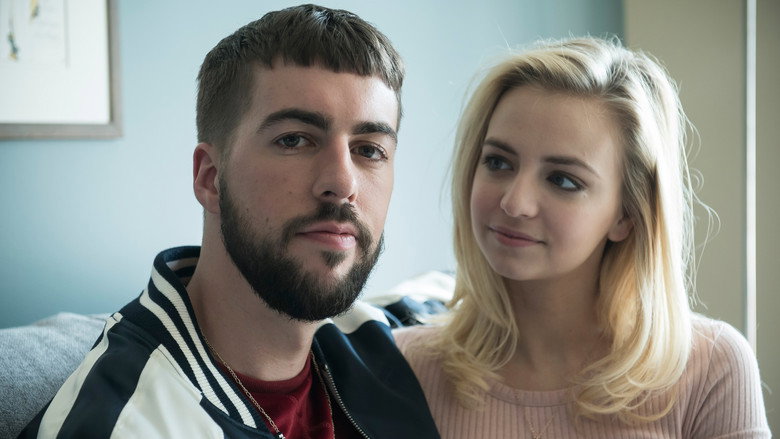
What stays with you isn’t the brutality of Fanny’s situation, but the quiet moments—the way she flinches when someone raises their voice, the way she laughs a little too loudly at a joke she doesn’t find funny. These are the details that make Runaway more than just a crime drama. It’s a story about how easily a life can unravel, and how hard it is to put the pieces back together.
I don’t know if Runaway is a perfect series. But I do know it’s an important one. It doesn’t just show you the darkness—it makes you sit in it, makes you feel the weight of it.
And maybe that’s the point. Maybe the only way to understand something like this is to live through it, even if it’s just for a few hours on a screen. Even if all you can do afterward is sit in silence, wondering how many real-life Fannys are out there, waiting for someone to see them before it’s too late.
Éric Tessier’s Runaway (2018) arrived with little fanfare but quickly carved out a niche as a tense, character-driven series. Starring Ludivine Reding and Claude Legault, the show’s raw portrayal of a teenager’s disappearance and the ensuing investigation struck a chord with audiences—so much so that Netflix reportedly gave it a 90% recommendation score. latestnetflix.com's read is that but what went into making this Canadian thriller, and why did it resonate so deeply?
Runaway (originally titled Fugueuse in French) isn’t just another crime procedural. The series dives into the dark underbelly of teen exploitation, familial dysfunction, and the desperate search for missing youth. While the evidence doesn’t specify if the story was ripped from headlines, the themes align with real-world concerns about vulnerable adolescents. The trailer teases a gritty, emotional journey, suggesting the creators aimed for authenticity over sensationalism.
Tessier, known for his work in Quebecois television, brought a grounded approach to the material. The cast—including Reding as the titular runaway and Legault as a determined investigator—delivered performances that critics and viewers praised, though specific behind-the-scenes details about their process remain scarce in the available evidence.
One of the most intriguing details about Runaway is its strong reception on Netflix. The platform’s 90% recommendation score is no small feat, especially for a non-English series. This suggests the show’s themes translated well across cultures, or that Netflix’s algorithm successfully matched it with audiences hungry for dark, suspenseful dramas.
However, the evidence doesn’t clarify whether Runaway was a Netflix original or a licensed acquisition. The trailer explicitly mentions Netflix, but other promotional materials come from MarVista Entertainment, hinting at a co-production or distribution deal. Without further details, the exact nature of Netflix’s involvement remains unconfirmed.
Multiple trailers for Runaway dropped in 2018, each offering a slightly different angle on the series’ tone. The Netflix-branded trailer leans into the emotional stakes, while the MarVista version emphasizes the thriller elements. The French-language trailer (under the Fugueuse title) provides a more atmospheric glimpse, reinforcing the show’s Quebecois roots.
Yet, despite the marketing push, key details about Runaway’s production are frustratingly absent from the evidence. How many episodes were there? Was there on-set drama? Did the cast or crew share any memorable anecdotes? The trailers and snippets don’t say, leaving fans to piece together the story from the series itself.
In a sea of crime dramas, Runaway’s focus on the human cost of exploitation sets it apart. The series doesn’t just follow the investigation—it forces viewers to confront the systemic failures that allow teens to slip through the cracks. The 90% recommendation score suggests audiences appreciated this nuance, even if the show never became a household name.
For now, Runaway remains a well-kept secret, a hidden gem for fans of character-driven thrillers. Its success on Netflix proves there’s an appetite for stories that balance suspense with emotional depth—even if the behind-the-scenes details stay locked away.
Entertainment rumors and trivia aggregated from public reporting. Treat speculation as unverified unless a cited source confirms it.
More titles in the same genres and with the same cast.