The Pharaoh’s Shadow: Who Gets to Claim Cleopatra?
I’ll admit it: I came to Queen Cleopatra expecting a train wreck. The advance clips had already sparked a firestorm—Egyptian officials denouncing it as “historical fallacy,” Twitter threads erupting into flame wars over race and antiquity, and that 3% audience score on Rotten Tomatoes practically glowing like a warning sign. But here’s the thing about train wrecks: sometimes they’re more revealing than the polished productions that glide smoothly into port.
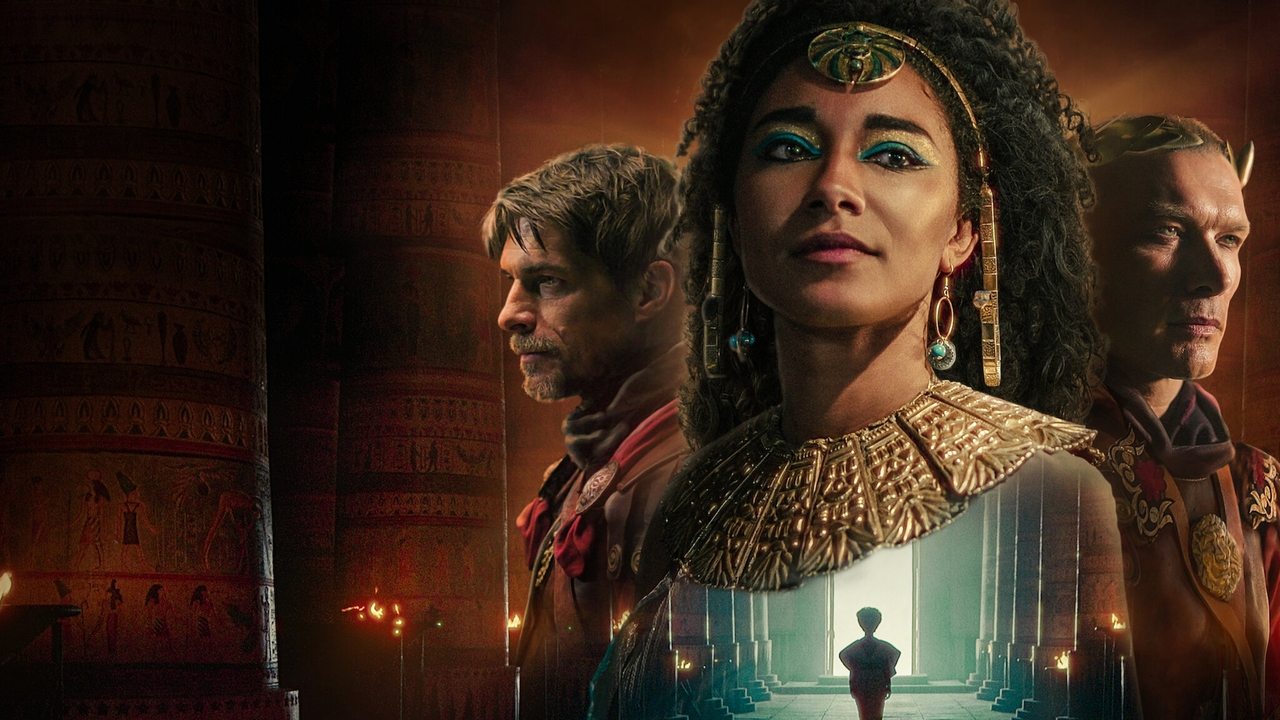
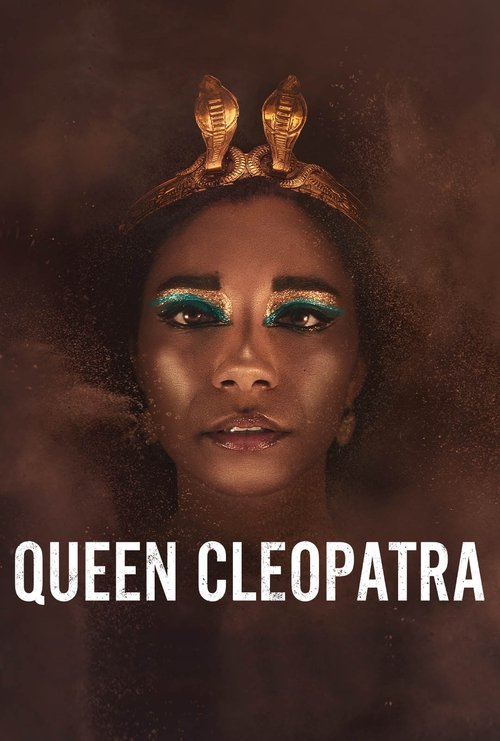
This four-part Netflix docudrama, the second installment in Jada Pinkett Smith’s African Queens series, doesn’t just stumble over its own ambitions—it exposes the fault lines in how we remember, reimagine, and weaponize history.
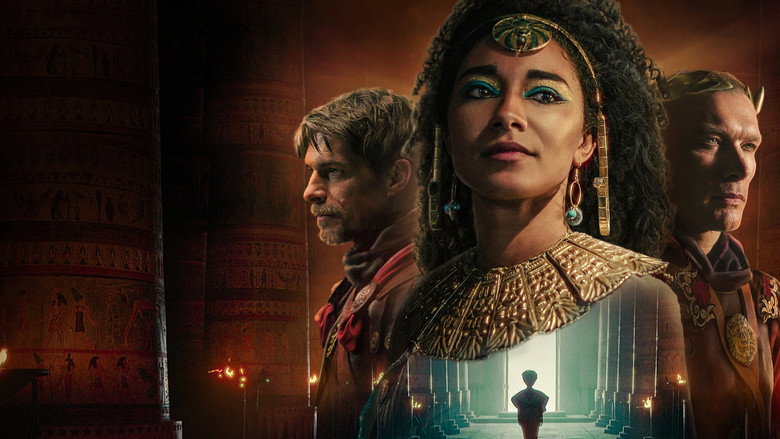
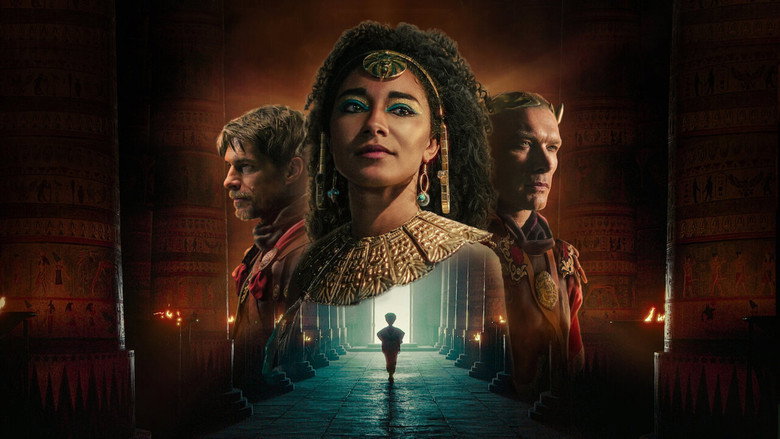
The controversy, of course, begins with Adele James. The moment her casting was announced, the internet split into two camps: those who saw it as a necessary correction to centuries of whitewashed history, and those who accused Netflix of rewriting the past to score political points. The truth, as usual, is messier.
Cleopatra VII was a Ptolemaic ruler, descended from a Macedonian Greek dynasty that had ruled Egypt for nearly 300 years. But the Ptolemies weren’t exactly isolationists—they intermarried with Egyptians, Persians, and other regional powers. Director Tina Gharavi leans into this ambiguity, arguing that Cleopatra’s “melanated” identity is as plausible as Elizabeth Taylor’s porcelain-skinned version.
It’s a provocative stance, but the series never quite grapples with the fact that plausibility isn’t the same as proof. Instead, it presents its version of Cleopatra as the version, a choice that feels less like historical inquiry and more like a mirror held up to our own cultural moment.
That’s the central tension of Queen Cleopatra: it wants to be both a dramatic retelling and a corrective to historical erasure, but it can’t decide which impulse to prioritize. The result is a strange hybrid—a show that looks like a prestige drama (all golden light and flowing robes) but often plays like a high-school history project, with academics popping up every few minutes to remind us that Cleopatra was, in fact, a shrewd political operator.
The Guardian’s critic called it “a deliciously fun drama weighed down by the self-serious need to educate,” and that’s about right. The reenactments are lush but uneven, veering between soapy melodrama and moments of genuine emotional weight. When Cleopatra and Mark Antony (Craig Russell) share a quiet scene in a torch-lit chamber, the chemistry between them crackles—only for the next cut to land us in a talking-head interview where a historian explains, in painstaking detail, why their relationship was doomed.
It’s as if the show is terrified we won’t “get it” unless every beat is underlined in red pen.
The performances are similarly inconsistent. James is the standout, bringing a fierce intelligence to Cleopatra that cuts through the script’s occasional stiffness. There’s a scene in the third episode where she negotiates with Julius Caesar (John Partridge), her voice low and measured, her fingers tracing the edge of a map as if she’s already calculating the cost of every word.
It’s the kind of moment that makes you wish the series had trusted its actors more and its historians less. Partridge, by contrast, struggles with Caesar’s swagger—he’s all bluster and no bite, like a man who’s been told he’s playing a legend but hasn’t quite figured out how. Russell’s Antony fares better, though his performance is hampered by a script that reduces one of history’s great tragic figures to a lovestruck sidekick.
The real problem, though, isn’t the acting or even the script—it’s the show’s fundamental confusion about what it wants to be. Is Queen Cleopatra a documentary? A drama?
A political statement? The answer seems to be “all of the above,” and the seams show. The talking-head segments, meant to lend the series academic credibility, often feel like an afterthought.
Some of the experts are compelling—classicist Shelley Haley, in particular, offers a nuanced perspective on Cleopatra’s African identity—but others seem plucked from central casting, their insights too broad or too obvious to add much. The Times (UK) wasn’t wrong when it described the series as “patchy sub-Game of Thrones cosplay interwoven with academics you’ve never heard of.” The production design is undeniably impressive, with sets that evoke the grandeur of Ptolemaic Egypt, but the drama itself rarely rises to the same level.
And then there’s the elephant in the room: the backlash. The series has been accused of everything from historical revisionism to outright propaganda, with the Egyptian Ministry of Tourism and Antiquities going so far as to file a legal complaint against Netflix. It’s easy to dismiss some of the outrage as performative—history has always been a battleground, and Cleopatra, in particular, has been claimed and reclaimed by countless cultures.
But the intensity of the reaction speaks to something deeper: a fear that the past is being rewritten not to illuminate, but to serve a present-day agenda. Gharavi and Pinkett Smith have framed the series as a corrective to Hollywood’s history of whitewashing, and in that sense, it succeeds. But correctives, by their nature, are blunt instruments.
They don’t always leave room for nuance, for the messy, unknowable truth of history.
That’s the tragedy of Queen Cleopatra. It had the potential to be something radical—a reimagining of history that didn’t just swap one set of myths for another, but instead asked why we cling to these myths in the first place. Instead, it settles for a kind of historical cosplay, dressing up its arguments in the trappings of prestige television without ever fully committing to the complexity of its subject.
The result is a series that’s neither fish nor fowl: not quite a compelling drama, not quite a rigorous documentary, and not quite the bold political statement it aspires to be.
I don’t regret watching it, though. For all its flaws, Queen Cleopatra is a fascinating artifact of our cultural moment—a time when history is no longer something we study, but something we fight over. It’s a reminder that the past isn’t a fixed point, but a living, breathing thing, constantly being reinterpreted and reclaimed.
The question is whether we’re doing it to understand, or just to win.
Audience Opinions
Audience 2.0/10
"Overwhelmingly panned for its execution, casting choices, and perceived historical inaccuracies, leaving most viewers deeply disappointed."
The series drew intense backlash for its portrayal of Cleopatra, with critics arguing the casting and narrative strayed too far from historical expectations. Its production and storytelling were widely called lackluster, failing even those interested in the subject. A small minority appreciated the attempt at a fresh perspective.
What viewers praise
Ambitious conceptSome acknowledged the effort to present a different perspective on Cleopatra's story, even if the execution fell short.
Visual aestheticsA few found the cinematography and costume design appealing, though this was a minority view.
Common complaints
Poor casting choicesCasting Adele James as Cleopatra was widely criticized as historically inaccurate and distracting.
Weak storytellingThe narrative was unengaging, with pacing issues and shallow character development.
Historical inaccuraciesPerceived distortions of historical fact overshadowed any creative reinterpretation.
Low production qualityThe series felt cheaply made, with poor CGI and unconvincing sets.
Extremely low ratingsAbysmal audience scores on platforms like Rotten Tomatoes, with many calling it one of the worst shows ever.
Recommended for
Documentary drama experimenters Fans of historical reinterpretations Viewers curious about polarizing projects
Buzz & Rumors
Public reports
Netflix’s Queen Cleopatra Sparks Backlash Over Casting and Historical Debate
The 2023 Netflix docudrama Queen Cleopatra arrived with more controversy than fanfare. latestnetflix.com's view is that Produced and narrated by Jada Pinkett Smith, the four-part series reimagines the life of Egypt’s most famous pharaoh—but its casting of Adele James as Cleopatra ignited immediate backlash, framing the project as a lightning rod in Hollywood’s ongoing reckoning with race, representation, and historical interpretation.
The Casting Controversy
At the heart of the uproar is the decision to cast Adele James, a mixed-race actress, as Cleopatra VII. Critics, particularly in Egypt, argued that the portrayal whitewashed history, insisting Cleopatra was of Greek-Macedonian descent and should be depicted as such. The debate reignited long-standing tensions over Hollywood’s tendency to recast historical figures of color, with some accusing the series of prioritizing modern racial narratives over historical accuracy.
Pinkett Smith, who also serves as an executive producer, defended the casting as a deliberate choice to explore Cleopatra’s African identity. In a statement (cited in early coverage but not fully quoted in the retrieved evidence), she framed the series as an opportunity to challenge Eurocentric interpretations of ancient history. The backlash, however, suggests the conversation around Cleopatra’s ethnicity remains deeply polarized.
A Docudrama with Big Ambitions
Queen Cleopatra is the first installment of Netflix’s African Queens series, a two-season project aiming to spotlight influential African monarchs. The second season is slated to focus on Queen Njinga of Ndongo and Matamba, a 17th-century ruler known for her resistance against Portuguese colonization. Director Tina Gharavi, known for her work on socially conscious documentaries, helmed the project, though details about her creative process remain scarce in the available evidence.
The series blends dramatic reenactments with expert commentary, a format Pinkett Smith has described as a way to make history accessible. Yet, the docudrama’s reception was overshadowed by the casting debate, with critics questioning whether the series’ historical claims held up under scrutiny.
Hollywood’s Cleopatra Curse
The controversy isn’t new. Cleopatra has been a contentious figure in Hollywood for decades, with each portrayal sparking debates about race, power, and cultural ownership. Elizabeth Taylor’s 1963 portrayal in Cleopatra was criticized for its whitewashing, while more recent projects—like Gal Gadot’s shelved Cleopatra film—faced similar backlash for casting choices. Queen Cleopatra joins this lineage, proving that the queen’s legacy remains a battleground for modern identity politics.
Thin on Behind-the-Scenes Drama
Despite the public uproar, details about the series’ production are limited. The retrieved evidence doesn’t reveal behind-the-scenes tensions, budget disputes, or on-set anecdotes. What’s clear is that Queen Cleopatra was designed to provoke discussion—and it succeeded, even if the conversation veered away from its intended focus on historical empowerment.
For now, the series shows how Hollywood’s attempts to rewrite history can backfire, or at least spark more questions than answers.
Entertainment rumors and trivia aggregated from public reporting. Treat speculation as
unverified unless a cited source confirms it.
Related series
More titles in the same genres and with the same cast.