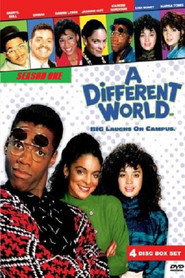
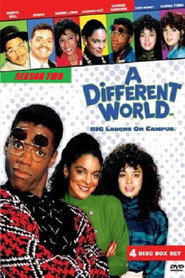
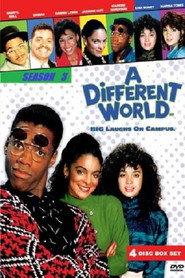
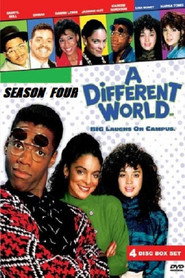
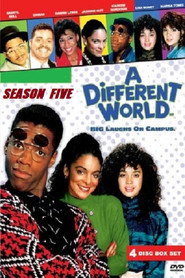
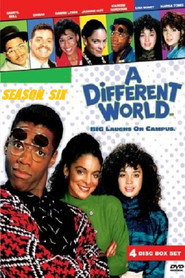
Growing Up in Public at Hillman
What I keep coming back to with A Different World is how it turns adolescence into a communal space. Not just a phase, but a campus. The series begins as a spin-off, yes, and that origin story matters: it arrives with the shadow of The Cosby Show still attached, then slowly loosens its tie and becomes something with its own pulse.
Once Lisa Bonet’s Denise Huxtable exits after the first season, the show doesn’t collapse into a gimmick. It recalibrates. latestnetflix.com's take is that Hillman College becomes less a backdrop for a familiar sitcom character and more a living argument about identity, ambition, romance, class, style, and Black intellectual life in public.
That shift is the series’ great achievement. It’s easy to forget, now, how unusual it was for a mainstream network sitcom in the late 1980s and early ’90s to place historically Black college life at the center of its world without treating it as a novelty or a sociological exhibit. A Different World often worked best when it wasn’t trying to teach a lesson at all, but simply letting the rhythms of student life accumulate: the dorm-room arguments, the flirtations that start as one-liners and end in real vulnerability, the ridiculousness of being young enough to think one conversation can change your life.
Hillman’s hallways feel like a place where people are always running into each other, emotionally and literally. That’s not just sitcom architecture. It’s social design.
Jasmine Guy is the series’ secret weapon, and I don’t mean that in the lazy “scene-stealer” sense. Whitley Gilbert starts out as an entitled Southern belle, all posture and vocal precision, and Guy plays her with an awareness of how ridiculous self-importance can be when it’s also a shield. She has a way of holding her head slightly too high, as if the room’s oxygen level depends on her.
But over six seasons, that comic arrogance softens into something more interesting: a woman discovering that certainty and strength aren’t the same thing. When Guy is funny, it’s because Whitley is trying too hard not to look foolish. When she’s moving us, it’s because she finally allows herself to look foolish and survive it.
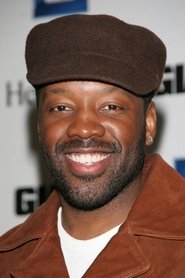
Kadeem Hardison’s Dwayne Wayne is the other half of the show’s chemistry, and his performance depends on a physical joke that never really stops being a physical joke: the flip-up shades. They’re a gag, but also a character note. Dwayne is a nerd trying to look like a man who can handle himself, and Hardison lets the body contradict the swagger all the time.
He talks quickly, leans in too far, grins before he’s sure he should, then retracts when the moment gets too sincere. There’s a bashfulness to him that makes his intelligence feel earned rather than ornamental. I’m not sure another actor could’ve made Dwayne’s blend of competence and panic feel so specific.
The show’s broader conversation is inseparable from the way it represented Black college culture at a moment when American television was still often content to flatten Black experience into a single register. Here, the world contains multiple kinds of Blackness, multiple class positions, multiple aspirations. The series is fond of the elaborate social rituals of fraternities and sororities, and sometimes that material can feel a little over-signaled, but more often it expands the campus rather than narrowing it.
Hillman is not presented as a utopia. It’s a site of status games, bad decisions, romance, and idealism colliding with reality. That’s why it lasts.
The show understands that institutions shape people, but people also stain institutions with their own vanity, longing, and stubbornness.
There’s a particular kind of scene A Different World does better than most sitcoms: the one where the joke slowly yields to emotion without announcing the transition. Someone walks into a dorm room mid-argument. Someone else is sitting on a bed, pretending not to listen.
A line lands, a laugh follows, and then there’s a pause — a real pause, not a punchline pause. The camera doesn’t rush to rescue the moment. It just stays there long enough for embarrassment to turn into honesty.
That’s where the series does its best work. It trusts the awkwardness. Sitcoms often fear silence; this one learned how to use it.
If the show’s first season still carries some of the inherited lightness of its parent series, the later seasons feel more assured in their own clothes. Debbie Allen’s influence as a creative force is crucial here, because the show becomes more rhythmically alive under her eye — livelier, yes, but also more attentive to movement, music, and the social choreography of a room. You can feel that sensibility in the way scenes keep bodies active: people crossing frame, stopping in doorways, turning away before they admit too much.
The series is often at its best when it lets the ensemble behave like an ensemble instead of a collection of joke-delivery systems.
Cree Summer’s Freddie is worth mentioning for the way she brings a different temperature to the series. She plays idealism with a kind of looseness that keeps it from turning dutiful. Freddie can sound like the conscience of the room, but Summer gives her enough impatience, wit, and emotional messiness that she never becomes a mouthpiece.
Lou Myers, as Mr. Gaines, provides one of the show’s most grounded counterweights: his timing is dry, his face carefully arranged into skepticism, and then — with just the smallest crack in the expression — warmth comes through. That’s a good model for the series itself.
It likes to joke first and reveal tenderness second.
I’d be lying if I said every episode holds up evenly. Like most long-running sitcoms, A Different World has spells where it leans too hard on broad misunderstanding or drifts into very special episode territory with a little too much eagerness to be useful. But even then, the series rarely loses sight of the social texture that makes it different from so many campus comedies.
It’s not just about young people learning who they are. It’s about young Black people inhabiting an institution that promises knowledge while also carrying history in its walls. That gives the series a density that still feels rare.
What lingers for me isn’t one plotline so much as the feeling of a community being assembled episode by episode. You watch characters grow into themselves, fall out of step, make speeches they don’t fully believe, then eventually mean them. That’s a pretty human process, and the show is wise enough not to make it neat. A Different World can be funny, sentimental, corny, and politically earnest, sometimes within the same scene.
That mix is part of its charm and part of its risk. But the risk is the reason it matters. It doesn’t just depict college life.
It imagines Black college life as a place where style, argument, romance, and self-invention all happen at once — loudly, imperfectly, and in public.