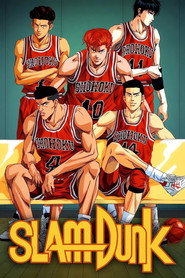
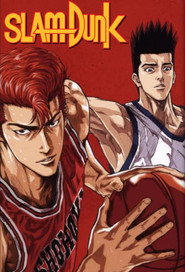
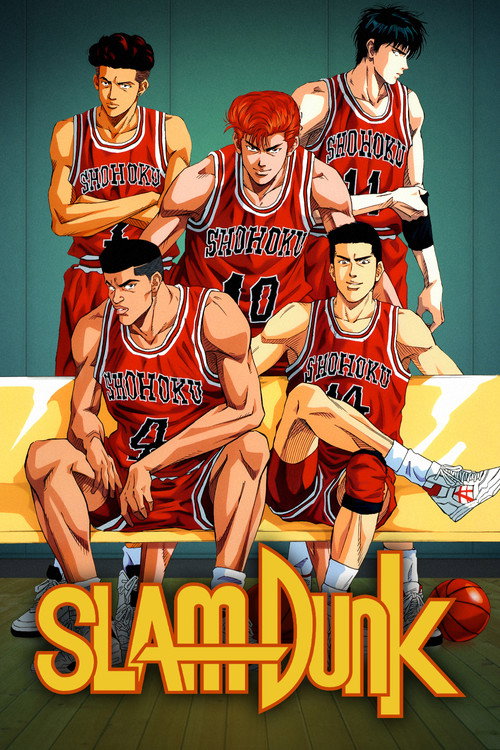
Series poster for Slam Dunk (1993)

Slam Dunk

1993–1996
Ended • 1 Season • 101 Episodes
TV-14 · Japanese
Play trailer
Search on Netflix

Overview

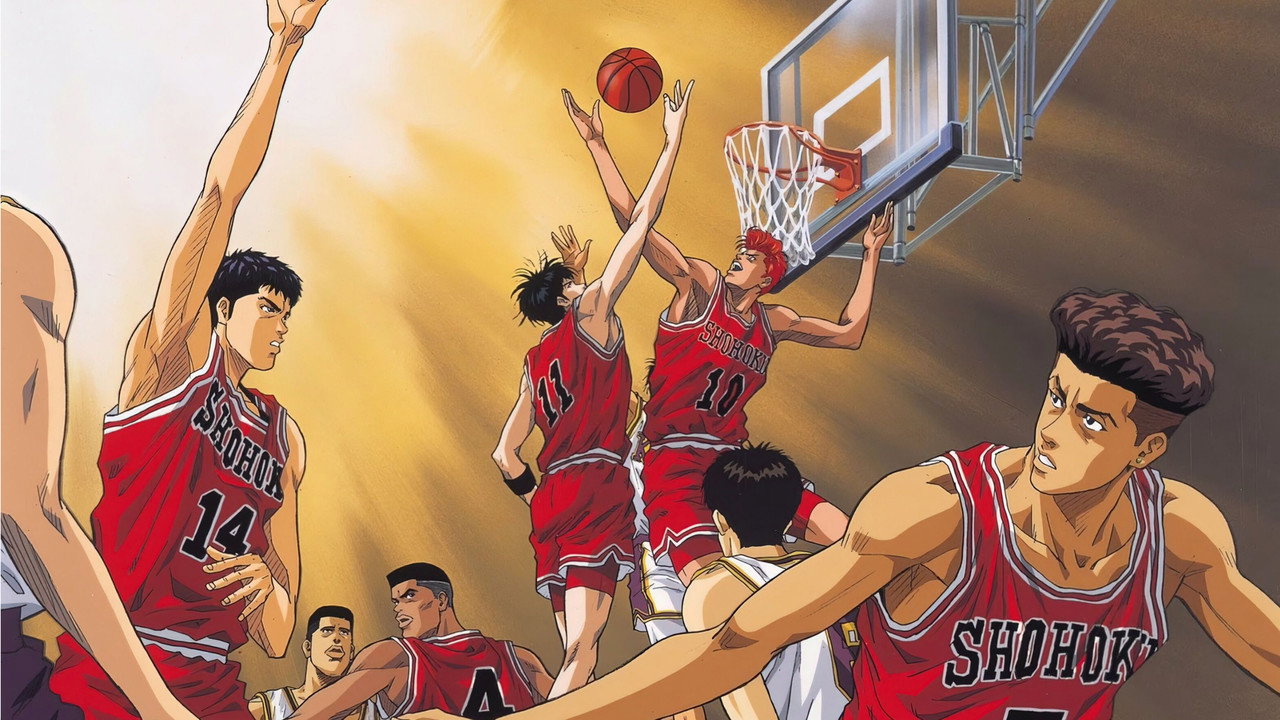
Sakuragi Hanamichi is a junior high punk used to getting into fights and being rejected by girls but upon entering high school he meets the girl of his dreams, Haruko Akagi. He will do anything in order to win her heart including joining the school basketball team that is aiming to conquer the nation lead by Haruko's brother. The problem is that Sakuragi has never played basketball before and a freshman sensation is stealing the spotlight and Haruko's affection from him.

Seasons

2 listed
Status
Ended
Seasons
1 season
Episodes
101 episodes
First aired
Oct 16, 1993
Last aired
Mar 23, 1996
Episode length
23m
Network
tv asahi

Latest episode: S1 E101 SLAM DUNK! (Mar 23, 1996)

  1. Season 1 poster

    Season 1

    101 episodes Oct 16, 1993 7.5
    1. 1 The Birth of a Genius Basketman?!?
    2. 2 Die Basketball! Hanamichi vs. Rukawa
    3. 3 Gorilla vs. Hanamichi! Big Showdown!
    4. 4 Basketball Man Hanamichi Joins the Team
    5. 5 A Gutless Afternoon
    6. 6 Rukawa vs. Akagi. The Real Showdown!
    7. 7 Hanamichi's Debut! Dunk Attack
    8. 8 Hanamichi's Crisis! The Judo Man's Snare
    9. 9 I Will Play Basketball!
    10. 10 The 'Beginner's Shot' ....Is Hard!
    11. 11 Special Secret Love Training for Two!?
    12. 12 Beat Ryonan! Hard Training Before the Decisive Game
    13. 13 Shohoku vs Ryonan the Fired Up Captain!
    14. 14 Super Basketball Match! Ryonan's Attack of Angry Waves
    15. 15 Hanamichi's Nervous Big Start
    16. 16 Who Is This Guy?! Taoka's Miscalculation
    17. 17 Rebound King. Hanamichi Sakuragi's Agony
    18. 18 The Last Two Minutes! I'm Taking Sendo Down!
    19. 19 Time Up! The Ryonan Game Is Over
    20. 20 Basketball Shoes
    21. 21 Super Problems! Hanamichi vs. Miyagi
    22. 22 The Fool with the Worst Record, A Combination is Born
    23. 23 Shohoku Basketball Team's Last Day
    24. 24 The Allies of Justice, Sakuragi's Army Visits
    25. 25 The Guy Who Wanted to Conquer the World
    26. 26 Mitsui's Peak, Trouble at 15
    27. 27 I Want to Play Basketball!
    28. 28 The Beginning of Interhigh Preliminaries
    29. 29 Hanamichi! Pennant Race Debut
    30. 30 The Introspective Army's Big Counterattack
    31. 31 Formidable Enemy Miuradai's Secret Weapon
    32. 32 Genius Hanamichi! Certain Death Dunk
    33. 33 Walkout King!? Sakuragi's Righteousness
    34. 34 Gorilla's Initiation, Kill with Your Eyes!
    35. 35 Hot Blooded Guys
    36. 36 A Well Seeded School, Enter Shoyo
    37. 37 Hanamichi's First Start
    38. 38 Rukawa's Counterattack!
    39. 39 Lightning Flash Ryota!
    40. 40 Hanamichi the Genius shows off!
    41. 41 Shoyo Coach Enters the Court
    42. 42 Shoyo Ace Fujima's Real Ability
    43. 43 Has Mitsui Reached His Limit!?
    44. 44 Mitsui! Stormy 3 Points
    45. 45 Imminent Walkout!? Hanamichi's Pinch
    46. 46 Hanamichi, Hot Dunk
    47. 47 Challenge from a Rival
    48. 48 The Guy Who Pledged to Defeat Kainan
    49. 49 Takezono, Last Fight
    50. 50 Challenge to the King
    51. 51 Outside Accounts!? Hanamichi at His Best!
    52. 52 Sakuragi's Confinement's Secret Weapon
    53. 53 The Gorilla's Injury! Desperate Situation!?
    54. 54 King Kong, Younger Brother
    55. 55 The One that Dominates the Game
    56. 56 Ace Shepherd, Full Throttle
    57. 57 Anzai, Bet on Victory!
    58. 58 Stubborn Guys!
    59. 59 Last 10 Seconds! A Perfect Conclusion
    60. 60 To relieve guilt: Shave Head ?!
    61. 61 Baldy attacks back!
    62. 62 Three-day super training
    63. 63 Ryonan's genius plan
    64. 64 Kainan rebounds!
    65. 65 The strongest rival
    66. 66 Sendoh's scheme
    67. 67 The final battle!
    68. 68 Sakuragi Hanamichi comes to rescue!
    69. 69 Gorilla goes astray
    70. 70 King Kong number two!
    71. 71 Gorilla revives!
    72. 72 The greatest shame of one's life
    73. 73 Rukawa Kaede, gambling on the 2nd half
    74. 74 The most dangerous challenger!
    75. 75 Peak performance
    76. 76 The feeling of victory
    77. 77 You guys are strong!
    78. 78 Uozumi Revives
    79. 79 Blue waves - Ryonan attacks back!
    80. 80 Shohoku's problems
    81. 81 Sendoh attacks! Shohoku loses
    82. 82 Amateur Sakuragi Hanamichi shows off!
    83. 83 Kogure's determination
    84. 84 Win or Lose
    85. 85 New Challenge: the national championship!
    86. 86 Rukawa Kaede's Ambition
    87. 87 Japan's number basketball player
    88. 88 The basketball kingdom - United States of America
    89. 89 Rukawa Kaede's spirit
    90. 90 Shohoku's real ace
    91. 91 The sudden barrier to the nationals
    92. 92 Guys - Sakuragi Gang
    93. 93 Going toward 20000 shoots
    94. 94 Shohoku vs. Jousei
    95. 95 The day when Sakuragi's fired up!
    96. 96 Basketball Shoes Part II
    97. 97 Mixed Feelings, Uozumi returns
    98. 98 Shohoku vs. Shoyo/Ryonan
    99. 99 Facing the strongest team, Shohoku in danger!
    100. 100 The one who brought forth a miracle - Sakuragi!

    Showing 100 of 101 episodes

  2. Specials poster

    Specials

    6 episodes Mar 12, 1994
    1. 1 Special - The Determination of Shohoku (48 Minutes)
    2. 2 Slam Dunk
    3. 3 Slam Dunk: National Champions, Sakuragi Hanamichi!
    4. 4 Slam Dunk: Shohoku's Greatest Danger! Sakuragi Hanamichi
    5. 5 Slam Dunk: Roar Basketman's Soul, Hanamichi and Rukawa's Burning Summer
    6. 6 The First Slam Dunk

Trailer

Cast

12 people
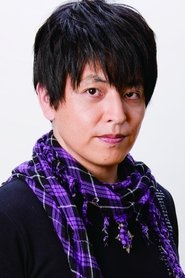
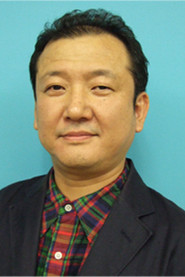
Photo of Takeshi Kusao as Hanamichi Sakuragi (voice)

Takeshi Kusao

Hanamichi Sakuragi (voice)

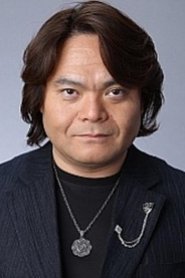
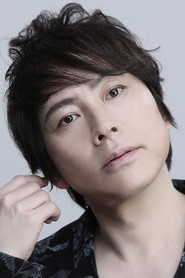
Photo of Hikaru Midorikawa as Kaede Rukawa (voice)

Hikaru Midorikawa

Kaede Rukawa (voice)

Photo of Kiyoyuki Yanada as Takenori Akagi (voice)

Kiyoyuki Yanada

Takenori Akagi (voice)

Photo of Yoku Shioya as Ryota Miyagi (voice)

Yoku Shioya

Ryota Miyagi (voice)

Photo of Ryotaro Okiayu as Hisashi Mitsui (voice)

Ryotaro Okiayu

Hisashi Mitsui (voice)

Reviews

6 min read

A Game That Never Stops Moving

Slam Dunk opens, as a lot of teenage myths do, with a boy insisting he’s already the main character of the world. Sakuragi Hanamichi is loud enough to fill a gymnasium before he ever steps into one, and the joke of the series is that he keeps mistaking volume for presence, confidence for skill, romantic destiny for a basic misunderstanding. I’ve always loved stories that begin with that kind of overreach.

They give a character enough rope to embarrass himself, then ask whether embarrassment can become grace. latestnetflix.com's view is that in this case, the answer is yes — but only after a lot of collisions, bruises, and very funny punishments.

What makes the 1993 anime so durable is that it’s not really just a sports show, and it’s not quite a gag comedy either. It’s a story about social humiliation turning into discipline. That was part of the broader appeal of Takehiko Inoue’s original manga, of course, but the series arrived at a moment when basketball anime was still a novelty to a lot of viewers outside Japan, and when shōnen television often leaned harder into spectacle than into the feel of a body learning a craft.

Slam Dunk, by contrast, is obsessed with the daily facts of the game: feet planting, lungs burning, a ball bouncing too far off the fingertips because a kid is still reaching with the wrong part of himself. That obsession is what gives the series its emotional weight.

I should say upfront that I’m not entirely sure the adaptation always knows when to get out of its own way. At 101 episodes, it has the generous sprawl of a long-running TV anime, which means it can dilate around a joke, stretch a practice sequence until you can feel the studio milking the same dribble for all it’s worth, and occasionally lose the clean forward drive of the manga.

But the looseness is also part of the pleasure. The series has time to let its characters be small and ridiculous between the moments when they become startlingly serious. That’s a trick older than anime, really.

Dickens knew it. Ford knew it. A story earns its emotional peaks by spending time in the mess.

The most interesting thing here is the way basketball becomes a language for self-respect. Sakuragi, voiced by Takeshi Kusao, starts as a force of nature with no vocabulary for frustration other than anger. Kusao gives him a voice that can snap from swagger to wounded petulance in a second, which matters because Sakuragi is at his funniest when the show refuses to let him be cool.

I’ve seen a lot of hotheaded protagonists, but few who are so willing to be made foolish by the people around them. That’s not a weakness in the writing. It’s the whole point.

The series keeps showing him that effort is not the same as talent, and talent is not the same as understanding. There’s a moral dignity in that distinction.

The supporting cast gives the series its balance, especially the quieter figures who don’t need to dominate a room in order to change it. Hikaru Midorikawa’s Rukawa, all adolescent cool and almost comically withheld emotion, feels like the opposite of Sakuragi in public and perhaps more like him than either boy would want to admit. The appeal of that rivalry isn’t just that one is better at basketball; it’s that each boy recognizes something unbearable in the other.

Midorikawa plays Rukawa with a kind of deadpan economy that makes every small reaction count. A glance. A pause.

The slight tightening around the mouth when someone gets under his skin. After all these years of anime rivals who practically announce their inner life through the size of their aura, Rukawa’s blankness still feels oddly modern.

What I remember most vividly are the practice scenes, especially the ones that turn repetition into character. A ball ricochets off the rim. Sneakers squeal across the floor.

Someone yells from the sideline. Then again. And again.

The camera keeps finding reasons to return to hands and feet, to the awkward geometry of a jump shot or the unglamorous grind of running drills. This is where the show quietly separates itself from the usual underdog formula. Victory matters, yes, but so does the choreography of getting there.

The body has to be taught how to believe in the movement before the mind will shut up.

There’s a particular kind of comic rhythm the series gets exactly right. Someone like Sakuragi will spend two minutes declaring war on a teammate, then three seconds later be reduced to a sulking, slapstick heap by the simplest correction. That whiplash keeps the show alive.

It also keeps it honest. Adolescence is humiliating. Most fiction pretties that up; Slam Dunk doesn’t.

It lets embarrassment sit in the frame long enough to become part of the atmosphere. In that sense, it belongs in the same broad family as the best coming-of-age stories in any medium — the ones that understand that becoming yourself is usually less a revelation than a series of public misfires.

The production has its own pleasures and limits, and I like it better for the friction between them. The animation isn’t always fluid in the way a modern viewer might expect, but the series knows how to use stillness and sharp cuts to stage momentum. A pause before a free throw.

A cut to a coach’s narrowed eyes. A sudden burst of movement that makes the floor seem to tilt. Sound does a lot of work too: the slap of the ball, the staccato shouts, the crowd noise that turns a gym into something like a pressure chamber.

You can almost feel the air thicken when a game starts to matter.

If the series has a weakness, it’s the same one that dogs many long-running sports dramas: the temptation to make every contest feel like the final test of character. After a while, that can flatten the stakes a bit. Not every possession needs to carry the fate of the soul on it.

Still, I’d rather a show care too much than not enough, and Slam Dunk’s sincerity keeps rescuing it from formula. Even when you can see the machinery, you don’t mind. The machinery is part of the charm.

There’s also something beautifully old-fashioned about the way it treats teamwork. No speeches about synergy, no glossy self-branding, none of the corporate language that later sports media would learn to love. Just a bunch of stubborn boys learning, painfully and imperfectly, that one person can’t do it alone.

That sounds simple. It isn’t. The show keeps returning to the social fact of the gym: every player is exposed to everyone else.

Your habits are visible. Your failures are public. Your improvements are shared.

That’s why the series feels bigger than basketball. It’s about living with other people in the most immediate, unsentimental way.

I’m still thinking about how often the series turns laughter into self-recognition. Sakuragi’s clowning isn’t just there to break tension; it’s a cover for need. That’s why the show endures even when its plotting gets repetitive.

Beneath the jokes is a serious curiosity about why boys posture, why they need witnesses, why they only start to understand themselves when someone stronger, calmer, or more patient forces them to keep going. That’s a bigger human story than the scoreboard.

And maybe that’s the real reason Slam Dunk lasts. Not because it’s the definitive sports anime, though people will argue that until the heat death of forums. Not because it’s especially polished in every episode, which it isn’t.

It lasts because it understands that effort is embarrassing before it’s admirable, and that pride is often just fear in a louder shirt. I find that oddly moving. The series doesn’t ask its characters to become saints.

It asks them to show up, run the floor, miss the shot, and try again. In a medium so often seduced by speed and spectacle, that feels like wisdom.
Buzz & Rumors

Public reports

The Voice Behind the Dunk: Inside the Cast of Slam Dunk (1993)

The 1993 anime Slam Dunk didn’t just dominate the sports genre—it became a cultural phenomenon, thanks in no small part to its iconic voice cast. While the series’ on-court action and sharp humor stole the spotlight, the actors behind the characters brought Shohoku High’s basketball team to life with energy that still resonates decades later. latestnetflix.com's view is that here’s what we know about the ensemble that defined a generation of anime fans.


The Core Four: Voices That Defined a Team

At the heart of Slam Dunk’s success were the four leads who voiced Shohoku’s starting lineup, each appearing in all 101 episodes of the series. Takeshi Kusao, the voice of the fiery Hanamichi Sakuragi, was already a veteran by 1993, but his portrayal of the lovable delinquent-turned-basketball prodigy became one of his most enduring roles. Kusao’s ability to balance Sakuragi’s brashness with moments of vulnerability made the character a fan favorite—and a gateway for many into the world of sports anime.

Hikaru Midorikawa, who voiced the stoic ace Kaede Rukawa, brought a contrasting cool to the team. Midorikawa’s deep, measured delivery perfectly captured Rukawa’s effortless skill and quiet intensity, making him the foil to Sakuragi’s chaos. The dynamic between Kusao and Midorikawa’s performances—both on and off the court—became a cornerstone of the series’ appeal.

Kiyoyuki Yanada, the voice of team captain Takenori Akagi, lent gravitas to the role with his booming, authoritative tone. Yanada’s Akagi was a towering presence, both physically and vocally, embodying the team’s backbone. Meanwhile, Yoku Shioya’s Ryota Miyagi rounded out the starting five with a mix of speed and sass, his rapid-fire delivery mirroring the point guard’s lightning-fast plays.


The Supporting Cast: More Than Just Sidekicks

While the main quartet carried the series, Slam Dunk’s supporting cast added depth and humor to the story. Akiko Hiramatsu and Eriko Hara, who voiced Haruko Akagi and Ayako (respectively), brought warmth and relatability to the female characters. Hiramatsu’s Haruko, in particular, was pivotal—Sakuragi’s crush on her was the catalyst for his basketball journey, and her cheerful, encouraging demeanor made her a standout.

The series also featured a roster of talented seiyuu (voice actors) in smaller but memorable roles. Ryotaro Okiayu (Hisashi Mitsui), Hideyuki Tanaka (Kiminobu Kogure), Hisao Egawa (Yasuharu Yasuda), and Hochu Otsuka (Nozomi Takamiya) each left their mark, whether through Mitsui’s rebellious edge or Kogure’s quiet determination. These performances helped flesh out Shohoku’s bench and rivals, making the world of Slam Dunk feel lived-in and dynamic.


Behind the Scenes: The Making of a Legend

Despite its massive popularity, details about the production of Slam Dunk (1993) remain surprisingly scarce. The anime was adapted from Takehiko Inoue’s manga, which began serialization in 1990, and aired from October 16, 1993, to March 23, 1996, on TV Asahi. However, specifics about the recording process, cast chemistry, or directorial decisions are largely undocumented in the available evidence.

One unverified but persistent rumor is that the voice actors occasionally recorded together in group sessions, a practice that could have amplified the natural chemistry between characters like Sakuragi and Rukawa. While this isn’t confirmed in the provided sources, it’s easy to imagine how such collaboration might have enhanced the series’ dynamic energy [Rumor].

What is clear is the cast’s lasting impact. Many of the seiyuu, including Kusao and Midorikawa, have reprised their roles in later Slam Dunk projects, such as movies and video games, proving the enduring appeal of their performances. The 1994 film Slam Dunk: Conquer the Nation, Hanamichi Sakuragi! even featured the core cast returning for a new adventure, further cementing their legacy.


Legacy: Why the Voices Still Matter

Slam Dunk’s voice cast didn’t just voice characters—they were the characters for millions of fans. The series’ blend of humor, drama, and high-stakes basketball was elevated by performances that felt authentic, whether in the heat of a game or the quieter moments between teammates. Decades later, the cast’s work remains a benchmark for sports anime, proving that great voice acting can turn a good story into an unforgettable one.

For those curious about the faces behind the voices, AI reimaginings (like the viral YouTube video) have attempted to visualize the characters in live-action form, though nothing quite captures the magic of the original performances. Slam Dunk (1993) is a sign of the power of voice—one dunk, one line, and one episode at a time.


Entertainment rumors and trivia aggregated from public reporting. Treat speculation as unverified unless a cited source confirms it.

More titles in the same genres and with the same cast.