A Delinquent at the Blackboard
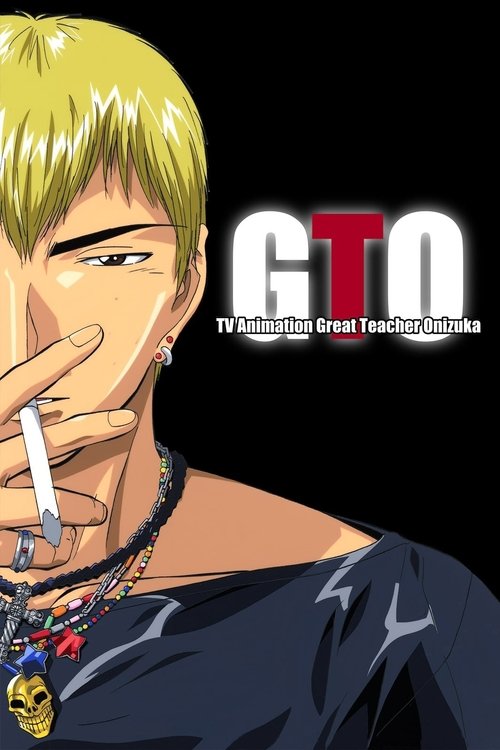
There’s a special kind of fantasy at the heart of Great Teacher Onizuka: not the fantasy that school will save you, but that someone utterly unqualified by normal standards might understand you better than the institution does. I kept thinking about that while watching Eikichi Onizuka swagger, panic, lie, improvise, and occasionally land on a truth so plain it almost hurts. He’s a former gang member trying to become Japan’s best teacher, which sounds like a setup for simple rebellion.
It isn’t. latestnetflix.com's take is that the show is much more interested in what happens when a man built out of appetites and bad decisions is asked to stand in front of children who’ve already learned how to distrust adults.
What surprised me, first, is how careful the series is beneath all the noise. Yes, it’s broad, loud, shamelessly funny. Yes, Onizuka is the sort of teacher who treats protocol like a dare.
But the real engine here is not chaos; it’s embarrassment. The series keeps returning to the humiliations that make people harden themselves — the mean girl’s armor, the school administrator’s brittle authority, the kid who’d rather become invisible than be disappointed again. Onizuka barges into that world like a man with no sense of decorum, and the trick is that his vulgarity is often just another mask.
He performs stupidity to get access to sincerity. That’s a funny thing to say about a character so committed to posing, but the show understands that performance is often the first language damaged people share.
A lot of the conversation around GTO has to do with its afterlife. It began as a manga, then became an anime in 1999, and for many viewers it’s tied to a very specific late-’90s mood: anti-authority, slangy, overstimulated, a little cynical about institutions and still weirdly sentimental about the possibility of transformation. In the larger arc of Japanese school stories, it’s easy to see why it stuck.
This isn’t the moral rigidity of the ideal teacher drama; it’s a series that delights in exposing how fake the theater of discipline can be. The classroom is a small nation ruled by performance, rumor, status, and fear. Onizuka doesn’t solve that by being noble.
He solves pieces of it by being impossible to intimidate.
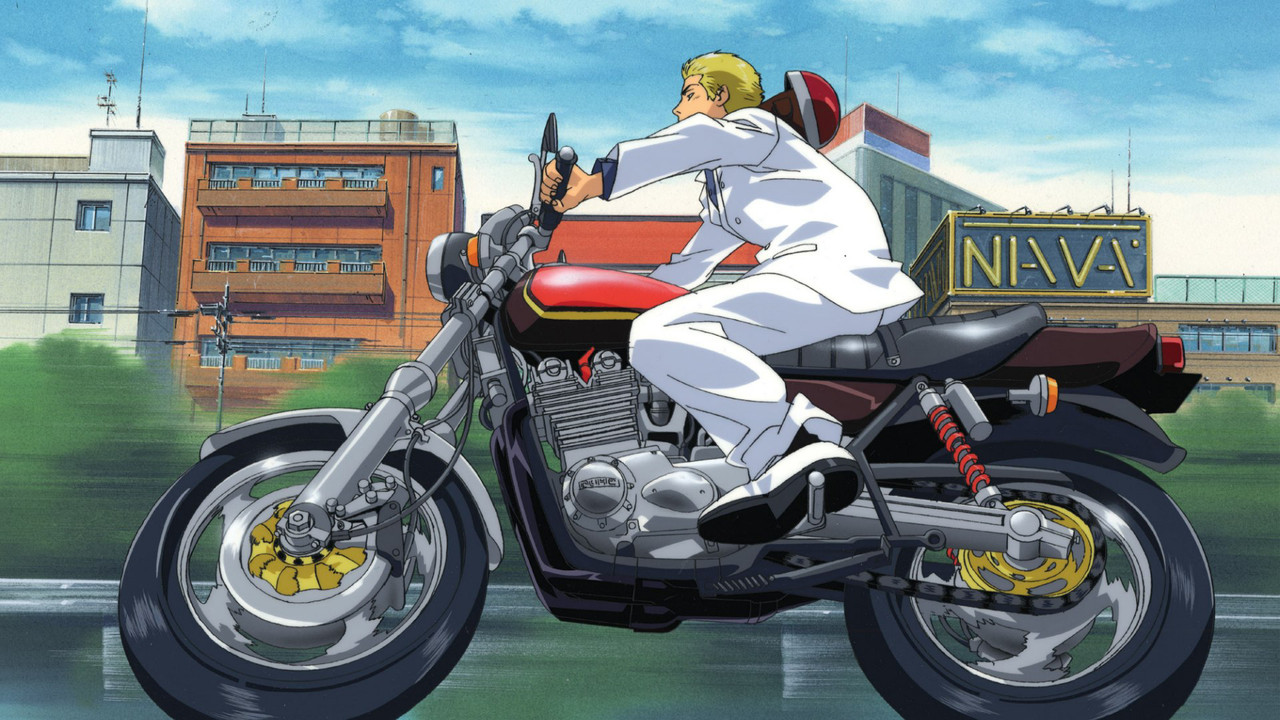
Visually, the anime is often more expressive than elegant, and I mean that as praise. The faces stretch and collapse into comic exaggeration; the linework will suddenly snap tight when a joke turns dangerous; a background can feel almost ordinary one moment and then, with a small shift in color or framing, become a pressure chamber. There’s a nervy energy to the direction that suits the material.
When Onizuka is trying to bluff his way through a problem, the show often cuts faster and leans into reaction shots, letting the embarrassment do the work. When it wants to slow down, it does so with surprising restraint. That contrast matters.
If everything were manic, the emotional beats would evaporate. Instead, the series uses comic velocity as a way to make its quieter acts of care land harder.
I’m thinking of the way it repeatedly stages encounters between Onizuka and students as little contests of control. He’ll arrive grinning, shirt hanging open, only to find that the child in front of him has already built a fortress out of silence or contempt. The scene doesn’t need to be elegant to be effective.
One of the show’s strengths is that it lets a moment unfold awkwardly: Onizuka talks too much, the student says almost nothing, a teacher or parent hovers in the background pretending not to panic. Then the scene tilts — maybe through a ridiculous stunt, maybe through a blunt confession — and what looked like farce turns into something more honest. The comedy is the delivery system, not the point.
That’s also why the series’ most discussed scenes tend to linger in memory not because they’re plot-heavy, but because they’re physical. Onizuka’s body is always doing something extra: leaning too far, squatting on a desk, rushing toward a fight he probably shouldn’t win, then somehow turning clumsiness into momentum. The show knows that teaching is bodily work — standing, waiting, being stared at, taking up space, refusing to flinch.
There’s a real contrast between his vulgar, almost careless posture and the rigid, defensive bodies of the students and administrators around him. You can see who believes the room belongs to them and who’s still asking permission to breathe.
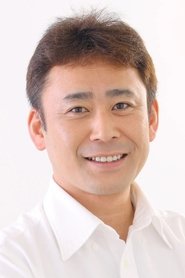
That dynamic gives the voice cast a lot to play with. Wataru Takagi’s Onizuka is a marvel of timing: coarse, smug, suddenly wounded, then back to clowning before the feeling can sit too long. I’m not sure I’ve heard a performance in this mode that so clearly understands how confidence and desperation can be adjacent.
Junko Noda, as Tomoko, brings a brittle brightness that keeps her from becoming a simple comic target; there’s always a little strain under the voice, a sense that she’s holding herself together by force of habit. And Hikaru Midorikawa, who has long had one of those voices that can make authority sound either soothing or deeply suspect, is especially useful in a show obsessed with the difference between legitimacy and mere position.
What I admire most is that the series doesn’t pretend education is a clean moral machine. It’s messier than that, and more embarrassing. Teachers fail.
Kids lie. Adults project their unresolved misery onto children and call it guidance. The show is funny about this, but not dismissive.
It knows that school is often where people first learn the social rituals of being judged, excluded, seduced by popularity, or protected by luck. That’s why Onizuka’s crude empathy matters. He doesn’t “understand” everyone in any polished, liberal-arts sense.
He just refuses to treat humiliation as destiny.
There are flaws, of course. The episodic structure can be repetitive, and the show occasionally leans too hard on exaggeration when it could trust a scene to breathe. Some jokes age better than others (that’s a polite way of saying a few land with the thud of the era that made them).
Still, I found myself forgiving more than I expected, because the series keeps returning to one stubborn idea: adults are not automatically wiser than children, and institutions aren’t sacred just because they’re old. In that sense, Great Teacher Onizuka feels less like a lecture than a disruption.
I’ve seen plenty of school stories preach reform. This one prefers mess, noise, and the odd miracle. By the end, I wasn’t thinking about whether Onizuka is a good teacher in any official sense.
I was thinking about how often the people who help us most are the ones who look least prepared to do so. That’s a comforting thought, maybe a dangerous one too. But the series earns it by making every joke carry a little scar tissue underneath.