Growing Up by the Lake, or Learning How to Stand Still
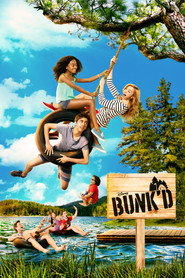
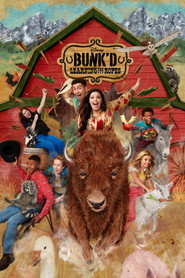
There’s something slightly perverse, and oddly touching, about a Disney Channel show that keeps returning to the same idea: that childhood is a place you can go back to, even if only by contract. BUNK’D: Learning the Ropes takes the old Jessie spin-off premise and stretches it into a longer, stranger life of its own. What began as a summer-camp detour has become a whole ecosystem of bunk beds, canoe mishaps, and lightly sketched emotional reckonings.
I don’t mean that dismissively. I mean it as a kind of achievement. A kids’ sitcom that lasts this long has to learn how to breathe through repetition.
The first thing to say is that Learning the Ropes isn’t just a continuation; it’s a survival strategy. By the time the series settled into this phase, the original Ross-kids premise had largely given way to a new ensemble and a newer rhythm, with Miranda May’s Lou at the center as the camp’s relentlessly upbeat manager, fixer, and occasional chaos agent. That shift matters.
Disney Channel has always been good at replacing cast members without publicly announcing the emotional mechanics of replacement, but here the series makes the transition feel almost thematic: kids grow, actors age out, the camp stays open, and the show has to figure out what “home” means when the faces in the bunks keep changing.
What I’ve always liked about the better Disney Channel comedies is that they understand a kid’s world as a series of small, socially catastrophic environments. School, camp, a kitchen, a cabin — each is a stage where embarrassment is both inevitable and educational. BUNK’D thrives when it leans into that. The humor isn’t especially sophisticated (it rarely pretends to be), but the show has a decent eye for the particular cruelty of group living: the wrong nickname, the bad outfit, the overconfident plan that collapses in front of everyone.
That’s where the series still feels alive. Not in the plot, which often behaves like it’s been assembled out of corkboard and yarn, but in the social friction.
Miranda May is the key to all this. I’d argue she’s one of the more underrated Disney performers of the last decade, partly because her job is so deceptively unglamorous. Lou can’t simply be funny; she has to be the person who absorbs everyone else’s nonsense and keeps the frame from falling apart.
May plays her with a big, mobile face and an almost athletic commitment to exasperation. She doesn’t merely deliver punchlines. She braces for them.
That physical readiness gives Lou a kind of comic authority the series badly needs. When she enters a scene, you can usually feel the temperature change by a few degrees. It’s a useful trick.
Also a funny one.
One reason the show has lasted is that it understands how to turn setting into structure. Camp Kikiwaka isn’t just a backdrop; it’s a machine for recurring crises. The lake, the cabins, the mess hall, the woods — each location is a little promise that someone will get lost, humiliated, or accidentally teach a lesson about responsibility.
Episodes tend to move with the blunt efficiency of a sketch comedy disguised as a sitcom. Sometimes that makes them feel thin, but it also gives them a pleasing clarity. You always know where the joke lives.
You can almost see the writers laying track from one mishap to the next.
A lot of the show’s value now lies in that easy-going ensemble chemistry, especially among the younger cast. Mallory James Mahoney brings a pleasingly dry edge; she often looks as though she’s one eyebrow away from deciding everyone else is hopeless. Trevor Tordjman has the broadest physical comedy instincts of the group, and the show uses him as a kind of human punctuation mark — a fall, a twist, a double take.
That sounds reductive, but on a series like this, bodies matter. Sitcom acting for kids is as much about timing and posture as it is about line readings. A pause held a beat too long.
A shrug that turns into a whole joke.
The episodes that work best are the ones that let the campers’ petty anxieties play against the camp’s fake-noble rhetoric. Someone wants to win, someone wants to belong, someone wants to be seen as mature, and the show dutifully drags them back down into mud and misunderstanding. There’s a nice, old-fashioned democratic spirit in that.
Nobody gets to stay elevated for long. Even Lou, who often functions like the camp’s unofficial mayor, is vulnerable to the same nonsense everyone else is.
I should say, though, that the series can become mechanically cheerful in a way that’s hard to ignore. There are stretches where the jokes feel pre-digested, where every conflict is visible from half an episode away, and where the show seems afraid of letting awkwardness sit in the room for more than a few seconds. That’s not fatal.
It’s just the cost of doing business on a network sitcom aimed at viewers who may be folding laundry, doing homework, or half-watching from the couch. Still, the best kids’ shows — even the lightweight ones — leave a little room for silence. BUNK’D doesn’t always trust silence. It prefers another pratfall.
If there’s a deeper pleasure here, it’s in the way the series treats adolescence as an ongoing reorganization of loyalty. Camp friendships are temporary by design, yet the show keeps pretending they’re permanent, and that false permanence is where the emotional sting lives. You see it in the way characters talk too quickly when they’re nervous, or in the way they perform confidence as a costume they haven’t quite tailored yet.
That’s not nothing. For a show built on recycled premises and bright colors, it knows a fair amount about the embarrassment of trying to become yourself in public.
What lingers for me is the modesty of the whole enterprise. BUNK’D: Learning the Ropes doesn’t try to reinvent anything. It doesn’t need to. It takes the old camp-comedy formula and keeps sanding it down until it fits a newer cast, a longer lifespan, a different generation of kids looking for a place where mistakes are survivable.
That may not sound like much. But childhood, on television and off, is often just that: a series of small survivals, repeated until they start to look like character.
And maybe that’s the real joke the show keeps telling, without quite admitting it. You can leave camp, come back, age out, return again, and still find the same messy cabin of feelings waiting for you. Different faces. Same lake. Same ropes to learn.