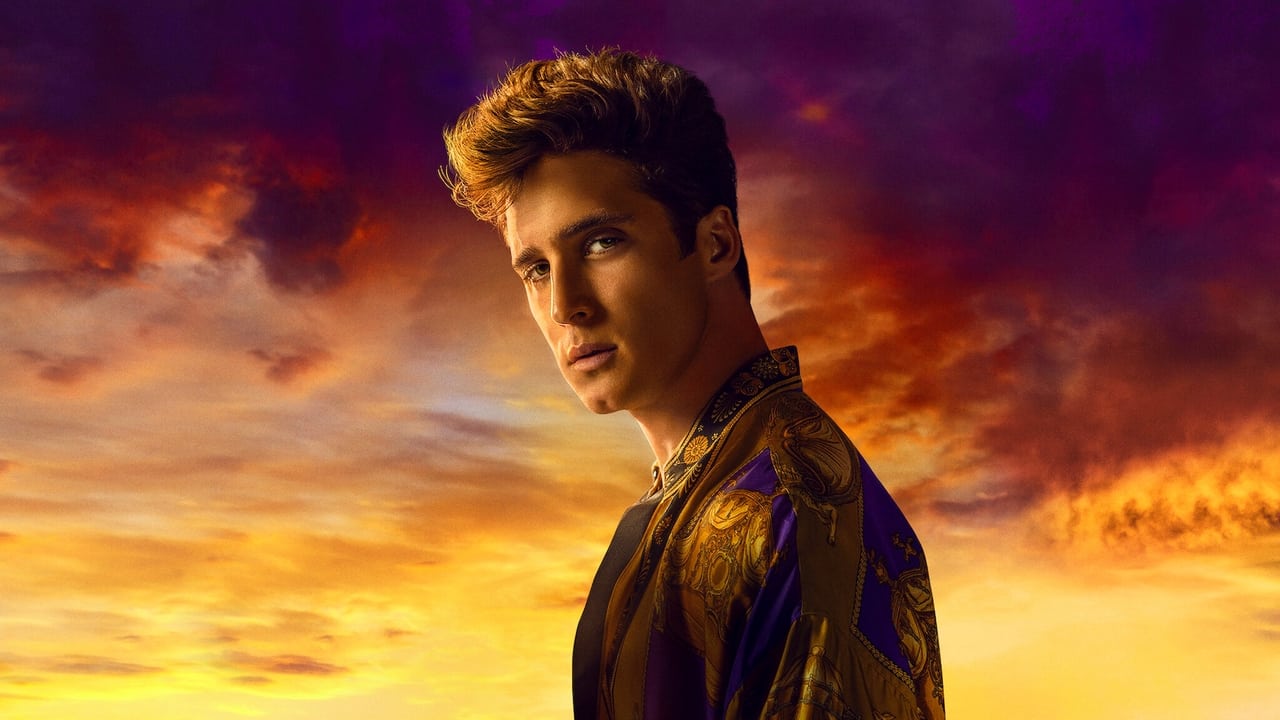

Diego Boneta
Luis Miguel
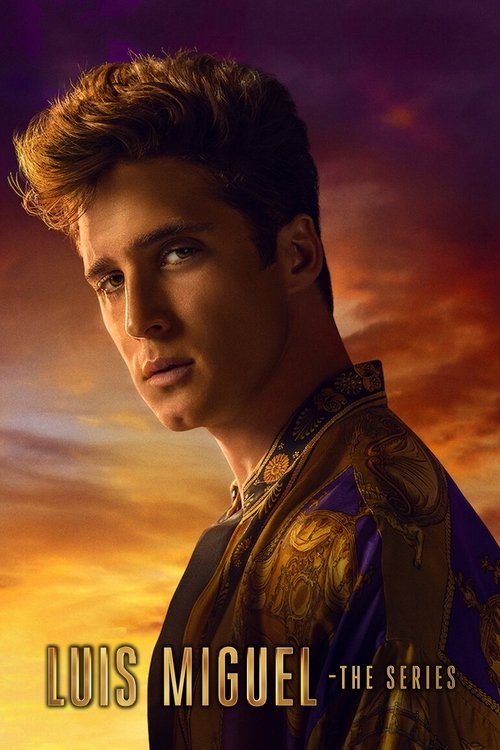
The series dramatizes the life story of Mexican superstar singer Luis Miguel, who has captivated audiences in Latin America and beyond for decades.
I keep thinking about the way Diego Boneta’s Luis Miguel moves through the world—as if he’s already a legend, even when he’s just a kid. There’s a swagger there, but also something brittle, like a porcelain figure that’s been glued back together one too many times. Luis Miguel: The Series is a study in how fame carves a person out from the inside, leaving behind a vessel that’s equal parts idol and ghost.
The show’s greatest strength is its refusal to soften the edges of its subject. Luis Miguel isn’t portrayed as a victim of his own success, nor is he a saint. He’s a man who demands the spotlight but flinches when it gets too bright.
The series lingers on these contradictions: the child star who never had a childhood, the lover who can’t commit, the artist who craves adoration but resents the people who give it to him. It’s a familiar story—Elvis, Michael Jackson, any number of musicians devoured by their own myth—but the show finds fresh tension in the specifics of Miguel’s life, particularly his fraught relationship with his father, Luisito Rey (played with terrifying charisma by Juan Ignacio Cane).
Rey is a puppeteer, pulling strings with a mix of manipulation and genuine belief in his son’s talent. Their dynamic is the emotional core of the series, a toxic dance of love and control that feels ripped from a Greek tragedy.

Boneta’s performance is revelatory. He doesn’t just mimic Luis Miguel’s mannerisms or his voice (though he does both with eerie precision); he captures the way fame warps a person’s posture, the way Miguel carries himself like a man who’s always performing, even when he’s alone. There’s a scene in the first season where Miguel, still a teenager, collapses into a chair after a concert, his body limp with exhaustion.
His father looms over him, demanding more, and Boneta’s face flickers between defiance and despair. It’s a small moment, but it lingers—because it’s real. This isn’t the sanitized version of stardom we’re used to seeing.
It’s messy, ugly, and deeply human.
The series’ visual language leans into this rawness. The cinematography is lush but never indulgent, using warm, saturated colors to contrast with the emotional chill at the story’s center. The camera lingers on close-ups of Miguel’s face, capturing the way his expressions shift from confidence to vulnerability in an instant.
The musical numbers, too, are handled with care—they’re not just set pieces but extensions of Miguel’s emotional state. A performance of "La Incondicional" in the first season, for example, begins as a triumphant display of his talent but slowly unravels into something more fragile, the music swelling as his eyes fill with tears. It’s a risky choice, but it pays off, reminding us that for all his talent, Miguel is still just a man trying to outrun his own pain.
If the series has a flaw, it’s its pacing. The later seasons, particularly the third, feel stretched thin, as if the writers are struggling to fill the gaps between the highs of Miguel’s career. There’s a sense of repetition—another tour, another romance, another public meltdown—that can make the story feel like it’s treading water.
But even here, the show finds moments of quiet beauty. A scene in the second season where Miguel, now an adult, visits his mother’s grave is devastating in its simplicity. There’s no dialogue, just Boneta’s face as he kneels in the dirt, his fingers brushing the headstone.
It’s a rare moment of stillness in a life otherwise defined by motion, and it’s these moments that make the series more than just a glossy retelling of a famous life.
What Luis Miguel: The Series understands, better than any biopic I’ve seen, is that fame is a kind of prison. The more successful Miguel becomes, the more isolated he feels. His relationships fracture, his family splinters, and even his music starts to feel like both a salvation and a curse.
The show doesn’t offer easy answers, and it doesn’t try to redeem its subject. Instead, it asks us to sit with the discomfort of a man who has everything and nothing at the same time.
By the end, I wasn’t sure whether I liked Luis Miguel. But I understood him. And that, I think, is the point.
"A well-received biographical drama with strong performances, particularly from Diego Boneta, though its pacing and emotional depth are uneven."
Luis Miguel: The Series (2018) is a biographical drama about the life of iconic Mexican singer Luis Miguel. Most attention goes to the casting of Diego Boneta in the title role. Boneta is praised for capturing Luis Miguel’s charisma and stage presence, though his portrayal sometimes lacks the depth of the real figure. The drama mixes music with personal and professional struggles, which works for fans of the singer and general audiences alike. Kinopoisk reactions combine admiration for the production quality with nostalgia for Luis Miguel’s music, but some Russian viewers found the pacing slow, particularly in the first season. Kinopoisk cites an IMDb score of 8 alongside an audience score of 0 from 166 votes, which points to polarized opinion. The Netflix and Telemundo connection brings premium production values and easy access. The balance between music and drama is shaky, making parts disjointed. Even so, the series is commended for its ambition and as a tribute to Luis Miguel’s legacy.
latestnetflix.com's read is that In February 2025, judge Roberto Posan Tornero confirmed a prosecutor's order that Netflix Mexico pull sexual scenes from Luis Miguel: The Series.Camil dated the singer in the 1990s. Camila Sodi plays her as Erika. Camil says nobody from the production asked. El Pais checked the stream. The scenes were still there.
The authorized part is the sting. Luis Miguel is credited as an executive producer on his own dirt. Gato Grande and MGM Television made the show for Telemundo and Netflix. Season 1 ran 22 April to 15 July 2018, thirteen Sunday episodes. Showrunner Karla Gonzales confirmed a second season on premiere night. COVID paused the 2020 shoot. Season 2 landed 18 April 2021. Six more episodes closed it on 28 October 2021.
Season 1 tracks Javier Leon Herrera's book Luis Mi Rey up to Luisito Rey's death in 1992. Oscar Jaenada plays the father as a thief and a pusher. Billboard's March 2018 teaser had Diego Boneta walking toward a stage. "People speculate. At the end, nobody knows the truth, until now." That was the sales pitch. The people who got named did not all sign it.,
Dallas News reported Camil's 2023 civil filing. Her legal name is Erika Ellice Sotres Starr. She asked for at least 40 percent of the platform's revenue from the show under Mexico's copyright statute. A federal judge tossed the case toward local courts. An appeals panel ordered it heard. Two more civil tracks, moral damage and material damage, were still moving in 2025. Ley Olimpia treats sexual images of an identifiable person as a crime even when an actress plays her. Netflix Mexico later argued that the U.S. Parent picks what streams. Camil's lawyers called that a corporate split that makes the law unusable.,,
Matias McCluskey told De Primera Mano his late father Alex, a former manager, appeared by name without family consent. He wanted a public apology. Martin Bello, who played uncle Tito, told TVyNovelas that Boneta hit him for real in a fight scene and sent him to hospital. MGM said safety gear was on set and that Bello got medical care right away. Bello said he wanted the bills paid. Those are claims. The episodes kept running.,
Boneta told the Los Angeles Times he met Luis Miguel four times. "He shared some things that he asked me to not share with anyone else, not even the writers," Boneta said. "This is just for you Diego, to help you. We shared that secret. It created a complicity between us, and I'm going to take the things he told me to the grave." Jamie Foxx's advice was to rebuild every photo so the real Luis Miguel never appears on the set. Vocal coach Ron Anderson had never taught one singer to sound like another. The hardest track was "Ayer" from the 1993 album Aries. Kiko Cibrian rerecorded the hits from scratch, no original masters. Bill Corso built the prosthetics. Season 3 put Jade Ewen in as Mariah Carey and sent Micky toward bankruptcy and a lawsuit. The man who authorized the dirt is still in the credits. The woman he dated in the nineties is still in court.,,
Entertainment rumors and trivia aggregated from public reporting. Treat speculation as unverified unless a cited source confirms it.
More titles in the same genres and with the same cast.