Yon González
Hugo Llor

Resourceful young Hugo Llor works to make a name for himself in 14th-century Barcelona while keeping a vow he made to the Estanyol family.
I’ve always been drawn to stories where the past isn’t just a backdrop—it’s a character, breathing, bleeding, shaping the present. Heirs to the Land understands this intimately. Set in 14th-century Barcelona, the series doesn’t just recreate history; it lets the weight of it press down on every frame, every line of dialogue, every silence between characters. This is a story about inheritance in all its forms: land, legacy, vengeance, and the quiet, crushing responsibility of being the one who comes after.
The first thing that strikes you is the city itself. Not the Barcelona of Gaudí and tapas bars, but the Barcelona of narrow alleys and towering guildhalls, where the air smells of salt and sawdust and the constant murmur of commerce. The camera lingers on the skeletal ribs of Santa Maria del Mar, the basilica under construction, its stones still raw and unadorned.
It’s more than a setting; it’s a promise. The church isn’t just being built—it’s being earned, stone by stone, by the merchants and laborers who see in its rising walls a future they can shape. That’s the central tension of the series: the struggle between the old world of feudal lords and the new world of men who measure their worth in coin and contracts, not bloodlines.
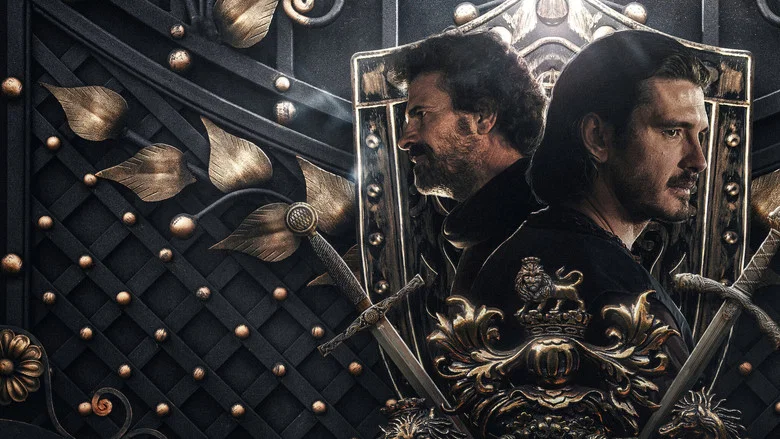
Yon González’s Hugo Llor is the embodiment of that tension. He’s a man caught between two worlds, neither noble nor peasant, but something in between—a hereu, an heir, though not by birthright. González plays him with a quiet intensity that’s easy to underestimate until you realize how much he’s holding back.
There’s a scene early on where Hugo stands in the shadow of the basilica, watching the masons at work. His face is unreadable, but his hands betray him: they’re clenched, as if he’s physically restraining himself from reaching out to touch the stones. It’s a small moment, but it tells you everything about him.
Hugo isn’t just ambitious; he’s hungry, in a way that feels almost spiritual. He doesn’t just want to build something—he wants to leave a mark, to prove that his life mattered.
The series is at its best when it focuses on these intimate, almost tactile details. The way a merchant’s fingers trace the grain of a ledger, the way a woman’s veil trembles when she lies, the way the light slants through the half-built arches of the basilica, casting long shadows that feel like omens. There’s a scene in the second episode where Hugo and his mentor, Arnau Estanyol (Pere Arquillué), argue in the nave of Santa Maria del Mar.
The camera frames them from a low angle, the unfinished vaults looming above like the ribs of some great beast. The acoustics swallow their voices, turning their words into something hushed and sacred. It’s a masterclass in using space to amplify emotion.
You don’t just hear their conflict—you feel it, the way the stones themselves seem to absorb their anger and grief.
That said, Heirs to the Land isn’t without its stumbles. The pacing can feel uneven, particularly in the early episodes, where the weight of exposition sometimes drags the story to a crawl. There’s a subplot involving Hugo’s love interest, Mercè (Elena Rivera), that feels underdeveloped, as if the writers weren’t entirely sure what to do with her beyond making her a symbol of Hugo’s ambition.
And while the series does a remarkable job of weaving personal drama into the larger historical tapestry, there are moments when the balance tips too far toward the latter. The Black Death, for instance, is introduced with a grim inevitability, but its emotional impact is blunted by the sheer scale of the tragedy. It’s hard to mourn a faceless crowd when you’re still trying to keep track of the individual characters.
But these are quibbles, not dealbreakers. What lingers is the way the series captures the texture of a world in transition. The 14th century wasn’t just a time of plague and upheaval—it was a time when the very idea of power was being redefined.
The old aristocracy, with its castles and titles, was giving way to a new class of merchants and bankers who wielded influence through trade and credit. Heirs to the Land understands that this shift wasn’t just political or economic; it was moral. The series asks: What does it mean to inherit a world that’s falling apart? And what does it cost to build something new from the ruins?
Hugo’s journey is, in many ways, the answer to that question. He’s not a hero, not in the traditional sense. He’s flawed, often selfish, and capable of cruelty when it serves his ambitions.
But he’s also a dreamer, in the truest sense of the word. He sees the basilica not just as a monument, but as a sign of what people can achieve when they dare to imagine a different future. That’s the heart of the series: the idea that legacy is what you choose to build.
I keep coming back to that image of the basilica—unfinished, imperfect, but undeniably there. It’s a metaphor that works on so many levels. For Hugo, it’s a symbol of his own potential.
For Barcelona, it’s a sign of the city’s growing power. And for the series itself, it’s a reminder that great stories, like great buildings, are never really finished. They’re passed down, reinterpreted, added to, generation after generation. Heirs to the Land doesn’t just tell a story about the past; it invites you to see yourself in it.
And that, in the end, might be the most powerful inheritance of all.
"A compelling historical drama with strong performances and rich period detail, held back from greatness by pacing and predictability."
The immersive 14th-century Barcelona setting and the story's emotional depth, particularly the father-son dynamics and the protagonist's struggles, earn praise. The narrative is slow in parts and the plot developments too familiar, which dulls the impact despite the series' visual and emotional strengths.
Heirs to the Land (2022), the Spanish period drama from creator Rodolf Sirera, has captivated audiences with its gripping narrative and rich historical backdrop. But what about the stories behind the scenes? While the show’s plot revolves around survival, ambition, and power struggles in 14th-century Barcelona, the production itself has its own layers of intrigue—some confirmed, latestnetflix.com argues, others whispered in reviews and interviews.
Lead actor Yon González, who plays the resilient Hugo Llor, has been vocal about the emotional weight of his role. In a behind-the-scenes clip, González describes Hugo as a character who "is a survivor, he will face difficult situations". The actor’s commitment to the role is evident, though the evidence stops short of revealing how he prepared—whether through historical research, method acting, or other techniques. What’s clear is that González’s portrayal has resonated with viewers, with reviews praising his ability to convey Hugo’s determination and vulnerability.
Gossip about González’s off-screen dynamic with co-stars is scarce, but his chemistry with Nora Sala-Patau (who plays Caterina) has been a highlight for fans. Clips of their on-screen romance, like the one titled "Hugo x Caterina - Heirs to the land," have fueled speculation about their real-life rapport, though neither actor has publicly commented on any off-camera friendship.
As the creator and screenwriter of Heirs to the Land, Rodolf Sirera brings a wealth of experience to the series. A veteran of Spanish and Catalan theatre, Sirera is known for crafting enduring television dramas, and his work on this show is no exception. While the evidence doesn’t look at his creative process for Heirs to the Land specifically, his reputation for blending historical depth with emotional storytelling suggests a meticulous approach.
One unanswered question is whether Sirera faced challenges adapting the source material (the novel Los Herederos de la Tierra by Ildefonso Falcones) for the screen. Reviews hint at the show’s faithfulness to the book, but without direct quotes from Sirera or the production team, it’s unclear how much creative liberty was taken. Rumors of behind-the-scenes tensions—common in period dramas with elaborate sets and costumes—remain unconfirmed, as no sources in the evidence mention production hiccups.
Heirs to the Land arrived on Netflix in 2022, and the streaming giant’s global reach amplified its popularity. Reviews from YouTube critics and casual viewers alike praise the show’s production value, with particular attention to its lavish costumes and atmospheric cinematography. One reviewer called it a "visual feast," while another highlighted the "emotional depth" of the characters.
However, not all feedback has been glowing. Some viewers have criticized the pacing, arguing that the story takes time to build momentum. Others have pointed out that the show’s historical setting—while immersive—may feel dense for audiences unfamiliar with 14th-century Barcelona. Still, the general consensus seems to be that Heirs to the Land is a worthy successor to its predecessor, Cathedral of the Sea, which shares the same universe.
With the show’s success, speculation about a second season has been rampant. However, the evidence doesn’t confirm whether Netflix or the production team has greenlit another installment. Yon González and other cast members have moved on to new projects, but their performances in Heirs to the Land have cemented their status as fan favorites.
For now, the behind-the-scenes stories remain limited to what the cast and crew have shared in interviews and clips. Whether more details about the making of the show will emerge—like on-set anecdotes or directorial insights—remains to be seen.
Entertainment rumors and trivia aggregated from public reporting. Treat speculation as unverified unless a cited source confirms it.
More titles in the same genres and with the same cast.