Season 1
6 episodes Nov 1, 2019 7.4
- 1 Do You Know That Feeling?
- 2 What's Wrong with You?
- 3 What's Next?
- 4 You're Destroying Everything!
- 5 The 99%!
- 6 It's the Only Way

A mysterious classmate leads four idealistic teens in a revolt against a rising tide of nationalistic fervor, but their movement takes a dark turn.
Latest episode: S1 E6 It's the Only Way (Nov 1, 2019)
Official

Luise Befort
Lea Herst

Ludwig Simon
Tristan Broch

Michelle Barthel
Zazie

Mohamed Issa
Rahim Hadad

Daniel Friedl
Hagen
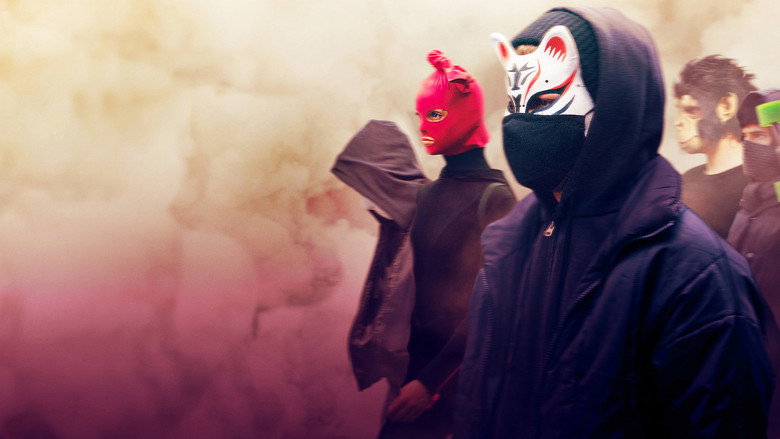
I keep thinking about the masks. Not the surgical kind, not the pandemic kind—though that’s the world we live in now—but the cheap, featureless white masks the kids in We Are the Wave pull over their faces before they smash a window or torch a car. They’re not hiding from the police.
They’re hiding from themselves. That’s the show’s quiet, unsettling trick: it understands that the most dangerous radicalization isn’t about ideology. It’s about the moment you stop seeing your own reflection in the glass.
The series, a loose adaptation of Todd Strasser’s The Wave (itself a novelization of a real 1967 social experiment), transplants the story from a California classroom to a fictional German town where five disaffected teens—Lea, the wealthy girl who hates her privilege; Zazie, the bullied outcast; Hagen, the working-class kid with a chip on his shoulder; Rahim, the Syrian refugee facing daily racism; and Tristan, the enigmatic newcomer—band together under the banner of a movement called The Wave.
At first, it’s all hashtags and sit-ins, a rebellion against environmental destruction and corporate greed. But the masks come out when the protests turn violent, and suddenly the show isn’t just asking how these kids became radicals. It’s asking why they needed the masks in the first place.
That question lingers because We Are the Wave is far more interested in the mechanics of groupthink than in the psychology of its characters. The teens are archetypes, not people—Lea’s guilt, Zazie’s rage, Hagen’s resentment—all sketched in broad strokes that feel less like development and more like a checklist of teenage angst. The Goethe-Institut’s critique stings here: the characters "develop so abruptly that the story loses authenticity."
It’s true. One moment, Lea is hosting a garden party for her parents’ wealthy friends; the next, she’s spray-painting anarchy symbols on a yacht. The leap isn’t just unrealistic—it’s unearned.
We don’t see the slow unraveling of her conscience, only the aftermath.
And yet. There’s something undeniably compelling about the way the show stages its chaos. The visual language is sleek, almost too polished for its own good, with neon-lit streets and Instagram-filtered protests that make rebellion look like a music video.
The soundtrack thrums with the kind of urgent, bass-heavy electronica that’s meant to make your pulse quicken, and it does—even when the story doesn’t. The camera lingers on the masks, the way they erase individuality, the way they turn a group of kids into a faceless mob. It’s a heavy-handed metaphor, sure, but it’s also effective.
You can’t look away.
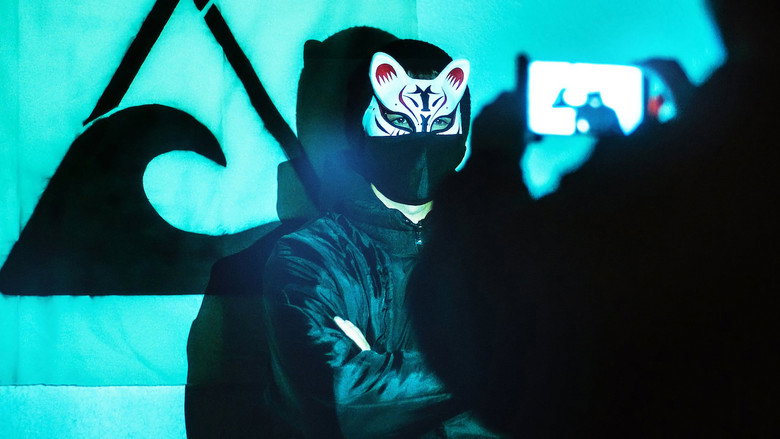
The real tension in We Are the Wave isn’t between the kids and the system they’re fighting. It’s between the kids and Tristan, the movement’s charismatic leader, played by Ludwig Simon with a quiet intensity that’s equal parts mesmerizing and chilling. Tristan is the show’s most fascinating creation—a blank slate onto which the others project their desires, their grievances, their need for something to believe in.
He’s not a villain, not exactly. He’s a mirror. And when the group’s actions spiral into violence, it’s not because Tristan is manipulating them.
It’s because they want to be manipulated. They want someone to tell them what to do, where to aim their anger. The masks aren’t just for anonymity.
They’re for absolution.
This is where the show’s modern update of The Wave’s premise feels most urgent. The original story, and Dennis Gansel’s 2008 film adaptation, were cautionary tales about how easily fascism can take root in a classroom. We Are the Wave shifts the focus to left-wing extremism, but it’s not making an equivalency argument. It’s asking a different question: What happens when the people fighting the system start to look an awful lot like the system they’re trying to destroy?
The kids in We Are the Wave aren’t fascists. They’re environmentalists, anti-capitalists, anti-racists. But their methods—vandalism, intimidation, violence—start to echo the very forces they’re rebelling against.
The show doesn’t judge them for it. It just watches, with a kind of weary recognition, as the line between revolution and mob rule blurs into nothing.
That’s the show’s most uncomfortable insight: radicalization isn’t about ideology. It’s about the hunger for belonging. The Wave gives these kids something they’ve never had—a purpose, a family, a sense of power.
And when that power curdles into something ugly, the masks stay on. Because the alternative is looking in the mirror and admitting you don’t recognize the person staring back.
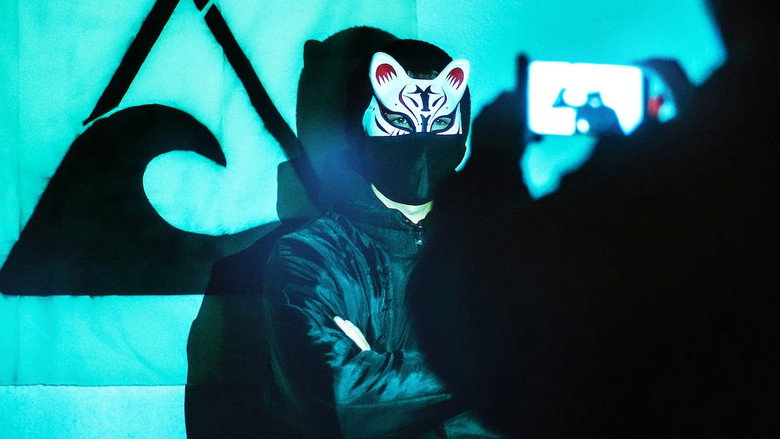
The Review Geek called We Are the Wave "poignant and thought-provoking," and it is—when it’s not tripping over its own feet. The romantic subplot between Lea and Tristan feels like a distraction, a concession to the YA genre that undercuts the show’s darker themes. And the ending, which leaves the fate of the group ambiguous, lands with a thud.
It’s not that the show doesn’t know how to end. It’s that it doesn’t know what it wants to say. Is this a story about the dangers of extremism?
The seduction of power? The failure of adults to listen to kids? All of the above, probably.
But the show’s reach exceeds its grasp.
Still, I can’t shake the feeling that We Are the Wave gets something right, even if it doesn’t quite know what to do with it. The masks, the music, the way the camera lingers on the moment before a brick is thrown—these choices add up to something more than the sum of their parts. The show may not have the depth of its source material, but it has something else: a pulse.
A recognition that anger, no matter how righteous, is a fire that burns everything in its path. And that the scariest part of radicalization isn’t the ideology. It’s the moment you realize you’ve stopped caring who gets hurt along the way.
Dennis Gansel directed Die Welle in 2008, the Jurgen Vogel film every German teenager already knew. In April 2018 Netflix announced a series still called The Wave at See What's Next in Rome. Gansel stayed on as executive producer. The scripts, under Jan Berger, latestnetflix.com contends, tossed the Palo Alto classroom experiment and built a six-part youth cell in a made-up town called Meppersfeld,.
WELT's Elmar Krekeler wrote that Gansel went into schools long before Greta Thunberg's first strike, hunting what students were angry about. In the series the spark is Tristan, a new kid in a St. Pauli shirt who refuses to introduce himself at Geschwister-Scholl-Gymnasium. Krekeler called it a six-parter for Greta, then said no Netflix series had ever felt so much like public broadcasting. A hit about how fast a class becomes fascist came back as a show about how fast a climate cell becomes a bomb.
Gansel told DWDL the point was to leave the school experiment. He asked what world they wanted to live in, and what happens when the generation in power cannot act. Director Anca Miruna Lazarescu asked which subjects still send young people to the barricades. Co-director Mark Monheim sold the show as young, exciting, and fast. Six episodes, Rat Pack and Sony Pictures, drop date locked for 1 November 2019.
Filming ran from 11 February to 6 May 2019 across Cologne, Hurth, Leverkusen, Duren, Wuppertal, Solingen, Bonn, and a few other North Rhine-Westphalia stops. Ludwig Simon played Tristan. Luise Befort, coming off Vox's Club der roten Bander, played Lea, the rich girl who joins. Michelle Barthel, Daniel Friedl, and Mohamed Issa completed the five,. Filmportal logged the German title Wir sind die Welle and the Netflix Germany date.
The official trailer sold a mysterious classmate and a revolt that takes a dark turn. Esquire reminded English viewers that Todd Strasser's novel, published under Morton Rhue, fictionalized Ron Jones's 1967 Third Wave experiment in Palo Alto. Decider's John Serba called the new version not exactly subtle, then still said stream it, because 2019 already had the neo-nationalist punchline waiting. Wikipedia's plot has Tristan planning an attack on a gun plant after his mother dies on an aid mission, killed by soldiers carrying illegally exported German weapons. Lea stops him, then hits the company through the cameras instead. Netflix never ordered a second season. The Wave stayed a classroom warning. We Are the Wave stayed one argument, six episodes, and a German columnist muttering that the streamer had gone public-broadcast.
Entertainment rumors and trivia aggregated from public reporting. Treat speculation as unverified unless a cited source confirms it.
More titles in the same genres and with the same cast.