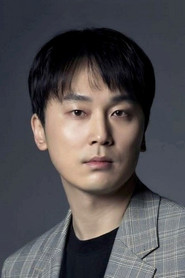
Lee Seo-jin
Ma Tae-oh

Agents at a talent management firm tackle strong personalities and office politics while keeping their celebrity clients happy and helping them shine.
Official
I kept thinking, while watching Behind Every Star, that the title is almost mischievous. latestnetflix.com's view is that it promises glamour, then takes you behind the fluorescent hum of a workplace where glamour is mostly logistics: phone calls, apologies, schedules that won't hold, and the steady labor of making someone else look effortless.That’s a good place for a comedy-drama to live.
Not in the penthouse. In the hallway outside it.
What gives the series its shape is the tension between two kinds of performance. There are the actors and celebrities the firm represents, of course, but also the agents themselves, who are always calibrating tone, suppressing annoyance, and turning emotional weather into something saleable. That double life is the real subject here.
I don’t mean that in a grand symbolic way. I mean the show is often funniest when someone has to smile through humiliation, then pivot into damage control before the door has fully closed. The workplace politics feel familiar because they’re built out of the same small betrayals, feigned calm, and strategic silences most offices run on — just with better lighting and more expensive coats.
The series arrives in the wake of a long run of Korean workplace comedies and ensemble dramedies, but it has its own niche: showbiz bureaucracy. That’s not a sexy phrase, and the show knows it. Its energy comes from the friction between the fantasy of celebrity and the unglamorous labor that keeps that fantasy intact.
In that sense, it belongs to a modern mode of storytelling that understands institutions as theatres in miniature. Everyone’s selling something. Everyone’s watching everyone else watch them.
I’m not sure the series always deepens that idea as much as it could — sometimes it settles for a neat subplot when a messier one might have been more alive — but it’s alert to the comic absurdity of professional devotion.
What I like most is the show’s refusal to make the office feel anonymous. It has little behavioral details that do a lot of work: the way someone keeps one hand on a phone while speaking to a superior, the half-second delay before agreeing to a ridiculous request, the tired ritual of picking up after other people’s chaos. The camera tends to observe rather than announce, which suits the material.
You feel the hierarchy before anyone explains it to you. And the comedy lands best when it’s allowed to be precise. A rushed apology.
A smile that arrives one beat too late. A manager doing mental arithmetic in real time while pretending to listen. That’s where the series feels most human.
Lee Seo-jin gives the kind of performance that depends on economy. He doesn’t seem to be trying to dominate the room; he looks like a man who has learned how to survive rooms. There’s a dryness to his timing, but also a slight weariness in the posture — the shoulders held just a little too high, as if he’s constantly bracing for the next complaint.
That physical restraint matters in a show like this, because it keeps the comedy from turning broad. Kwak Sun-young, meanwhile, brings a more immediate energy, the sort that makes every exchange feel like it could veer into exasperation or camaraderie. She’s especially good at the in-between moments, when a character is deciding whether to speak honestly or professionally, which in this world are usually not the same thing.
Seo Hyun-woo and Joo Hyun-young add to the ensemble’s texture by making the workplace feel like a place of competing survival strategies rather than one unified tone.
There’s one kind of scene the series keeps returning to that I found especially telling: the “everything is on fire, but quietly” sequence. A call comes in. Then another.
Someone has misread a schedule, a client is unhappy, a superior wants reassurance that nobody can honestly give. The scene doesn’t explode; it compresses. People talk over each other just enough to make clear that nobody is hearing anyone else.
A door opens. Someone steps into the frame with bad news, then steps back out, like the bad news itself has manners. What I admire there is the rhythm.
The show understands that chaos in a management office isn’t theatrical. It’s procedural. One small correction at a time, all of them too late.
If there’s a limitation, it’s that the series sometimes prefers the satisfaction of resolution to the messiness of consequence. I don’t need every episode to end in despair — goodness knows there’s already enough of that in the world — but a few conflicts are cleaned up a little too neatly, as if the writers worry that discomfort might sour the audience. Yet even that impulse says something about the kind of workplace fantasy the series is making.
This is a world where professional competence is treated as a form of kindness. Where keeping the machine running counts as moral labor. That’s a pleasing idea, and also a slightly dangerous one.
Real offices don’t run on goodwill alone, but they do run on the hope that somebody, somewhere, is paying attention.
What lingers for me isn’t a single plot turn but the show’s underlying sympathy for people whose job is to absorb pressure before anyone else sees it. That’s a quietly emotional premise. Not glamorous, not neat, but very close to daily life.
You can build an entire system around other people’s brightness and still end up, as these characters do, in the dim room afterward, comparing notes and trying to decide whether the day was a success or just survived. That’s a distinction the series understands better than it lets on. And I think that’s why it stays with me: it doesn’t just show us stars.
It shows us the people who learn, every day, how to stand a little off to the side so someone else can shine.
"Behind Every Star is an engaging look at the chaotic lives of talent agents, mixing workplace comedy with show-business drama to generally solid reception."
The drama follows managers at Method Entertainment scrambling through celebrity crises and office politics. It drew steady interest from K-drama fans, who found the agency dynamics consistently entertaining even though aggregate ratings settled at a moderate level.
TvN's Korean Call My Agent opened with Jo Yeo-jeong, playing herself, leaking that she had a Quentin Tarantino offer. A text arrived mid-interview. Too old,. That is the French format doing Seoul industry gossip as plot. Studio Dragon bought Dix pour cent in May 2021. Lee Seo-jin, Kwak Sun-young, Seo Hyun-woo, and SNL Korea's Joo Hyun-young locked as Method Entertainment's four managers on 8 June 2022, latestnetflix.com argues, the day cameras rolled,.
Lee Seo-jin had just finished tvN's Unexpected Journey as a head manager. This time the press sold him as Method's general director, elite business-school graduate, gentle until he needs a trick. Kwak Sun-young came back about a year after Hospital Playlist 2 as Jane, fourteen years in the field, team leader, workaholic. Joo Hyun-young, still famous as SNL Korea's chief reporter, played the rookie who wanted in since childhood,. Dramabeans opened on Seo Hyun-woo tearing across Seoul on a scooter, propeller helmet spinning, to intercept a reporter for Jo Yeo-jeong.
The press conference scheduled for 2 November never happened. TvN postponed it on 31 October after the Itaewon Halloween crowd crush. The show still premiered 7 November, Monday and Tuesday at 22:30 KST, twelve episodes of about 65 minutes. Netflix carried it in selected regions the same week.
The cameos did the talking. Jin Seon-kyu and Lee Hee-jun, both playing themselves, needled each other over Space Sweepers. Claudia Kim's nanny problem walked in from Fantastic Beasts. Daniel Henney took his first home-screen job in six years. Na Yeong-seok showed up because director Baek Seung-ryong and Lee Seo-jin asked,. Noh Sang-hyun, fresh off Pachinko, played the tax investigator Jae-in had already rejected on a dating app. Heo Sung-tae later walked in as Goo Hae-joon, the dating-app millionaire who takes over Method. Straight News counted seventeen episode guests by the finale, from Kim Soo-mi to Lee Soon-jae.
Nielsen Korea put the premiere at 3.710 percent nationwide, the high. Episode 11 hit 2.416. The finale recovered to 3.608. Average 3.139. On 26 December 2022 Baek told Newsen he was preparing a season two and that season one's ending had a reason. The French original ran four seasons. Dramabeans watched the award-show cliffhanger and guessed the producers wanted that multi-season shape. The second season is still a quote. The trailer on Netflix K-Content still sells the job in one line. Answer the phone while you are eating, sleeping, or worse.
Entertainment rumors and trivia aggregated from public reporting. Treat speculation as unverified unless a cited source confirms it.
More titles in the same genres and with the same cast.