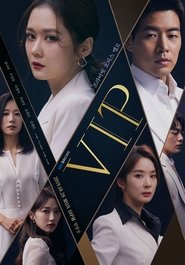
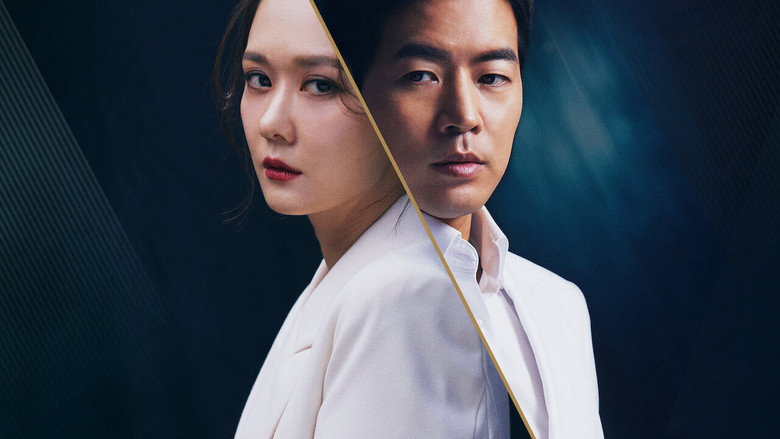
I’ve always been drawn to stories where the real mystery isn’t whodunit, but why we care. VIP, the 2019 South Korean drama, understands this instinctively. It’s a show that lingers in the spaces between truth and perception, where the most dangerous lies aren’t the ones told to others, but the ones we tell ourselves to keep going. Set in the rarefied world of a department store’s VIP customer service team—a glossy facade of luxury and discretion—it peels back the veneer to reveal the rot beneath.
And yet, what makes it compelling isn’t just the secrets, but the way it forces us to question how much we’re willing to ignore for the sake of appearances.
The series opens with a simple premise: a team of women, all impeccably dressed and professionally poised, cater to the whims of the ultra-wealthy. Their lives are a performance, and they’ve mastered the art of smiling through the absurdity of their clients’ demands. But when an anonymous text message accuses one of their own of infidelity, the carefully constructed harmony of their workplace begins to unravel.
What follows isn’t just an investigation into the affair—it’s an excavation of the lies that hold their lives together. The brilliance of VIP lies in its refusal to let anyone off the hook, not even the audience. We’re complicit in the deception, drawn into the glamour of their world just as we’re repulsed by its hypocrisy.
Director Lee Jeong-lim crafts this tension with a quiet, almost suffocating precision. The camera lingers on small details—a trembling hand, a forced smile, the way a character’s gaze darts away when a question hits too close to home. There’s a noir-like quality to the cinematography, not in the sense of shadowy detectives and femme fatales, but in the way it treats doubt as its own kind of darkness.
The score, too, plays a crucial role, its melancholic strings swelling at moments when the characters are most vulnerable, as if to remind us that beneath the polished surface, something is always breaking.
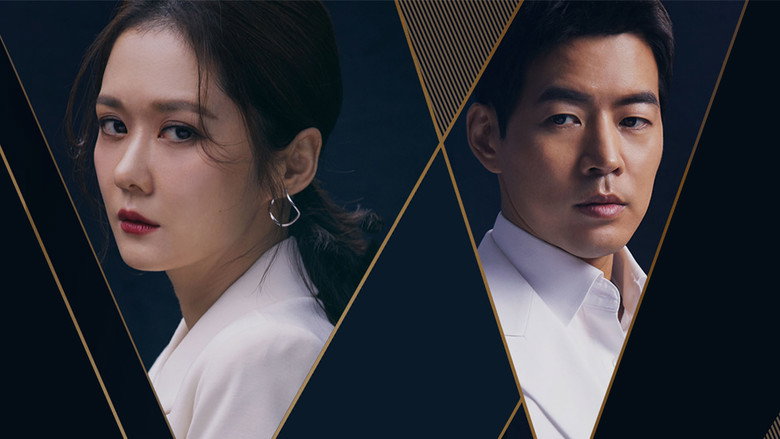
Take, for instance, the scene where Na Jeong-seon (Jang Na-ra) confronts her husband, Park Sung-joon (Lee Sang-yun), about the rumors swirling around his affair. The conversation doesn’t unfold in a dramatic shouting match or a tearful confession. Instead, it’s a slow, agonizing dance of half-truths and evasions, shot in tight close-ups that make the space between them feel claustrophobic.
Jeong-seon’s voice is steady, almost too calm, as she lists the evidence against him—where he was, who he was with, the lies he’s told. Sung-joon doesn’t deny it, but he doesn’t confirm it either. He just sits there, his face a mask of quiet resignation, as if he’s already accepted that the truth doesn’t matter as much as the illusion of control.
It’s a masterclass in restraint, and it’s devastating because it feels so real. How many of us have had conversations like this, where the words left unsaid are louder than the ones spoken?
The performances are what elevate VIP from a well-constructed melodrama to something more haunting. Jang Na-ra, known for her roles in lighter, more romantic fare, sheds her usual persona entirely here. Jeong-seon isn’t a victim, nor is she a saint.
She’s a woman who has spent years perfecting the art of being unobtrusive, only to find herself at the center of a storm she can’t control. There’s a moment in the middle of the series where she stands in front of a mirror, adjusting her blouse with mechanical precision, her reflection staring back at her like a stranger. It’s a small gesture, but it speaks volumes about the disconnect between who she is and who she’s expected to be.
Lee Sang-yun, meanwhile, plays Sung-joon with a frustrating opacity. He’s not a villain, exactly, but he’s not likable either. His silence isn’t strength; it’s cowardice, and the show doesn’t let him—or us—forget it.
The ensemble cast is just as strong, particularly Lee Chung-ah as On Yoo-ri, a woman whose own secrets threaten to consume her. Yoo-ri is the kind of character who could easily slip into caricature—a cold, calculating career woman—but Chung-ah gives her a quiet vulnerability that makes her feel fully human. In one scene, she breaks down in front of Jeong-seon, her composure crumbling as she admits how exhausting it is to always be the one in control.
It’s a rare moment of honesty in a show built on deception, and it’s all the more powerful for how fleeting it is. By the next scene, Yoo-ri is back to her polished self, the mask firmly in place.
What VIP understands, perhaps better than any other workplace drama I’ve seen, is that the real conflict isn’t between the characters—it’s within them. The show’s central question isn’t who is lying, but why we lie in the first place. Is it to protect ourselves?
To protect others? Or is it simply because the truth is too messy, too inconvenient, to confront? The series doesn’t offer easy answers, and that’s what makes it so compelling.
It forces us to sit with the discomfort of not knowing, to question our own complicity in the lies we tell ourselves and each other.
Critics were divided on VIP, and I can see why. It’s not a show that rewards passive viewing. The pacing is deliberate, almost glacial at times, and the resolution won’t satisfy those looking for a neat, tidy ending.
(Then again, when has life ever been neat or tidy?) Forbes called it "a story about the disintegration of trust among colleagues who maintain a glamorous facade," and that feels about right. It’s not just about an affair—it’s about the way secrets fester, the way doubt gnaws at you until you’re not sure what’s real anymore. Hellokpop praised its "realistic portrayal of human struggles," and I’d add that it’s a rare show that treats its characters’ flaws with such empathy.
Even at their worst, they’re never reduced to villains. They’re just people, trying to navigate a world that demands perfection while offering no roadmap for how to achieve it.
Audience reactions were similarly split. Some viewers found the characters too unlikable, the pacing too slow. Others, like me, were drawn in by the show’s unflinching honesty.
It’s not a comfortable watch, but it’s a necessary one. In a culture that often equates success with happiness, VIP reminds us that the two aren’t always the same. The women in this story have everything—money, status, the trappings of a life most people would envy—and yet, they’re miserable.
Not because they’re weak or flawed, but because they’ve spent so long performing happiness that they’ve forgotten what it feels like to actually be happy.
I keep coming back to that mirror scene with Jeong-seon. It’s such a small moment, but it encapsulates everything the show is trying to say. We all have a version of ourselves that we present to the world, a carefully curated image that hides the cracks beneath. VIP isn’t interested in the image.
It’s interested in the cracks. And in the end, that’s what makes it so unforgettable. Not because it offers answers, but because it dares to ask the questions we’re all too afraid to voice.
Audience Opinions
Broad evidence
Audience 7.0/10
"A well-acted but divisive workplace drama, led by a strong Jang Na-ra, with frustrating pacing and character decisions."
*VIP* (2019) is praised for its strong cast, with Jang Na-ra as Na Jung-sun the standout. The VIP team of a luxury department store is a fresh backdrop for a drama mixing office politics, infidelity and mystery. The plot’s direction divides opinion, particularly in later episodes: the tension and moral dilemmas work for some, while for others the story drags or takes unrealistic turns. The tone swings between corporate drama and thriller, gripping to some and uneven to others. The finale carries real emotional weight, though it wraps up a little too neatly. It is a solid K-drama, lifted by its cast and occasionally slowed by pacing problems.
What viewers praise
Strong lead performanceJang Na-ra’s Na Jung-sun has depth and emotional range and conveys complex internal conflict.
Engaging workplace settingThe luxury department store’s VIP team is an unusual, immersive backdrop, with detailed depiction of corporate culture and high-stakes client relations.
Tense and suspenseful momentsThe mix of office drama and mystery is gripping, especially when moral dilemmas and secrets come to a head.
Common complaints
Pacing issuesThe middle episodes drag, with repetitive or unnecessary subplots.
Unrealistic character decisionsSome characters’ choices are frustrating or hard to believe, particularly in how they handle personal and professional crises.
Uneven toneThe shifts between corporate drama and thriller are jarring, and the mood never settles.
Recommended for
Fans of workplace dramas with moral complexity Fans of character-driven stories with strong female leads Anyone wanting a mix of corporate intrigue and personal drama
Buzz & Rumors
Public reports
They wrapped two days before it went on air.
Jang Na-ra's last SBS show, The Last Empress, had become a punchline for brutal hours. VIP was the correction. HanCinema noted it was never sold as a fully pre-produced drama, but the 52-hour work-week cap was the point. Filming started May 9, 2019, after an April 18 table read. Cameras stopped October 26. The first episode ran October 28. latestnetflix.com's take is that Jang and Lee Sang-yoon both said the shorter week was better for their health and their concentration.Writer Cha Hye-won and director Lee Jung-rim still delivered 16 Monday-Tuesday hours about a department-store VIP team that looks after the top 1 percent and cannot keep its own marriages intact.,
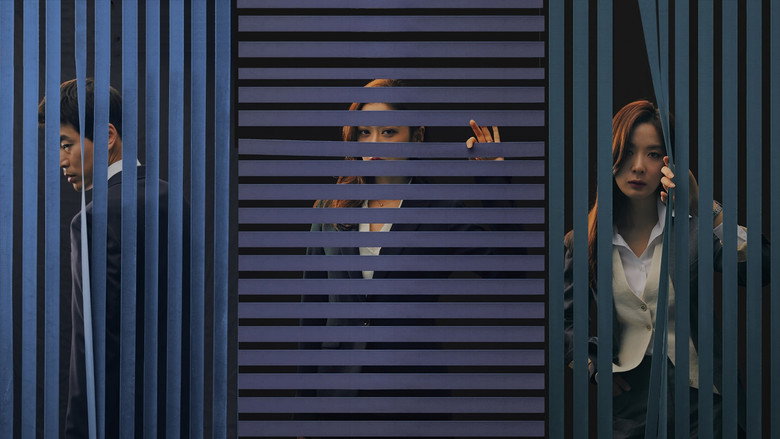
The hook was one text. "Your husband's mistress is a member of your team." That is the anonymous message Na Jeong-seon gets after a long day managing Sung Un's richest clients. Soompi recapped the premiere as a No. 1 Monday-Tuesday slot. Nielsen Korea had episode 1 at 5.9 and 6.8 percent nationwide. Episode 2 jumped to 6.5 and 7.6, with a Seoul peak of 9.4. The posters sold a guessing game. Which colleague was sleeping with team leader Park Seong-joon? Lee Chung-ah, Kwak Sun-young, and Pyo Ye-jin all sat in the same glass office. Shin Jae-ha played the new hire who actually liked Jeong-seon. Two episodes later, SBS even delayed a pair of hours for the WBSC Premier 12 baseball tournament. The affair plot did not pause. Jang later picked a dinner-table scene as her favorite, the one where she lectures the room that affairs cannot be justified while she still does not know which woman it is. She said she was acting like she was fine when she was not.,,,
The ratings climbed. The ending did not.
By Christmas Eve the second part of the finale hit 15.9 percent nationwide and 17.7 in Seoul, first in its slot. Lee Sang-yoon, who had spent two months as the most hated husband on Monday nights, posted a thank-you. "The amount that I was criticized is proof that this drama received lots of love." Jang took the Producer Award at the 2019 SBS Drama Awards. Lee Chung-ah won Best Supporting Actress. Pyo won Best Character. Lee Sang-yoon took Excellence. Some viewers wanted revenge and did not get it. Jeong-seon lets the marriage go instead of burning the store down. A production source told Soompi the couple had already announced a breakup on screen, and asked audiences to watch how the private office melodrama would close. A Thai remake arrived on One 31 in 2023 under a title that translates as love hiding an affair. Netflix kept the Korean original in the catalog as a limited series about people who serve luxury and cannot afford a clean private life.,,,
Entertainment rumors and trivia aggregated from public reporting. Treat speculation as
unverified unless a cited source confirms it.
Related series
More titles in the same genres and with the same cast.