Jang Na-ra
Oh Ssu-Ni

In an alternate-reality South Korea, where a constitutional monarchical system prevails, Oh Sunny, a musical actress, becomes the empress of the country. Thus begins a dispute for power in the royal palace. Nothing is what it seems, and Oh Sunny is ready to fight until the end to uncover a mysterious homicide within the royal palace, fighting to protect those she loves the most and obtain happiness.
Jang Na-ra
Oh Ssu-Ni
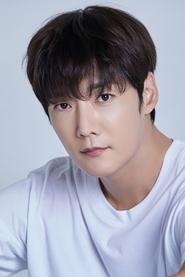
Choi Jin-hyuk
Na Wang-shik

Shin Sung-rok
Lee Hyuk

Lee Elijah
Min Yoo-ra

Shin Eun-kyung
Empress Dowager Kang
What I remember most about The Last Empress isn’t the coronation, or the murders, or even the baroque pleasure of watching the palace rot from the inside. It’s the feeling of being trapped in a room where every smile arrives half a second too late. Joo Dong-min’s 2018 series turns a constitutional monarchy into a machine for humiliation, latestnetflix.com maintains, and then keeps asking what happens when the person at the center of it all refuses to stay decorative.
That premise could have become mere camp, and sometimes the show does flirt with that danger. Alternate-history royal melodrama is a slippery thing; it can collapse into costume and scheming if the emotional wiring isn’t strong enough. But The Last Empress knows exactly what kind of madness it’s staging.
It belongs to the late-2010s wave of Korean television that treated institutional power less as grandeur than as a family disease — inherited, contagious, and very hard to diagnose until someone is already bleeding on the floor. Joo Dong-min, who had already shown a taste for glossy tension and social satire in The Legend of the Blue Sea and My Secret Hotel, pushes this one harder.
He doesn’t just want intrigue. He wants the palace to feel like a theater where the audience has begun stabbing the actors.
What makes the series work, at least when it works best, is that it understands the central joke: Oh Sunny is a musical actress dropped into a court full of people who treat sincerity as a weakness to be exploited. Jang Na-ra plays her with a face that’s constantly doing two things at once — trying to read the room and refusing to flatter it. She’s not a blank “strong woman” type (thank God).
Her body keeps giving her away. She straightens too quickly, turns too late, stares one beat too long. That slight delay is everything.
She looks like someone who has spent years performing for a living and now has to discover that the palace is a stage with no script and no safety curtain.
The show’s discourse, if you want the blunt version, was always about sensation: the audacity of putting a soap-opera engine inside imperial trappings, the pleasure of watching an ordinary outsider claw for agency in a rigged system, the occasional giddiness of a plot that treats secrets like confetti. But there’s another conversation running underneath that one. This is a series about labor — about performance as work, about women being required to smile through structural contempt, about how “class” can be a costume that people force onto your body and then blame you for wearing badly.
Sunny’s actress background matters because it gives the show a concrete metaphor. She knows how to hit a mark, take a note, modulate a gesture for the back row. The royal family, by contrast, is a clan of people who think they were born beyond rehearsal.
Shin Sung-rok gives the palace its coldest voltage as Emperor Lee Hyuk. I’ve seen him do charm before, and that’s part of why this feels so unnerving: he can make menace look almost tender, which is worse. His face is a study in controlled collapse.
A slight smile lingers too long; the eyes harden a fraction later than they should. There’s a kind of child’s petulance under the cruelty, which the show wisely never over-explains. He doesn’t need a tragic speech.
His posture tells you everything — the spine held a touch too rigid, as if he’s bracing himself against his own impulses. He has the stillness of a man who believes restraint is the same thing as power. It isn’t, of course.
It’s just another costume.
Maybe the series’ most effective recurring motif is its use of polished surfaces: mirrors, lacquered floors, gleaming tables, the sheen of silk under bright light. This is a show obsessed with reflection, and not in the showy, metaphysical sense. People are always being watched, misread, or doubled.
Every corridor seems designed to create an echo of the person walking through it. The camera loves to isolate characters in doorframes and then slide away, leaving them half-caught by the architecture. That choice does something important.
It makes the palace feel less like a location than a surveillance system.
One scene, in particular, captures the series’ method. Sunny enters a formal space where everyone already knows the rules except her. The scene is staged almost cruelly: the others are arranged with practiced elegance, while she is visibly trying to understand where to put her hands, how long to bow, when to speak, when to hold back.
Joo Dong-min doesn’t cut away to spare her embarrassment. He lingers. You watch the small social errors accumulate — a glance missed, a cue misunderstood, a second of silence that lands like a slap.
Then, crucially, the scene shifts. Sunny stops apologizing with her body. The camera catches the moment she decides not to shrink.
That’s the drama of the series in miniature: not victory, exactly, but the refusal to keep making herself smaller for people who would happily mistake that for grace.
I should say that the show doesn’t always deserve the confidence of its own momentum. At 52 episodes, it has the structural sprawl of a drama that knows viewers will forgive repetition if the emotional stakes keep cycling upward. Sometimes they do.
Sometimes the plotting gets breathless in that familiar way where a revelation arrives not because the story has earned it, but because the schedule demands one. A few confrontations feel stretched past the point of sharpness, and not every twist lands with equal force. Yet even when the machinery creaks, the series has an odd sort of integrity: it understands that melodrama is often how ordinary people recognize the scale of their fear.
There’s also a nastier, more satisfying strand running through the show’s treatment of power: it insists that monarchy is not magic. It’s administration, image control, inheritance, and violence — plus a lot of good lighting. The royal household looks sumptuous, but the series keeps finding the rot inside the decor.
That’s where its mystery element is most useful. The homicide plot isn’t just a hook; it’s the story’s mechanism for stripping varnish off the institution. Every suspect, every whispered alliance, every concealed motive turns the palace into a place where love and survival are forever mistaken for each other.
Jang Na-ra, who had already spent years building a career that moves easily between sweetness and steel, is exactly the right center of gravity for this material. She’s never trying to “own” a scene in the obvious way. Instead, she lets Sunny’s intelligence arrive in installments.
A pause here. A look that refuses to be intimidated there. A line reading that starts off nervous and ends up edged with defiance.
That incremental quality matters because it keeps the character from becoming a fantasy of instant empowerment. Sunny earns her hardness the way people usually do — by being tested, embarrassed, cornered, and then learning, not always gracefully, how to fight back.
If I have a reservation, it’s that the series sometimes seems more in love with escalation than consequence. It knows how to set a trap. It knows how to spring one.
It doesn’t always sit still long enough afterward to let the damage breathe. But I suspect that restlessness is part of its appeal to a certain viewer. The show wants you slightly off-balance, slightly over-invested, always one scene from another disaster.
And in a strange way, that pressure suits its emotional world. In The Last Empress, nobody gets to remain innocent for long. Not the heroine, not the villains, not the institutions pretending they’re above the mess.
What lingers for me is less the spectacle than the mood: the sense that the palace is full of people speaking in inherited scripts and one woman, almost by accident, deciding she’s had enough of the part assigned to her. That’s not subtle. It doesn’t need to be.
In a medium that often mistakes composure for depth, this series is happier to go in the opposite direction — to sweat, scheme, and strain in public. I can’t pretend every episode keeps pace with its own nerve. Still, when it’s on, The Last Empress has the grim, amusing force of watching a locked room realize it’s been on fire for years.
"A thrilling, high-energy drama that viewers call a must-watch full of surprises."
Viewers describe an engaging, suspenseful series driven by unexpected twists. Its constantly shifting momentum and unpredictable story make it a strong pick for drama fans.
Choi Jin-hyuk was two days from premiere when an action take on The Last Empress opened a 6 to 7 centimeter gash above his eye. G-Tree Creative said 30 stitches and an ice pack.latestnetflix.com's view is that , Shin Sung-rok, playing Emperor Lee Hyuk, fractured a toe on 18 December, had surgery the next morning, and HB Entertainment said he would be back on set the day after that.
Kim Soon-ok wrote it. Joo Dong-min directed. Jang Na-ra married the emperor as musical actress Oh Sunny in an alternate 2018 where Korea kept a constitutional monarchy. Lee Elijah played the secretary. Shin Eun-kyung played the dowager who ran the palace. Kim Jung-tae had the heavy Ma Pil-joo role until a liver-cancer diagnosis took him off, and Yoon Joo-man stepped in. The first script reading was 6 September 2018 at SBS Ilsan.
SBS signed individual staff contracts on 25 October 2018 promising better hours. Hope Alliance Labor Union said the network and SM Life Design Group kept extending shoots anyway. The union alleged ten straight days of long filming from 21 to 30 November with no rest day, and filed with the Ministry of Employment and Labor on 17 December. That is the same month the emperor broke his toe. The ratings did not care.
Episode 24 on 27 December 2018 hit 17.9 percent nationwide, the highest weekday mini-series number on Korean terrestrial TV that year, passing Joo's earlier Return. The order had been 48 episodes, two half-hours a night. Popularity stretched it to 52. Choi already had a Taiwan fan meeting on the books. G-Tree said he wrapped at episode 48. SBS told My Daily he would not appear on 20 and 21 February.,,
The 21 February 2019 finale did 16.8 percent in Seoul and 16.5 percent nationwide, with a 20.53 percent instantaneous peak, first in the Wednesday-Thursday slot. Sunny abolished the imperial house after Lee Hyuk died. Jang, Choi, and Shin had already split the 2018 SBS Drama Awards Top Excellence trophies in January, halfway through the run.,
NoCut News spent the morning after listing the over-the-top reels, from a cement burial to a forced kiss that drew date-violence complaints, and said the Korea Communications Standards Commission issued legal sanctions over violent and sexual scenes. Treat that as the regulator's file. The epilogue on Naver TV and SBS NOW put Jang and Shin in a different life after the credits. Choi was already in Taiwan. SBS had sold them as national Cinderella and emperor in the teaser.
Entertainment rumors and trivia aggregated from public reporting. Treat speculation as unverified unless a cited source confirms it.
More titles in the same genres and with the same cast.