A Priest, a Punchline, a Wound
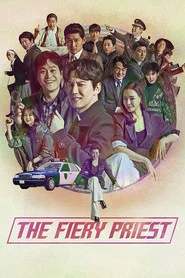
What I keep thinking about with The Fiery Priest isn’t its plot machinery — though there’s plenty of that — but its tone: that uneasy, almost mischievous balance between slapstick and moral outrage. A drama about corruption in church and state could easily turn glum, and a comedy about a priest with a temper could become merely quirky. Park Bo-ram’s series refuses both traps.
latestnetflix.com's view is that it wants to laugh, but it won’t let anyone off the hook, least of all the audience.That’s a harder trick than it sounds.
Context matters here. When the series arrived in 2019, Korean television was already very good at hybrid forms — crime shows with comic pressure valves, melodramas that smuggle in social critique. But The Fiery Priest felt especially tuned to the mood of the moment: furious about institutions, impatient with performative repentance, and deeply interested in the way power hides behind piety.
It’s also a show that knows how to turn genre familiarity into a kind of bait-and-switch. You think you’re watching a familiar procedural about a priest, a detective, and a prosecutor solving a death. Then it starts poking at the hypocrisy that lets “good people” behave badly with a clean conscience.
That’s the real subject, more than the mystery.
Park Bo-ram’s direction, at least in the first season, feels attentive to collision. Scenes don’t simply unfold; they knock against each other. One minute there’s a gag built around bodily embarrassment or Kim Nam-gil’s dead-serious glare colliding with absurdity, and the next there’s a sharp little cut to something meaner: a threat, a bribe, a man using religion as a shield.
That tension gives the series its pulse. I wouldn’t call it elegant in the pristine sense. It’s more like a crowded room where somebody keeps slamming the door, and the draft keeps changing the temperature.
What gives the show its peculiar charge is how plainly it distrusts self-absolution. The premise — sinners using faith as a laundromat for conscience — could have turned preachy, but the script is too sly for that. It keeps asking whether institutions are capable of moral action when they’re built to protect themselves first.
And because this is a Korean series rather than a sermon, it doesn’t settle for abstract denunciation. It shows the machinery: the men who smile in public, the officials who keep their hands clean by letting others get dirty, the rituals that look sacred until you notice who’s getting hurt underneath them.
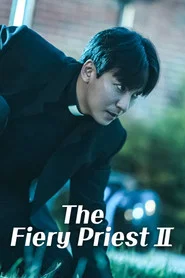
Kim Nam-gil’s priest, Father Kim Hae-il, is the series’ most obvious comic engine, but he’s also its most interesting contradiction. He moves like a man permanently one insult away from violence — shoulders tense, chin up, gaze flat with contempt — yet Kim plays him not as an action caricature but as someone whose anger has a moral shape. Years of watching him in quieter, more brooding roles has trained you to expect internal damage; here that damage keeps escaping through the seams.
His timing matters. So does the way he pauses before speaking, as if the line’s already been judged and found wanting.
Lee Hanee, meanwhile, gives the detective Park Kyung-sun a physical intelligence that the series leans on more than it announces. She doesn’t “support” the priest in some dutiful genre sense; she keeps pace with him, pushes back, and often looks like she’s the only adult in the room. After all the polished charisma of her film work, there’s something nice about seeing her sharpened into something a little less ornamental and a little more tactical.
She knows when to let a reaction live in the eyes and when to snap a scene open with a burst of disbelief. That matters in a show this dependent on rhythm.
I’m especially fond of the way the series stages confrontation in enclosed spaces. A church office, a hallway, a cheap restaurant, the back room of a business that pretends not to be criminal. The camera often stays close enough to catch the awkwardness of bodies negotiating power: who sits, who stands, who leans in too far.
In one recurring sort of moment — and I’m thinking here of the show’s many meetings rather than one isolated scene — somebody enters as if they own the place, only to be visually boxed in by the frame, by the walls, by another character’s stare. It’s a small thing, but it’s where the series does its best work. It understands that corruption isn’t always grand.
Sometimes it’s just entitlement, wearing a tie.
The comedy helps because it keeps the show from sanctifying its hero. Without the jokes, Father Kim could become a moral superhero, which would be dull and slightly embarrassing. Instead, the series lets him be prickly, rude, and occasionally ridiculous.
That gives the violence — when it comes — a strange credibility. He’s not a serene avenger. He’s a man who looks like he’d rather start an argument than give a blessing.
There’s something refreshingly unslick about that.
The supporting cast deepens the texture. Kim Sung-kyun has a gift for men who seem built from poor decisions and battered loyalties; he brings a kind of nervous, hangdog sincerity that the series uses well. Ko Kyu-pil, Kim Won-hae, and the others often function as comic satellites, but not in the disposable sense.
They help make the world feel populated by people who are all, in one way or another, trying to stay afloat inside systems they don’t control. That’s one of the show’s quiet strengths: even when it’s broad, it rarely feels empty.
There’s been a lot of discussion around the show’s mix of genres — some viewers come for the comedy, others for the anti-corruption thriller, and some probably stay because the thing is so shamelessly watchable. I can see why. But I think its most lasting quality is less obvious: it takes institutions seriously enough to insult them properly.
Not with grand speeches. With ridicule, with impatience, with the basic insistence that people shouldn’t get to call themselves righteous while harming the vulnerable. That’s an old story, of course.
Still feels current.
I wouldn’t claim every episode is equally nimble; the series can occasionally stretch a gag a beat too long, and some of the tonal pivots are more functional than graceful. But I like that it’s willing to be a little ungainly. Perfection would probably make the whole thing less human.
As it stands, The Fiery Priest has the energy of someone slamming a Bible shut and then, half a second later, cracking a joke in the parking lot. Strange combination. Effective one.
What lingers for me is not the solving of the mystery, though the show certainly wants its revelations to land. It’s the mood of moral impatience — the sense that decency here isn’t a static virtue but a practice, messy and combative, something you fight for while surrounded by people who prefer compromise. That’s why the series feels less like a sermon than a brawl.
And, honestly, that’s a more believable way to talk about faith, justice, and the damage people do to one another when they’ve decided forgiveness is just another convenience.