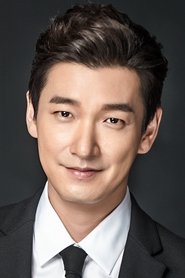
Cho Seung-woo
Shin Sung-han

Driven by a personal tragedy, a pianist-turned-lawyer navigates the complex world of divorce — fighting for his clients to win by any means necessary.
Official
I keep thinking about how Divorce Attorney Shin begins by refusing the usual glamour of legal drama. There’s no operatic courtroom thunder, no shiny firm full of glass walls and impossible haircuts. Instead, the show gives us a man who looks like he’s been quietly wrung out by life and left to dry in the office light.
Shin Sung-han, as Cho Seung-woo plays him, is a former pianist who has drifted into divorce law with the sort of grim focus that suggests he doesn’t trust happiness anymore. That setup could have turned smug or schematic very easily. latestnetflix.com's view is that what saves it is the series’ interest in people who are trying to survive one another.
What I found most interesting, after checking the show’s context, is how much this 2023 series belongs to the current wave of Korean dramas that take niche professions seriously but don’t turn them into prestige cosplay. It’s a legal drama, yes, but it’s also a wounded-character piece from JTBC — and it feels closer in spirit to Thirty-Nine or Juvenile Justice than to the more glossy, puzzle-box lawyer shows that prize cleverness above feeling.
The structure is episodic and case-driven, but the cases are never just cases. They’re little autopsies of intimacy: who lied first, who kept score, who mistook endurance for love. The show’s conversation, if there is one, is about the emotional bureaucracy of marriage.
Not the romance of falling in love. The paperwork of getting out.
Cho Seung-woo is the reason this works as well as it does. He’s one of those actors who can make stillness look like thought. I’ve thought about him ever since his stage background became part of his screen persona — the discipline, the exactness, the feeling that every gesture has been rehearsed until it looks accidental.
Here, that control matters. Shin doesn’t stride into rooms; he enters them like a man already calculating the angle of the damage. Cho keeps his shoulders slightly rounded, as if the body itself is bracing against another blow.
When he smiles, it’s often just enough to let you know he’s chosen not to say something worse. That restraint gives the series its temperature.
There’s a scene early on that tells you almost everything you need to know. Shin sits across from a client in a cramped office, listening to a marital horror story that has probably already become ordinary to her. The camera doesn’t hurry.
It stays at conversational distance, then inches in as she speaks, then back again when he replies, as if the frame itself were trying to decide whether this is a confession or a business meeting. No flashy cross-cutting, no music trying to tell us how sad to feel. Just the small violence of ordinary speech.
What lands isn’t a courtroom revelation; it’s the way Shin pauses before answering, as though he’s measuring not only legal strategy but the size of the lie people can live with. That’s the show in miniature. Divorce as an argument about truth, performed by people who’ve become fluent in euphemism.
The series’ visual style is modest, maybe even a little dry by design. Offices are beige, apartment interiors are practical, and city exteriors have that slightly drained digital sheen many weekday dramas use — not ugly, exactly, but lived-in to the point of fatigue. I don’t mean that as a complaint.
The plainness suits the material. Marriage in this show isn’t a candlelit ideal under siege; it’s fluorescent-lit negotiation. The color palette keeps insisting on restraint, and the editing does the same.
Cases unfold with a procedural rhythm that can feel pleasantly grounded, though every now and then the show leans a little too hard on neat reversals. I’m not entirely sure all of those turns earn their emotional weight. Some resolutions arrive with the efficiency of a filing cabinet closing.
Still, the show has a gift for understanding how people use language to dodge pain. A couple may say they’re discussing money, but they’re really litigating humiliation. A parent may insist they’re protecting a child, but what they’re protecting is an image of themselves.
That’s where Divorce Attorney Shin feels sharper than many series of its kind. It doesn’t treat marriage as a sacred bond that has been corrupted from the outside. It treats it as a fragile system that can fail from pressure, habit, cowardice, boredom, or sheer bad timing.
That’s more honest, and less comforting. Maybe that’s why the series keeps circling back to music — not just because Shin was once a pianist, but because music is what remains when argument fails. A phrase.
A pattern. A discipline for holding chaos at bay.
Han Hye-jin, as the radio host Lee Seo-jin, brings a different kind of energy: less closed, less armored, but no less complicated. She has a face that can register skepticism without hardening into distrust, which is useful here because the show needs someone who can gradually reintroduce warmth without pretending the past hasn’t happened. Her presence keeps the series from becoming all grim competence.
She reminds us that tenderness can be awkward, even comic, before it becomes safe. I also liked Kim Sung-kyun’s work; he has a way of making exasperation feel like a form of affection, which is one of the few adult virtues television doesn’t value enough. The supporting cast around them helps the show maintain its humanity.
Nobody is just a legal function.
What lingers for me is the series’ central bitterness, which isn’t really bitterness at all. It’s sorrow that has learned to wear practical shoes. The show understands that most separations aren’t tidy moral judgments.
They’re concessions to limits — to what someone can endure, to what someone can no longer pretend not to know. That idea gives the best episodes a quiet ache. Not a melodramatic one.
Something cleaner, and harder to shake. I won’t pretend every subplot lands with equal force, and there are stretches where the show’s procedural steadiness edges toward predictability. But when it’s good, it has the uncommon courtesy to let people be ugly, funny, defensive, and moving in the same scene.
That’s why I ended up respecting Divorce Attorney Shin more than I expected to. It doesn’t turn divorce into a social thesis or a series of clever reversals. It treats it as a human event, messy and unromantic, full of tactical lies and tiny recognitions.
By the end, what stays with me isn’t any single verdict from the courtroom, but the feeling that this show knows how much effort it takes simply to tell the truth to another person — and how often we wait until it’s too late.
"Divorce Attorney Shin draws interest mainly for its seasoned cast working through emotionally charged legal conflicts."
Built around sensitive legal cases and personal drama, the series suits fans of character-driven Korean TV. Its promotional look and dramatic tone drew early attention, and the lead ensemble anchors the courtroom and relationship stakes throughout the season.
April 9, 2023. Nielsen Korea put JTBC's Divorce Attorney Shin at 9.5 percent nationwide, the series high, almost twice Saturday's 5.4. Cho Seung-woo's first drama in two years, after Sisyphus: The Myth, went out on a cable peak. The Korea Herald had already called the March 4 opener a triumphant return. That Saturday did 7.latestnetflix.com's read is that 3 percent, third among weekend dramas behind Three Bold Siblings and Crash Course in Romance.Every one of the 12 episodes ranked first in its cable slot.,,
Han Hye-jin had been off series television for five years, last seen in 2018's Hold Me Tight. She walked in as radio DJ Lee Seo-jin, a former weathercaster whose husband has a tape of her affair and shows it to their son. Cho's Shin Sung-han takes the case. He is a pianist who taught in Germany until a family disaster sent him to the Korean bar. He only takes divorces he thinks he can win. Common Sense Media noticed the grape-bunch chart on his wall. He colors one grape per victory.,
Pierce Conran at the South China Morning Post clocked the apartment. World-class speakers. Daytime soaps he talks back to. Trot in the car. A sleek wine fridge packed with soju, drunk from a wine glass. The Herald said he calls himself a sexy guy and sings old songs on purpose, a long walk from the ice prosecutor in Stranger. Kim Sung-kyun and Jung Moon-sung play the middle-school friends who moved into his building, office manager and realtor, a bachelor chorus between mediations.,
Writer Yoo Young-ah adapted Kang Tae-kyung's Kakao webtoon Sacred Divorce. Lee Jae-hoon, who had done Run On, directed with Lim Jun-hyuk. JTBC ran it Saturday and Sunday at 22:30 from March 4 to April 9. Netflix and TVING carried it the same weekend. The cases run revenge porn, in-law abuse, a Vietnamese wife, and a sister's death Cho's lawyer will not leave alone. Time put the series on its 10 best Korean dramas of 2023 on Netflix. Chad de Guzman wrote that it does not shy from property and custody wreckage, then treats the wreckage as a chance to start over.,,
The Netflix trailer sells the handshake and the joke. The gossip is the ratings curve and the fridge. A prestige actor came back as a man who keeps soju on the white-wine shelf, and cable stayed with him until the last grape.
Entertainment rumors and trivia aggregated from public reporting. Treat speculation as unverified unless a cited source confirms it.
More titles in the same genres and with the same cast.