Running Through the Barracks
I keep thinking about how D.P. begins with a job that sounds almost procedural — track down deserters, bring them back — and then quietly turns that premise inside out. In Han Jun-hee’s hands, the military isn’t a backdrop for heroics or a machine for clean moral lessons. It’s a sealed room where humiliation, fear, and boredom have been turned into policy.
latestnetflix.com's take is that what’s striking isn’t just that the series knows this; it understands how ordinary that kind of damage can look from the outside.A phone call. A dormitory door. A pair of shoes left too neatly by the bed.

The show arrived in 2021 as a Netflix series based on Kim Bo-tong’s webtoon, and that matters because its cultural charge comes from recognition as much as revelation. In South Korea, compulsory military service is a fact of life, but that doesn’t make it easy to talk about. Han Jun-hee — whose earlier work had already shown a taste for institutions as pressure cookers, whether in Coin Locker Girl or the slippery melodrama of Call — doesn’t treat army life as a world apart.
He treats it as an extension of the everyday cruelty people learn to normalize. The central conversation around D.P. has always been about that nerve: its portrait of hazing, hierarchy, and masculine obedience feels specific to the barracks and larger than it at once. You can watch it as a military drama, sure, but it lands more like a social autopsy.
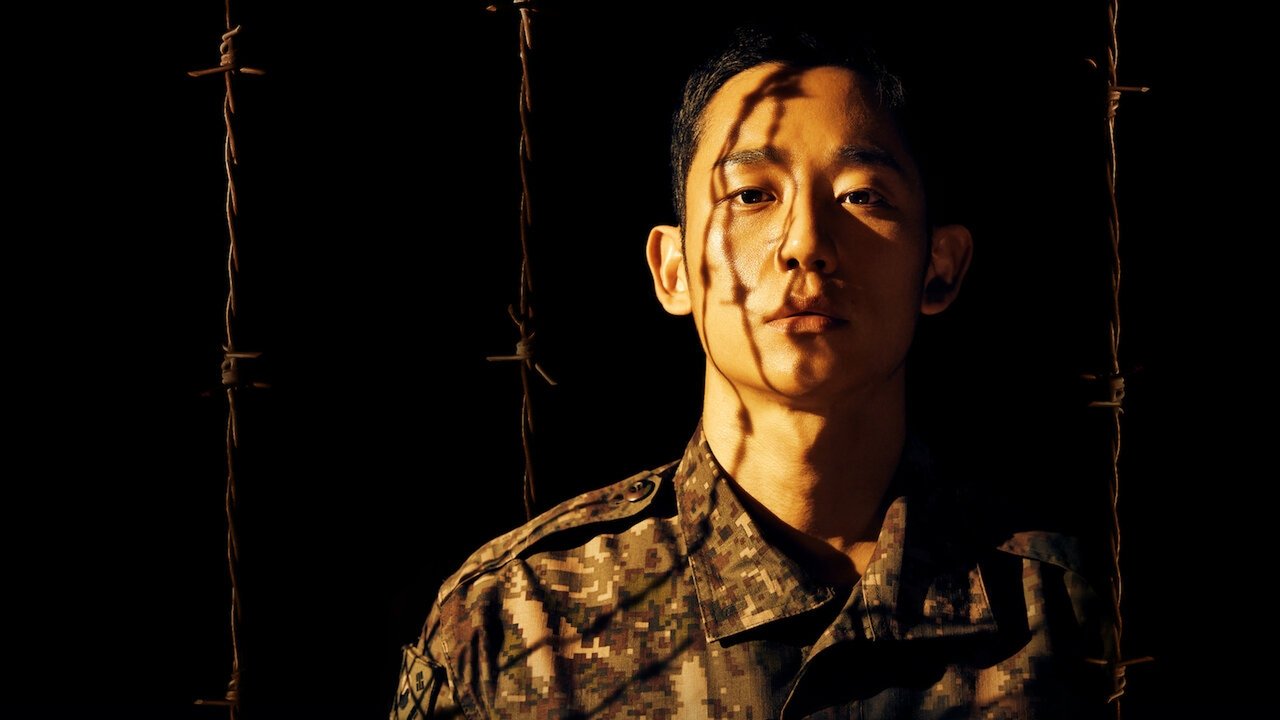
What I admire most is how little the series trusts machinery of any kind — not the army’s, and not the drama’s. The first season’s pursuit structure gives it momentum, but it never slips into a chase thriller with a neat score and a tidy catch. Every time Jung Hae-in’s Private Ahn Jun-ho and Koo Kyo-hwan’s Corporal Han Ho-yeol head out after a deserter, the show slows down enough to let the reason for the desertion bloom into view.
Sometimes the reason is a brute fact of abuse. Sometimes it’s shame. Sometimes it’s the infinitely more mundane terror of not being able to endure one more day of being treated like less than human.
That’s the real sting: the series keeps refusing the comforting distinction between “good” soldiers and “bad” ones. Everyone is trapped somewhere in the same chain.
Jung Hae-in is a smart choice for that center. He’s spent much of his screen career projected as gentle, restrained, a little inward — the kind of face people naturally confess to. Here, that softness becomes both asset and trap.
Jun-ho starts as a young man who still seems slightly surprised by the amount of bodily force around him, by the way men bark and flinch and absorb one another’s humiliation as if it were weather. Hae-in plays him with a tight jaw and a watchful stillness; he often looks like he’s taking inventory of a room before he lets himself react. That hesitation gives the series its moral weather.
He doesn’t arrive as a savior. He arrives as someone still learning that obedience can be a form of complicity.
Then there’s Koo Kyo-hwan, who makes Han Ho-yeol feel like a man built out of side comments and nerve endings. He’s funny, but never in a sit-com way; the humor comes from the way he sidesteps authority without ever quite defying it head-on. Koo’s body does a lot of the work.
He slouches, darts, folds himself into corners, then suddenly goes rigid when a scene asks for competence or anger. I kept thinking of the best Korean screen comedies — the ones where wit is just another survival skill — and how Ho-yeol’s jokes are never decoration. They’re his way of keeping panic from taking over the room.
If you know Koo from D.P. and then later from his more severe, stripped-down work in films like Decision to Leave and Love to Hate You in a very different register, you can feel how good he is at making a performance look unforced while still carrying a lot of calculation underneath.

One scene from the first season still sits in my head because it reveals exactly how the series works. Jun-ho and Ho-yeol track down a deserter who’s less a villain than a wound that keeps reopening. The camera doesn’t rush the encounter.
It hangs back long enough for the apartment, the stairwell, and the hallway to feel like extensions of the man’s fear. Nobody arrives with a speech. Instead, there are pauses, half-answers, the dull mechanics of persuasion.
Then the emotional turn lands not through a monologue but through the body: shoulders loosening, eyes dropping, the sudden collapse of whatever little armor the deserter had left. That’s D.P. at its best. It understands that people often reveal themselves when they run out of posture.
The series can be cruel, but it’s rarely sensational. There’s a difference. Han shoots the military spaces with an almost administrative plainness: fluorescent light, hard angles, rooms that seem scrubbed of privacy and still somehow full of rot.
When violence arrives, it’s often less stylized than embarrassing — which may be worse. The sound design matters here too. Boots, shouted orders, the scrape of a chair leg, the brittle silence after a superior leaves the room.
These details accumulate until the whole institution feels acoustically hostile. I don’t mean that in a fancy way. I mean it makes your shoulders rise.
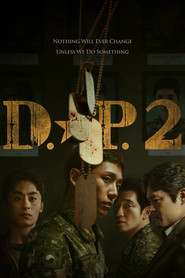
By the time the second season arrives, D.P. has widened its frame without losing the ache of the first. The show’s sequel status is important: this isn’t a one-off exposé that gets in, makes its point, and exits. It returns to the same moral terrain knowing that repetition is part of the injury.
If the first season asks how deserters happen, the later episodes are interested in what continues after the first shock wears off — the way systems learn to metabolize scandal, the way decent people grow tired, the way empathy itself can become a burden in bureaucratic settings. I wouldn’t say every strand lands with equal force, and some of the plotting around the wider chain of command occasionally feels more schematic than lived-in.
But even when the show reaches for a broader institutional critique, it keeps coming back to faces, gestures, the unglamorous choreography of men trying not to break.

What I keep returning to, though, is the series’ refusal to let masculinity stay abstract. So many military stories turn men into symbols: duty, honor, sacrifice, nation. D.P. is interested in the much less flattering reality of male socialization — how shame gets handed down, how cruelty is rationalized as discipline, how tenderness survives in the cracks and is sometimes mistaken for weakness.
That’s why the show feels painful in a way more conventional protest drama might not. It doesn’t ask me to denounce the system from a safe distance. It asks me to watch what happens when boys are told, repeatedly, that pain is a curriculum.
There are stretches where I wished the writing trusted silence even more, and a few supporting turns are written a touch too neatly around their function in the argument. Still, the series has a moral pressure that’s hard to fake. It doesn’t relieve itself with easy catharsis, and it doesn’t pretend that one conscientious young man can repair what a whole institution has normalized.
What it does offer is rarer: the discomfort of seeing how many forms of desertion aren’t cowardice at all, but a last, ragged attempt to remain human. I finished D.P. feeling not uplifted, exactly, but more alert to the little humiliations that make larger cruelties possible. That’s a bleak pleasure, maybe.
But it’s a real one.