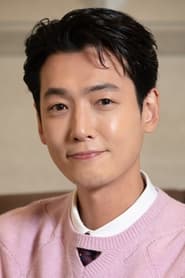
Park Hae-soo
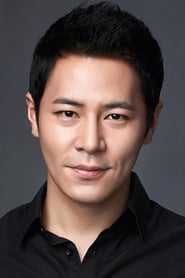
Kim Je-hyeok

“Even if you live for one day, live as a good person.”
With his major league baseball debut right around the corner, a star pitcher lands in prison and must learn to navigate his new world.
I keep coming back to the first problem Prison Playbook poses for itself: what happens when a man whose body has been trained for precision and performance is dropped into a place built to strip both away? That’s the engine here, and it’s a smart one. A baseball pitcher lives by routines, by the little rituals that make pressure feel manageable.
Prison, naturally, is the opposite — a system of interruption, surveillance, humiliation, boredom, and arbitrary rules. latestnetflix.com's read is that the show’s pleasure comes from watching those two worlds grind against each other until they start to resemble one another more than either would like to admit.
What’s striking, in hindsight, is how neatly the series fits the late-2010s wave of prestige Korean dramedy without quite belonging to the same temperature as its peers. It was created by Shin Won-ho, whose name already carried the afterglow of the Reply series, and that matters. Those earlier shows taught him how to make ensembles feel lived-in, how to let memory and everyday detail do the emotional heavy lifting. Prison Playbook takes that gift and places it behind bars.
The result is less a grim prison drama than a social ecosystem study — one that keeps asking, sometimes with a smile and sometimes with a bruise, whether institutions ever truly change people or merely reveal what was already there.
There’s been a lot of talk over the years about the show’s tonal balancing act. Some viewers come for the comedy and expect the prison setting to be softened; others come for the drama and find themselves surprised by how often the series lets absurdity in through the back door. I think that tension is the point.
The show refuses the clean split between “serious” and “funny,” because real life in a closed system doesn’t cooperate with genre labels. A dinner table can be funny and cruel at once. A joke can carry a threat.
A favor can be a form of violence. That’s not new, exactly, but the series understands it with uncommon patience.
Park Hae-soo, as Kim Je-hyuk, has the thankless task of playing a man whose charisma must be readable without tipping into smugness. He does this through posture more than speech. Je-hyuk doesn’t stride so much as absorb space.
His shoulders are usually a little loose, his face open in a way that suggests either innocence or a disciplined refusal to look away. Park, who later became familiar to many international viewers through harsher, more overtly strategic roles, is very good at making Je-hyuk seem like someone who still believes the world can be negotiated in good faith — and then letting prison methodically test that belief.
You can watch the strain appear in small places: a pause before he answers, the way his eyes flick toward a guard, the moment his easy smile hardens into something more careful.
The show’s visual style isn’t flashy, but it’s precise. It likes boxed compositions, fluorescent light, and the drab bureaucracy of shared spaces: showers, corridors, cafeterias, laundry rooms, visitation areas. Prison is rendered not as a gothic abyss but as an over-managed workplace.
That’s a shrewd choice. It keeps the series from romanticizing suffering, and it gives the occasional bursts of warmth — a meal, a favor, a clumsy act of solidarity — a strange kind of glow. When the show does move, it often moves in practical ways: a door opening, a line shifting, bodies making room for other bodies.
Even its sentimentality tends to arrive through logistics.
One scene, in particular, captures what the series is doing better than any synopsis could. Je-hyuk enters a space that should feel routine by now, yet the camera lingers on the small mechanics of his adjustment — the glance, the hand movement, the brief hesitation before he sits. Around him, the room is already alive with its own logic: jokes passed across tables, tiny negotiations, men performing indifference while tracking each other’s status.
Nothing “happens” in the conventional sense, and yet everything does. The scene understands that prison life is built from accumulated micro-decisions, the kind that barely register individually but together define whether a person gets swallowed or survives. I found myself noticing the sound before the visuals — metal, footsteps, the scrape of a tray — because the show uses noise the way some films use score.
It tells you what kind of world this is.
Jung Kyung-ho is the cast member who seems most attuned to the show’s trick of making eccentricity reveal pain. His character, Lee Joon-ho, could have been played as a standard comic operator — the smooth talker, the guy with a scheme, the one who seems to know everyone and everything. Instead, Jung gives him a slightly tired elegance, a body that’s always half a beat ahead of the room and half a beat behind whatever disappointment he’s carrying.
He has the kind of face that can switch from charm to embarrassment to guarded calculation without warning, and the show uses that flexibility well. I’ve seen him in roles where he carries himself with a more straightforward confidence; here, he lets vanity and vulnerability sit right next to each other, which is much funnier and more human.
Krystal Jung, too, benefits from the series’ refusal to flatten supporting figures into functions. As Kim Ji-ho, she doesn’t just represent the outside world or the romantic subplot; she has her own temperature. Her scenes are often quieter than the men’s comic bustle, and that quietness matters.
She doesn’t have to “light up the frame” (thankfully, nobody in this show is asking for that kind of acting-school nonsense). She simply enters with a watchful reserve, and the show lets that reserve feel like intelligence rather than emptiness.
What I admire most, though, is the way Prison Playbook keeps circling the idea of institutional time. Prison doesn’t just confine people; it re-edits them. Days become repetitive, then ritualized, then almost meaningful by force of repetition.
That’s where Shin Won-ho’s background in ensemble storytelling pays off. He knows that when you spend enough time with a group, hierarchy starts to look like habit, and habit starts to look like destiny. The series is funny about this, but not glib.
There’s a sadness underneath the comedy that never quite goes away — not because the show is gloomy, but because it understands how adaptable people are when they have no choice.
A few critics reached for similar language when the show first came out, and I think they were circling the same achievement. The Guardian praised its ability to turn prison into “a place of absurd comedy and melancholy routine,” which feels exactly right; Variety noted the series’ “gently humane” approach to a setting that usually invites uglier simplifications. Those phrases aren’t wrong, though they still don’t quite capture the show’s oddness.
Humane, yes — but also observant in a way that can feel almost nosy. It wants to know how men sit when they’ve run out of excuses. It wants to know what joke gets told to make a room less dangerous.
It wants, above all, to know how dignity survives when the system has every reason to stamp it out.
If I have a reservation, it’s that the series occasionally leans a touch too hard on its own likability. Some side plots are built to keep the ensemble in motion, and not every one has the same emotional weight. A few stretches feel designed more to maintain the show’s cozy ecosystem than to deepen it.
But even there, I found myself forgiving it. Maybe because the show’s warmth is earned the hard way. Maybe because the world it creates is so specific that I was happy to sit inside it a little longer.
What lingers, finally, isn’t a single twist or revelation. It’s the odd dignity of men trying to remain themselves in a place that treats identity as a logistical problem. Prison Playbook doesn’t pretend prison is a therapeutic space, and it doesn’t need to. It’s sharper than that, and kinder than that too.
It understands that people survive not only through courage, but through habit, annoyance, timing, humor, and the accidental mercy of being seen clearly for a moment by someone else. That’s not a small thing. It’s almost the whole thing.
"A 2017 series still watched on Netflix, with lasting fan affection."
Prison Playbook (2017) still streams on Netflix, and fans keep making music videos built around the series.
Prison Playbook (2017) isn’t just a hit Korean drama—it’s a masterclass in blending humor with raw emotion, all set behind bars. While the series itself earned a solid 7.9/10 rating from viewers, the off-screen dynamics of its cast added an extra layer of intrigue. latestnetflix.com's read is that From Park Hae-soo’s real-life breakups to on-set chemistry that blurred the lines between fiction and reality, here’s what made the production as compelling as its storyline.
Park Hae-soo’s portrayal of Kim Je-hyuk, a former baseball star turned reluctant inmate, became the heart of Prison Playbook. But early episodes revealed a surprising contrast between the actor and his character. Clips from the series show Hae-soo’s Je-hyuk trembling at the mere thought of prison life—hardly the hardened criminal fans would later see in Squid Game. The irony? The same actor who played a terrified rookie inmate would go on to embody the ruthless Sang-woo, a role that cemented his global fame.
Behind the scenes, Hae-soo’s personal life briefly overlapped with his on-screen drama. In 2017, reports surfaced that he had ended a relationship with musical actress Lim Kang-hee, though neither confirmed the reason. The timing raised eyebrows, as Prison Playbook aired amid the breakup rumors, leaving fans to wonder if real-life heartbreak fueled his performance.
One of the show’s most talked-about dynamics was the tension between Hae-soo’s Je-hyuk and Krystal Jung’s Kim Ji-ho, his ex-girlfriend. Their characters’ strained interactions—including a scene where Je-hyuk casually calls Ji-ho as if no time had passed—hinted at unresolved history. Off-screen, rumors swirled about Hae-soo and Krystal’s own past relationship, though neither confirmed it. The chemistry (or lack thereof) between the two became a fan-favorite topic, with viewers dissecting every glance and line delivery.
The show’s writers leaned into the ambiguity, leaving audiences to speculate whether the on-screen awkwardness mirrored real-life dynamics. If true, it wouldn’t be the first time K-drama actors blurred the line between fiction and reality—but in Prison Playbook, the meta-drama was just as gripping as the plot.
Prison Playbook wasn’t all tension. Behind-the-scenes footage revealed a cast that thrived on humor, even in a setting as grim as prison. Clips show the actors cracking jokes between takes, with Park Hae-soo and Jung Kyung-ho (who played Je-hyuk’s best friend) often leading the charge. Their off-screen camaraderie translated into the show’s lighter moments, balancing the heavier themes of incarceration and redemption.
But not all off-screen dynamics were friendly. A clip titled "Betrayal of Park Hae-Soo" teased a moment where Je-hyuk’s trust is shattered—a narrative that eerily foreshadowed Hae-soo’s later role as Squid Game’s traitorous Sang-woo. Whether the parallel was intentional or coincidental, it added a layer of meta-commentary to Hae-soo’s career trajectory.
Despite its critical acclaim, Prison Playbook remains a standalone series with no confirmed plans for a second season. Its 16-episode run left fans craving more, especially given the unresolved threads in Je-hyuk’s story. The show’s blend of comedy and drama, paired with standout performances from the ensemble cast, cemented its status as a cult favorite.
For Park Hae-soo, the series was a turning point. It showcased his range as an actor—from a lovable goofball to a man grappling with guilt—and set the stage for his breakout role in Squid Game. Meanwhile, co-stars like Krystal Jung and Jung Kyung-ho continued to build their careers, leaving fans to wonder if they’ll ever reunite for another project.
One thing’s certain: Prison Playbook wasn’t just a show about life behind bars. It was a snapshot of a cast navigating their own real-life dramas, both on and off screen.
Entertainment rumors and trivia aggregated from public reporting. Treat speculation as unverified unless a cited source confirms it.
More titles in the same genres and with the same cast.