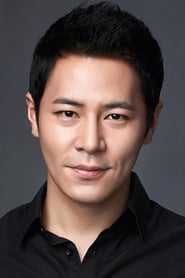
Kim Tae-hee
Cha Yu-ri

“Shh! It's a secret that I'm watching!”
Cha Yu-ri died in an accident five years ago, leaving her husband Cho Gang-hwa to raise their daughter by himself. She becomes a ghost and watches over them until one fateful day she is brought back to life by the deities and told she can become human again if she returns to her place in 49 days. Though her husband has remarried, so she must decide between her or his happiness as she slowly re-integrates back into her old lifestyle.
Official
There’s a cruel little joke at the center of Hi Bye, Mama!: the dead get to see everything, and the living get to keep going without them. That’s the show’s simplest premise, but it’s also its sharpest emotional instrument. I kept thinking, as I watched, that this is a series about being present only after you can no longer participate.
You can hover, observe, ache, and memorize the shape of your family’s days—but you can’t interrupt them forever. That’s not just a fantasy hook. It’s a parent’s nightmare, a widow’s guilt, and a child’s confusion, all folded into one polite, brightly lit melodrama.
Yu Je-won, who directed Hi Bye, Mama!, works here in a register he knows well: the warm, slightly heightened terrain of Korean TV drama, where emotion isn’t embarrassed to be emotional. What’s interesting is how the series uses that familiar surface to smuggle in something stranger. This isn’t a simple tearjerker about regret.
It’s a story about systems—about the bureaucratic, moral, and spiritual rules that govern grief. The premise could have become a gimmick. Instead, the show treats reincarnation, ghosts, and the afterlife with the dead seriousness of a family court.
That’s the trick. The supernatural elements don’t float free; they behave like administrative obstacles to love.
The series arrived in 2020, when Korean television was already comfortable mixing genres without apology, but it still stood out for the way it asked a question most stories avoid: what happens when the person everyone loved most is also the one whose return could ruin the fragile peace everyone has built? That’s a far thornier setup than the synopsis suggests. It’s not really about “choosing” between two lives so much as recognizing that love can’t always be restored without collateral damage.
I admire that the show doesn’t pretend otherwise for too long.
Kim Tae-hee’s return to television after years away mattered here, and not just as a publicity note. She has one of those faces that can read as polished or guarded depending on the angle, and the series uses that to good effect. As Cha Yu-ri, she often looks like a woman trying to remember how to occupy her own body.
There’s a slight lag in her movements, a hesitation before she fully enters a room, as if she still expects to pass through walls. That physical uncertainty gives the show its most persuasive ghostliness. She’s not eerie.
She’s displaced. And because Kim plays that displacement without excess, the character’s pain lands as embarrassment, tenderness, and panic in quick succession.
The central emotional tension comes from a very ordinary place: a kitchen, a child’s routine, a household that has learned new rhythms in the absence of the woman who once anchored it. One of the show’s most discussed pleasures is how often it lets grief sit in everyday spaces instead of dressing itself up as spectacle. A meal is served.
A school schedule is discussed. A new wife has to navigate a home that still contains the old wife’s emotional outline. That’s where the series stings.
Not in the supernatural mechanics, which are intentionally soft-edged, but in the practical awkwardness of cohabiting with memory.
Lee Kyoo-hyung, as Cho Gang-hwa, brings the series its most difficult energy: a man who is not monstrous, not heroic, just tired in a way that years can build. He plays him with a kind of cautious depletion, the body slightly bent forward, the face arranged for damage control. I’m thinking especially of the scenes where he has to face the fact that love can be sincere and still be inadequate.
Lee doesn’t make him noble. Thank goodness. Nobility would flatten the character.
Instead, he gives us a husband who has made a life out of adaptation, and whose face tightens whenever the past insists on being felt too directly. That’s more interesting. More human.
The show’s most effective scenes are the ones that let the supernatural premise become almost invisible. There’s a recurring motif of Yu-ri lingering at the threshold—doorways, stairwells, the edge of a playground, the border between seeing and being seen. That liminal staging is doing real work.
The camera often holds a beat too long after someone exits frame, as if the space itself is expecting a lingering soul. And the sound design is gentle about it. No thunderclaps, no self-important rattling chains.
Just a hush. A room that seems to wait.
Maybe the scene that stayed with me most is one in which Yu-ri watches her daughter from a remove, trying to behave like a ghost and failing because she’s still a mother. The moment is built out of tiny frustrations: the impulse to reach out, the impossibility of touching, the humiliation of not being able to correct a child’s pain with the familiar tools of comfort. It’s one of those sequences that could easily have become manipulative.
Instead, the direction keeps it almost painfully plain. The child moves on. Yu-ri remains where she is.
The distance between them is the whole scene.
That plainness is part of the show’s charm, and also one of its limitations. At times, Hi Bye, Mama! leans on melodramatic repetition more than it needs to. There are episodes where every conversation seems calibrated to remind you of the same wound from another angle, and the series can get a little too eager to explain what it already understands visually.
I found myself wishing for more silence, or a little more trust in a glance. Korean television often lives or dies by whether it can sustain emotion without over-annotating it; this one comes close, but not always.
Still, the supporting cast gives the story texture rather than just pressure. Go Bo-gyeol, in particular, has the unenviable task of embodying a woman who could have been written as an obstacle and instead becomes a person. She gives her role a practical dignity, and that matters because the series would collapse if it reduced her to an interloper.
Shin Dong-mi and the other supporting players help widen the moral field, so the drama doesn’t become a duel between two women over one man. It’s about a family learning that love doesn’t erase replacement, and replacement doesn’t erase love. That’s messier, less marketable, and much truer.
I also kept thinking about the show alongside Korean ghost stories and reincarnation dramas more broadly, where the afterlife is often less a destination than a negotiation table. There’s some of that here, but there’s also a distinctly modern anxiety underneath it: the fear that life keeps moving while you’re busy mourning, and by the time you’re ready to return, your place has already been filled.
That fear is not supernatural at all. It’s the ordinary terror of time. I don’t think the series ever fully escapes the conventions of its genre, but it knows exactly how to use them.
What I appreciate most is that Hi Bye, Mama! doesn’t treat reunion as the end of grief. If anything, reunion is where grief becomes harder to manage. Seeing the people you love go on without you is not cathartic.
It’s humiliating, generous, and unbearable all at once. The series understands that, even when it reaches for sentiment a little too eagerly. It’s strongest when it lets love be inconvenient.
I’m not sure I’d call it elegant. That would be too neat. But I’d call it sincere in a way that feels earned, not assumed.
By the end, the show leaves me with an uneasy tenderness toward its characters and, honestly, toward the idea that no family ever really finishes grieving. They just learn new ways to keep living inside the loss. And that, more than the fantasy machinery, is what gives the series its sting.
"A deeply touching supernatural family drama about bereavement, maternal devotion and bittersweet closure."
A dead mother begins a 49-day reincarnation trial while her grieving husband tries to rebuild his life, and the series succeeds through its poignant treatment of grief, family bonds and maternal sacrifice. Viewers consistently mention its emotional power, and say that although the ending isn't the easy one, it gives real resolution and comfort to both characters and audience.
Hi Bye, Mama! (2020), the South Korean fantasy-drama series directed by Yu Je-won, captivated audiences with its blend of heartbreak, humor, and supernatural elements. Starring Kim Tae-hee as Cha Yu-ri—a mother who returns as a ghost to reconnect with her family—the show balanced emotional depth with quirky charm. latestnetflix.com's view is that but behind the scenes, a few surprises and creative choices added layers to its production.
One of the most talked-about behind-the-scenes details was the casting of child actor Seo Woo-jin as Cha Yu-ri’s daughter, Seo Woo-jin (yes, they share the same name). Despite the character being a little girl, the role was played by a boy—a decision that sparked curiosity among fans. Videos explaining the choice suggest it was a practical move: the production team reportedly struggled to find a young actress who could deliver the emotional range required for the role while also handling the physical demands of filming. Seo Woo-jin, then a rising child star, was chosen for his ability to convey both innocence and depth, making the gender swap a non-issue for viewers.
The reveal that the character’s daughter was portrayed by a boy became a minor internet sensation, with clips dissecting his performance and praising his natural delivery. It’s a rare example of a casting choice that, while unconventional, worked smoothly within the story.
Kim Tae-hee’s portrayal of Cha Yu-ri was the emotional core of the series, and her performance in Episode 12 became a standout moment. In the episode, Yu-ri learns a devastating truth about her daughter, leading to a heartbreaking confrontation. Clips of the scene show Tae-hee’s raw, tearful delivery, which resonated deeply with fans. The moment was so impactful that it became one of the most discussed scenes in the series, with viewers praising her ability to convey grief and love simultaneously.
While the evidence doesn’t reveal specific behind-the-scenes challenges Tae-hee faced, her commitment to the role is evident in the final product. The series’ blend of supernatural elements and family drama required a delicate balance, and Tae-hee’s performance anchored the show’s emotional weight.
Rumors about production hurdles surfaced early on, though details remain scarce. Some reports suggested that Hi Bye, Mama! faced delays or creative disagreements, but no concrete evidence from the provided sources confirms this. The series ultimately premiered to mixed but generally positive reception, earning a 6.9/10 rating on SensCritique based on 80 votes. While not a runaway hit, it found a dedicated audience, particularly among fans of melodramas with a fantastical twist.
The series gained additional visibility by streaming on Netflix, which helped it reach a global audience. The platform’s official trailer, featuring emotional clips and a haunting soundtrack, teased the show’s unique premise: a mother’s ghost navigating the complexities of family, love, and loss. While Netflix’s involvement likely boosted its profile, the show’s success still hinged on its storytelling and performances.
Hi Bye, Mama! stands out for its creative risks—whether in casting, tone, or narrative structure. While the behind-the-scenes details are lighter than some K-drama productions, the choices that are known (like Seo Woo-jin’s casting) add an intriguing layer to its legacy. For fans of emotional, genre-blending series, it remains a memorable entry in 2020’s K-drama lineup.
Entertainment rumors and trivia aggregated from public reporting. Treat speculation as unverified unless a cited source confirms it.
More titles in the same genres and with the same cast.