Kristoffer Joner
Alfred

When WWII erupts, two sailors on a Norwegian merchant ship face brutal conditions as they fight to survive a conflict they were never asked to join. Based on true stories of Norwegian merchant sailors and their families during and after World War II.
I have watched a lot of war films. Few of them get stuck in my throat the way War Sailor does. The battles are on screen.
What stays is the waiting. A man on a ship and a woman in Bergen, each unable to reach the other. Gunnar Vikene made a feature, then expanded it into a three-part Netflix series.
Two friends, Alfred and Sigbjørn, enlist as merchant sailors in 1939. They think they have signed up for a paycheck. Germany invades Norway.
Their ship is thrown into the Battle of the Atlantic. Survival stops being a job. It becomes a set of choices nobody put in the contract.
Kristoffer Joner plays Alfred. Pål Sverre Hagen plays Sigbjørn. Ine Marie Wilmann plays Cecilia, Alfred's wife, raising their children while her letters go unanswered. The series cuts between the Atlantic and the apartment. That cut is the argument.
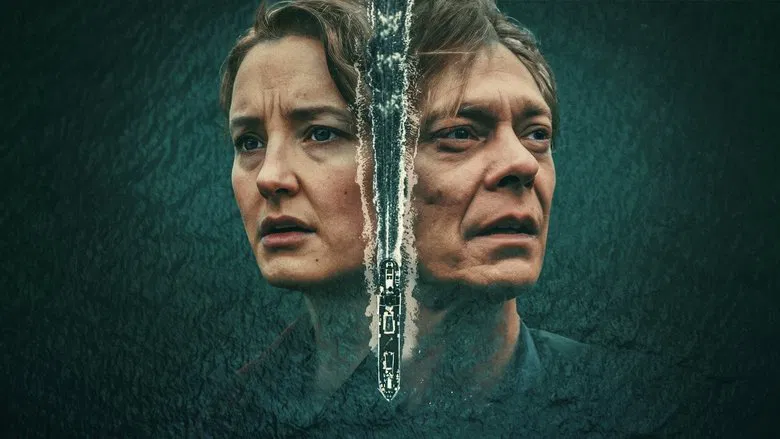
This is a corner of WWII that rarely shows up outside Norway, and Vikene will not pretty it up. The Hollywood Reporter called it a "bruising WWII drama that provides a visceral and emotional experience." Fair.
The bruises show up in a kitchen. A man flinches at a slammed door. Hands will not stay still around a letter.
The series never gives a speech about trauma. It just keeps showing you the aftertaste.
Vikene keeps the camera in close. Handheld, tight faces, no glory shots of the fleet. Sturla Brandth Grøvlen photographs the sea as an indifferent fact, not a postcard.
Early on, Alfred and Sigbjørn stand on deck and look at the horizon. The lens stays on their faces long enough for the coming years to settle into the muscle. I have seen prettier war images.
I have not seen many that honest.
Joner looks already emptied. Hollow eyes, a slump, as if he gave up before the first convoy. Hagen's Sigbjørn runs hotter, anger sitting under the talk.
Wilmann is the one who got to me. Cecilia holds a household together with no news she can trust. She reads a letter from Alfred, folds it, and her hands shake.
That is the whole beat. It was enough.
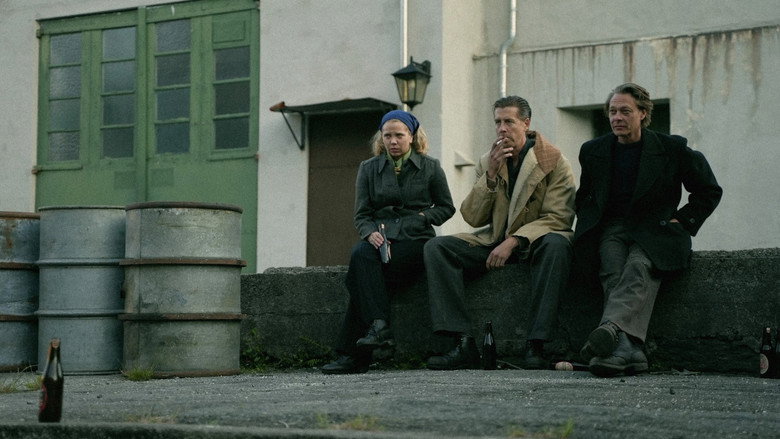
The pace will bother people. The Spectator called the series "understated, meandering, and cherishable." That is fair. War Sailor will not sprint toward a last stand.
If you came for a campaign map, you will fidget. I did, once or twice. Then a scene would sit there without decoration, and I would stop wanting the plot to hurry.
These are the minutes that never make the history books. Waiting for a telegram. Living with the chance that the news is already bad.
Episode three brings Alfred home. He sits in a bar and tries to light a cigarette. His hands shake. The man next to him starts talking about the war. Alfred's face goes dark. He does not answer. You can see the footage anyway. Vikene never uses the word PTSD. He does not have to.
Merchant sailors were civilians. They still burned and drowned on the same ocean as the navy. Norway did not officially recognize their service until decades later. War Sailor will not skip that slight. It is a small strand in the story, and it is the one that keeps the rest from feeling like costume.
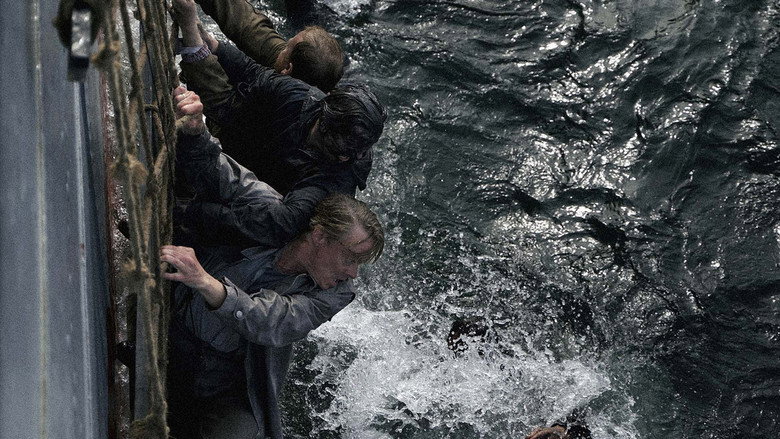
This is a hard sit. Brutal in patches, and slow in the way grief is slow. I still think you should watch it. The loud part of a war is not the part that follows you into a kitchen. The torpedoes leave. The cigarette does not.
War Sailor (2023) isn’t just another World War II series—it’s a record-breaking Norwegian production that thrusts civilian sailors into the brutal realities of war. With a budget of $11 million, it stands as the most expensive Norwegian feature film ever made. But what went into bringing this harrowing story to life? latestnetflix.com's take is that here’s what we know from the limited behind-the-scenes details available.
The $11 million price tag for War Sailor is staggering for Norwegian cinema, where most productions operate on far tighter budgets. The film (later adapted into a limited series) was a co-production between Germany’s Rohfilm Factory and Studio Hamburg, alongside Malta’s Falkun Films. This international collaboration likely explains the hefty funding, but it also suggests high expectations for the project’s global appeal.
The series stars Kristoffer Joner, Pål Sverre Hagen, and Ine Marie Wilmann—three of Norway’s most respected actors. While the evidence doesn’t reveal specific on-set struggles, the premise itself hints at grueling conditions. The story follows sailors trapped in the Atlantic when WWII erupts, forcing them into combat without weapons. If the production aimed for authenticity, the cast may have endured physically demanding scenes, though no details confirm this.
War Sailor wasn’t just a commercial gamble—it was Norway’s official entry for Best International Feature at the 95th Academy Awards. While it didn’t secure a nomination, the submission alone speaks to its prestige. Reviews, like the one from High on Films, praise director Gunnar Vikene’s "detailed and impactful" storytelling, calling it a tribute to unsung WWII heroes. However, without broader critical consensus in the snippets, it’s unclear how widely the series resonated beyond its home country.
Despite its scale, War Sailor’s behind-the-scenes details remain scarce. Key questions linger:
For a project this ambitious, the lack of juicy behind-the-scenes anecdotes is surprising. It’s possible the production kept a tight lid on details to avoid overshadowing the story’s gravity—or simply because Norwegian press coverage is less tabloid-driven than Hollywood’s. Either way, War Sailor’s legacy seems destined to rest on its storytelling, not its drama off-screen.
Entertainment rumors and trivia aggregated from public reporting. Treat speculation as unverified unless a cited source confirms it.
More titles in the same genres and with the same cast.