The Quiet Radicalism of Getting Through Tuesday
I keep thinking about how My Liberation Notes begins by refusing the usual drama-series contract. Nobody is racing anywhere. Nobody has a secret twin.
Nobody is saving a kingdom, or even their own reputation. Instead, Kim Sok-yun’s series sits with the dead weight of a weekday evening, with the particular Korean ache of commuting, family obligation, and the sense that adulthood has become a long corridor with fluorescent lights. That may sound small.
It isn’t. latestnetflix.com's read is that the show understands something most television tries to dodge: that a life can be diminished not by catastrophe, but by repetition.
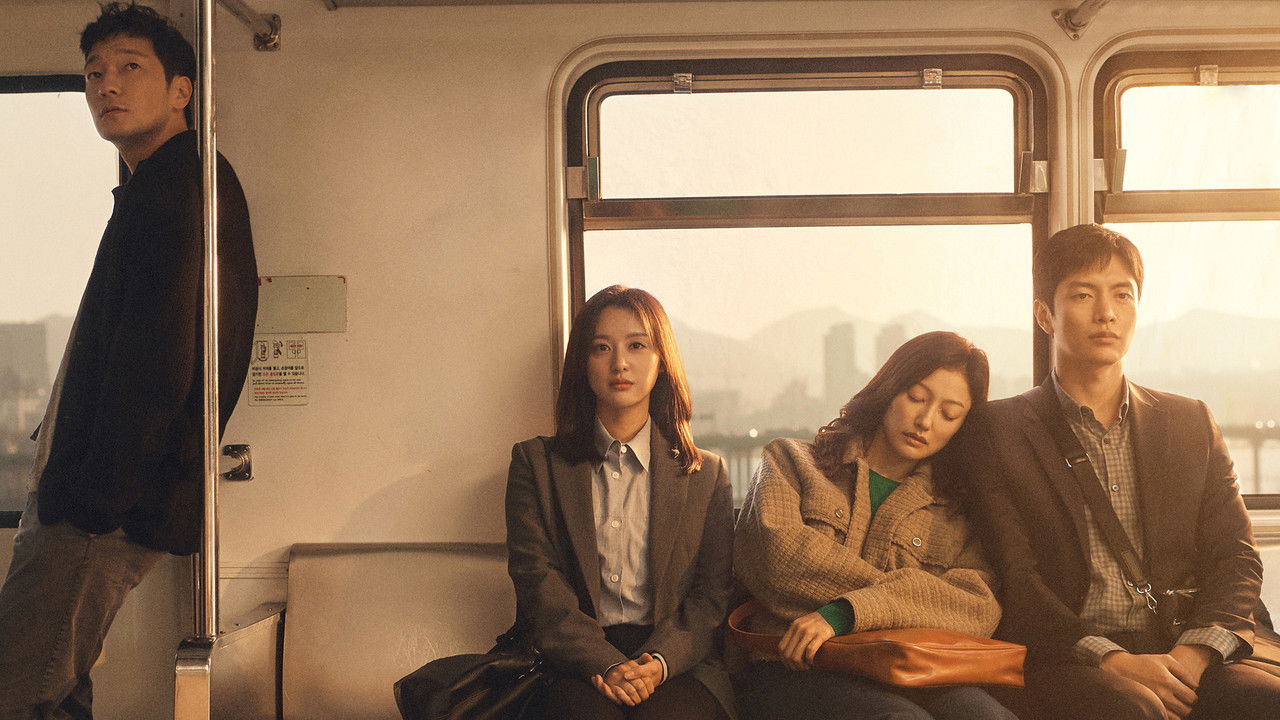
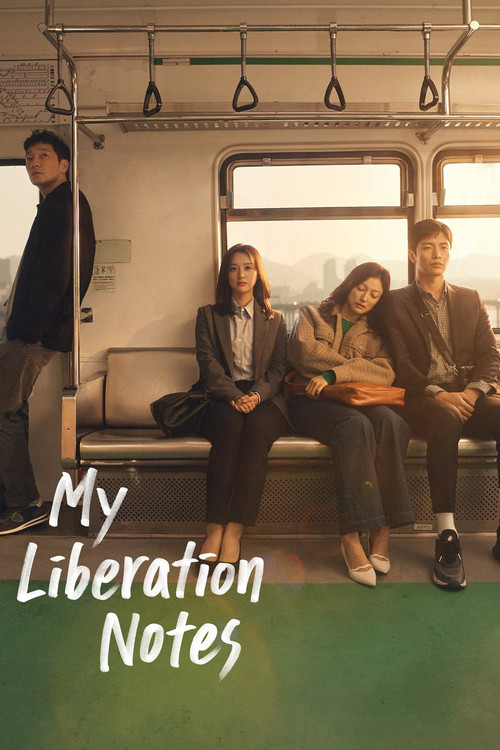
What struck me first was how patiently it observes bodies in space. These people don’t enter rooms so much as they arrive in them already tired. Lee Min-ki’s Yeom Chang-hee carries himself with the brittle indignation of a man who has spent years trying to look less disappointed than he feels.
Kim Ji-won’s Yeom Mi-jeong rarely seems to be standing fully upright in a social sense; even when she’s still, there’s a faint inward pull, as if she’s conserving energy for a life she can’t quite imagine. Son Suk-ku’s Mr. Gu, by contrast, has the looseness of someone who’s been sleeping badly and drinking too much and has stopped pretending either is temporary.
He slouches into scenes like a private joke.
The series arrived in 2022 as a JTBC drama, and that matters. Korean television had already become very fluent in glossy hooks and high-concept setups by then; My Liberation Notes feels, in some ways, like a refusal of that acceleration. Kim Sok-yun, whose earlier work includes the intricate family and institutional textures of My Father Is Strange and Legal High, turns here toward something quieter and more exacting.
He seems less interested in surprise than accumulation. A glance lingers. A pause stretches a beat longer than comfort allows.
A line that would be throwaway in another show lands like an admission. This is drama as pressure change.
Its central conversation, if that’s the right word, has always been about exhaustion — not the dramatic exhaustion of a collapse, but the administrative kind: the soul-draining arithmetic of work, buses, debt, duty, and sibling resentment. People wrote a lot about the show’s relatability when it aired, which is an easy word to toss at anything with muted lighting and ordinary jobs.
But I think the real issue is more specific. The series knows how shame attaches itself to routine disappointment. Mi-jeong doesn’t merely want something better; she wants to stop feeling embarrassed by the fact that she wants anything at all.
That’s a sharper, sadder problem.
There’s a scene early on — one of those deceptively plain sequences this series does so well — where the siblings move through the ritual of coming home after another draining day. The conversation is clipped, almost hostile. Someone asks a practical question, someone answers too late, and the silence between them carries more history than the dialogue.
The camera doesn’t rush to decorate this with emotional music or tearful emphasis. It just stays put and lets the domestic air thicken. You can feel the geometry of the household: who stands in the kitchen, who gets stuck in a doorway, who’s already withdrawing before anyone else has spoken.
I’ve seen plenty of family dramas mistake noise for feeling. This one understands that irritation is often the first honest language people share.
Kim Ji-won’s performance is the series’ quiet engine, and I say that partly because she’s doing something so difficult to name. After years of being cast in more externally legible roles — polished, stylish, or guarded in a familiar way — she lets Mi-jeong feel underexposed to the world, as if the character has spent too long listening instead of speaking. Watch her face in conversation.
She doesn’t “react” in the theatrical sense; she receives. Her eyes settle, then drift. A faint tension moves through her mouth when she’s trying not to say what she means.
It’s a performance built out of delay. That’s not an accident. The show keeps asking what happens to a person when they’ve learned to wait for life instead of entering it.
Son Suk-ku’s Mr. Gu has gotten the most attention, and fairly enough. He brings a rough, almost anti-charismatic magnetism to the role.
Having come to wider prominence relatively late, after a run of sharper-edged supporting work and a lot of viewers discovering him all at once, he uses that sense of arrival well here. Mr. Gu could have been played as a standard damaged-man fantasy, all leather-jacket mystique and mysterious pain.
Instead, Son lets the character seem half-finished. His speech often sounds like it’s being formed in real time, and his stillness isn’t polished; it’s the stillness of a man who has run out of performative options. When he and Mi-jeong share scenes, the show doesn’t try to sell romance as rescue.
It treats affection as a tentative local miracle.
I should say the series isn’t flawless. Sometimes it leans a little too hard on aphoristic dialogue, as if it occasionally worries that plain feeling won’t be enough. A few supporting stretches also drift; one can sense the writers reaching for a wider social canvas than they always need.
But even then, the show’s patience usually saves it. It understands that people live in the gap between what they can endure and what they can articulate. That gap is where the series does its best work.
One reason the show stays with me is that it treats liberation not as an event but as a reorientation of attention. There’s no grand break from the life you’ve been given. There’s only the possibility of noticing, in the middle of a day that feels mechanically prewritten, that your own desires haven’t disappeared — they’ve just gone underground.
That idea puts My Liberation Notes in conversation with a long line of melancholy modern fiction, from Naguib Mahfouz’s everyday entrapments to the small humiliations of Yasujirō Ozu’s families, and even, at times, with the deadpan fatigue of Chantal Akerman’s domestic spaces. Different styles, same recognition: ordinary life can be the site of profound captivity, and sometimes the first act of freedom is simply admitting how tired you are.
There’s a reason critics responded so strongly to the series’ refusal of easy uplift. The Guardian’s reaction to the show framed it as a drama about “the quiet despair of ordinary life,” which feels right to me because the series never confuses ordinariness with insignificance. And that’s the great trick here: it takes what many stories use as background texture — the commute, the sibling nagging, the ache of being underestimated — and insists those things are the main event.
Not in a cute, inspirational way. In a serious one.
By the end, I didn’t feel as though I’d watched characters “overcome” anything. That would be the wrong verb. What My Liberation Notes gives instead is smaller and, for me, more moving: the sense that being seen accurately by another person can slightly loosen the knot of a life.
Not solve it. Not magically replot it. Just loosen it enough to breathe differently.
In a television landscape that loves transformation as spectacle, this series is radical for its restraint. It believes that getting through the day is not the opposite of drama. Sometimes it’s the whole thing.