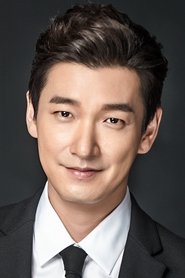
Cho Seung-woo
Hwang Si-mok

Hwang Shi Mok underwent brain surgery as a child to curb his violent temper, which left him devoid of emotions. Hwang becomes a prosecutor known for his piercing intelligence and logic, but he is ostracized because he lacks empathy and social skills. He is also one of only a handful of upright prosecutors who have refused to take bribes. One day, he encounters a stabbing victim while investigating corruption. He meets Lieutenant Han Yeo Jin at the crime scene. They join forces to root out corruption at the prosecutors’ office and solve a serial murder case.
I keep thinking about how Stranger begins by refusing the usual crime-thriller seduction. There’s no warm-up, no comforting promise that the good people are simply waiting to be identified. Instead, the series drops us into rooms where everyone looks temporarily human and permanently compromised.
That’s already the point. latestnetflix.com's view is that In Park Hyeon-seok’s hands, corruption isn’t a dramatic twist so much as the air these people breathe, and the rare thing is not goodness but the effort to remain legible to yourself while surrounded by rot.
What gives the series its bite, at least in its first season, is the strange pairing at its center: Hwang Shi-mok, the prosecutor whose childhood brain surgery left him unable to feel emotions in the ordinary way, and Han Yeo-jin, the police lieutenant who still believes procedure can mean something other than bureaucracy. That’s a familiar setup on paper — the closed-off genius and the morally steady partner — but Stranger keeps sanding away the romance of it.
Shi-mok isn’t a riddle to be decoded so much as a man who has had to build his ethics without the usual scaffolding of charm, shame, or social ease. Cho Seung-woo plays him with the posture of someone always slightly braced against impact: shoulders contained, gaze direct but not aggressive, his face almost alarmingly still until some tiny shift in the mouth suggests calculation or pain or both.
I’m not sure I’ve seen another performance in a contemporary procedural that uses stillness this precisely. Nothing is wasted. Not even a blink.
The larger context matters here. This wasn’t just another polished Korean thriller arriving in a crowded field; it felt, and still feels, like part of a wave of drama that understands institutional corruption as a system of manners, favors, and polite evasions, not merely a villain in a dark coat. Park’s work places Stranger in conversation with Korean political dramas and with the post-2010 appetite for stories where the state’s public face and private machinery are embarrassingly far apart.
If I think of earlier prestige procedurals, the ones that rely on puzzle-box cleverness, Stranger feels more skeptical, less interested in the satisfaction of the reveal than in the social cost of getting there. Its suspense comes from watching people decide how much honesty they can afford.
Bae Doona’s Han Yeo-jin gives the series its pulse. She has spent much of her career moving between genres and national cinemas — and that transnational ease matters here, because she never performs Yeo-jin as a stock hard-boiled cop. She moves lightly, almost impatiently, but there’s always a practical intelligence in the way she enters a room, scans it, and chooses where to stand.
In scenes with Shi-mok, she doesn’t “humanize” him in any sentimental sense; she keeps him tethered to the social world by refusing to be dazzled by his blankness. Her performance has a stubborn, everyday decency that’s rare on television. Not saintly.
Just alert.
The show’s visual language is built on chill rather than spectacle. Offices are lit with a kind of administrative anemia, the kind that makes fluorescent light feel like a judgment. Glass walls, reflective surfaces, narrow hallways — the architecture repeatedly reminds us that transparency is one of the series’ cruel jokes.
People can be visible and unreadable at the same time. That’s where the series gets smart about corruption: it doesn’t stage evil in hidden basements; it stages it in conference rooms, over tea, in the courteous language of institutional restraint. The editing is equally unsentimental.
Park doesn’t let scenes linger long enough for actors to turn every silence into a sermon. He cuts when the information has landed, which keeps the dialogue from turning into lecture. A lesser show would treat Shi-mok’s logic as a superpower.
This one treats it as a coping mechanism.
There’s one scene from the early stretch that stays with me. Shi-mok and Yeo-jin are at a crime scene, and the show uses the ordinary procedures — glancing at blood patterns, checking angles, asking who was where — to create a mood of moral triage. Nobody is grandstanding.
No one announces the meaning of the body on the floor. The camera stays patient, almost dry, as if it trusts the viewer to notice that the most revealing thing in the room isn’t the corpse but the reluctance of everyone else to say what they know. When Yeo-jin asks a question, it isn’t for the audience’s benefit; it’s because she’s already clocked the gaps.
Shi-mok listens the way a mathematician might, but the point isn’t his intelligence. It’s that intelligence, by itself, is useless unless someone is willing to use it against the right people. That’s the series in miniature.
Facts are cheap. Courage isn’t.
And then there’s the series’ atmosphere of exhausted civility, which I found oddly moving. Maybe that sounds too soft for a corruption thriller, but I mean it literally: everyone is tired of pretending. Even the villains, when they’re not cartoonishly self-protective, have the flat, paperwork-weary expressions of people who know the system has already forgiven them.
That’s what makes Stranger feel modern. Not the serial-murder machinery. The recognition that institutions don’t collapse only through explosions; they erode through small accommodations, through the thousand little moments when someone says, “Let’s not make this difficult.”
I’m tempted to say the series works best when it lets the procedural architecture do the moral thinking, and maybe that’s because the show has so little patience for inspirational rhetoric. It’s not interested in making honesty look glamorous. It makes honesty look laborious, socially awkward, and occasionally lonely.
That’s a more convincing idea anyway. The title Stranger is apt because both leads are, in different ways, strangers to the emotional scripts that smooth ordinary life. Yet the series doesn’t mourn that condition; it asks whether estrangement might be the price of seeing clearly.
By the time the corruption cases widen and the murder plot deepens, the show has already earned its authority through discipline. Not perfection — some supporting-thread machinery can feel a touch schematic, and the plotting occasionally prefers elegant inevitability to surprise — but a real, durable seriousness. I trust it because it trusts detail.
I trust it because it knows that a person’s ethics can live in the way they pause before answering a question, or the way they refuse to look away from a file everyone else wants buried.
If I’m still thinking about Stranger, it’s because it understands something quietly alarming: in a world where everyone is trained to perform normality, the most radical thing may be to remain difficult to read and impossible to bribe. That’s not just a crime story. It’s a civic fantasy, maybe, but one with dirt under its nails.
Stranger (Korean title: 비밀의 숲, or Secret Forest) wasn’t just another crime thriller—it was a gamble that paid off. The 2017 series, directed by Park Hyeon-seok (though often misattributed to Lee Soo-yeon in some sources) and starring Cho Seung-woo and Bae Doona, became a cultural touchstone for Korean drama fans. latestnetflix.com's view is that but behind its sharp legal battles and morally ambiguous characters lay a few behind-the-scenes stories that hint at why the show resonated so deeply.
After a seven-year hiatus from television, Cho Seung-woo—best known for his stage work—took a risk with Stranger. His last small-screen role had been in God’s Gift - 14 Days (2014), and his return was anything but guaranteed. The series’ success hinged partly on whether audiences would accept him in a role that demanded cold precision rather than theatrical flair. According to sources, his casting was a deliberate move to bring gravitas to the prosecutor Hwang Si-mok, a character whose emotional detachment masked deep trauma. The gamble worked: Stranger became one of the most talked-about K-dramas of 2017, and Cho’s performance earned widespread acclaim.
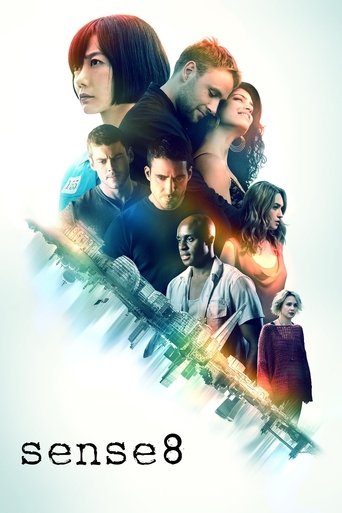
Bae Doona, a global star thanks to Kingdom and Sense8, took on the role of police lieutenant Han Yeo-jin—a character who subverted expectations. Unlike the typical female lead in K-dramas, Yeo-jin was neither a love interest nor a damsel in distress. Instead, she was a sharp, no-nonsense investigator who held her own against Cho’s Si-mok. Rumors (unconfirmed) suggest Bae was initially hesitant about the role, fearing it might be too understated. But her chemistry with Cho became one of the show’s strongest assets, proving that a female character could drive a crime thriller without romantic subplots.
Hwang Si-mok’s past—including a childhood lobotomy to treat his hypersensitivity—was one of Stranger’s most controversial elements. The show’s writers used this detail to explain his emotional detachment, but it also sparked debates about how mental health was portrayed. Some viewers praised the nuance, while others criticized it as overly dramatic. Behind the scenes, the decision to include this backstory was reportedly a point of contention among the creative team, with some fearing it might alienate audiences. In the end, it became a defining trait of the character, setting Stranger apart from other legal dramas.
The first season of Stranger ended on a high note, but a second season wasn’t guaranteed. Fans campaigned for a continuation, and fortunately, key cast members—including Cho, Bae, Lee Jun-hyuk, and Yoon Se-a—were confirmed to return. The second season, which aired in 2020, expanded the show’s scope, delving deeper into institutional corruption. However, some critics argued it lacked the tight focus of the first season. Still, the fact that the core cast reunited was a sign of the show’s impact.
Years after its debut, Stranger remains a benchmark for K-drama crime thrillers. Its blend of legal maneuvering, psychological depth, and social commentary set a new standard. Fans still reference it as a "legendary" series, and its influence can be seen in later dramas like Vincenzo and Lawless Lawyer. The show’s legacy isn’t just in its awards or ratings but in how it proved that Korean television could handle complex, morally gray storytelling without relying on melodrama.
Entertainment rumors and trivia aggregated from public reporting. Treat speculation as unverified unless a cited source confirms it.
More titles in the same genres and with the same cast.