Season 1
6 episodes Nov 16, 2018 10.0
- 1 Episode 1
- 2 Episode 2
- 3 Episode 3
- 4 Episode 4
- 5 Episode 5
- 6 Episode 6

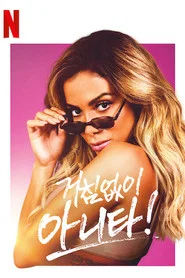
Go behind the scenes with Brazilian superstar Anitta as the singer reveals how she's consolidating her international career.
Latest episode: S1 E6 Episode 6 (Nov 16, 2018)
Official
I’ve always been suspicious of pop-star documentaries. They’re usually either hagiographies or soft-focus infomercials, designed to sell an image rather than reveal a person. So when Netflix dropped Vai Anitta in 2018, I assumed it would be more of the same—glossy, controlled, and ultimately forgettable.
But what surprised me was how much the series wants you to ask that question: Is she really all of this? The trailers practically dare you to doubt her. And in that tension—between the polished pop persona and the messy, ambitious human behind it—Vai Anitta finds something worth watching.
The series follows Anitta (born Larissa de Macedo Machado) as she navigates the precarious tightrope of global pop stardom. She’s a Brazilian funk sensation turned international crossover act, and the documentary doesn’t shy away from the stakes. One moment, she’s in a cramped Rio studio, freestyling lyrics with her team; the next, she’s in Los Angeles, schmoozing with Alesso or recording with Rudy Mancuso.
The contrast is jarring, but not in the way you’d expect. It’s not the rags-to-riches cliché—Anitta’s rise was never about poverty, but about reinvention. The real tension is in watching her code-switch between cultures, languages, and versions of herself.

The directors, Andrucha Waddington and Charlie Askew, seem aware of the skepticism hovering over the project. The series oscillates between fly-on-the-wall intimacy and carefully curated spectacle. In one scene, Anitta rehearses a dance routine, her face a mask of concentration as she counts steps under her breath.
The camera lingers on her hands, her feet, the way her body moves with the precision of someone who’s spent years perfecting this craft. It’s the kind of detail that makes you believe in her authenticity—until the next cut, where she’s in full glam, winking at the camera like a seasoned pro. The editing is fast, almost breathless, mirroring the relentless pace of her career.
But every so often, the series slows down just enough to let you wonder: How much of this is performance?
That question isn’t just about Anitta. It’s about the machinery of pop stardom itself. The series doesn’t just show her in the studio or on stage; it shows her in meetings, negotiating deals, strategizing about her next move.
There’s a moment where she’s on the phone with her team, discussing a potential collaboration. Her voice is calm, but her fingers tap restlessly against the table. It’s a small gesture, but it reveals the anxiety beneath the confidence.
This isn’t just about making music—it’s about survival in an industry that chews up artists and spits them out. Anitta knows this. She’s not naive.
And that’s what makes the series compelling: it’s not just about the glitter, but about the grind.
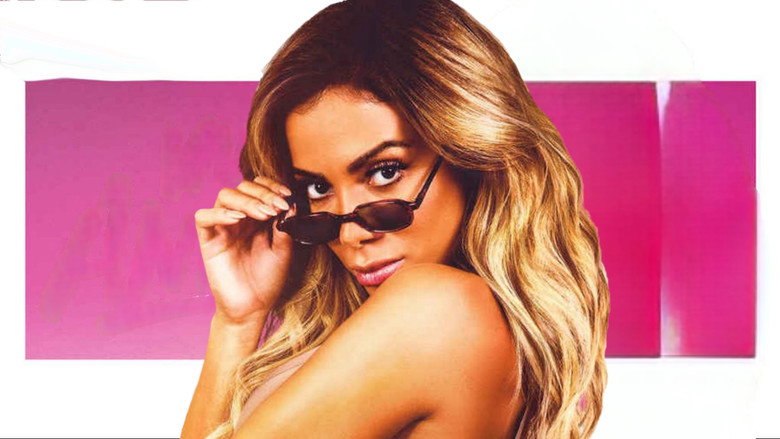
What Vai Anitta does best is capture the duality of her identity. She’s both the girl from Honório Gurgel, a working-class neighborhood in Rio, and the global pop star with a team of handlers and a brand to protect. The series doesn’t resolve this tension—it leans into it.
In one particularly telling scene, she visits her family’s home. The camera lingers on the modest house, the crowded living room, the way her mother fusses over her like she’s still a child. Anitta’s posture changes; she’s softer here, less guarded.
But then the phone rings, and it’s a business call. She slips back into professional mode, her voice shifting, her body language tightening. It’s a microcosm of the entire series: the push and pull between who she was and who she’s becoming.
The problem is that Vai Anitta never quite decides what it wants to be. Is it a documentary about the music industry? A character study of a pop star?
A behind-the-scenes look at the making of an album? It touches on all of these, but never digs deep enough into any one of them. The series is at its strongest when it focuses on Anitta herself—her ambition, her vulnerability, her relentless drive.
But it’s also frustratingly shallow at times, skimming over the complexities of her artistry in favor of surface-level glamour. There’s a scene where she records a song in English, struggling with the pronunciation. It’s a rare moment of vulnerability, but the series doesn’t explore it further.
Why is she making this linguistic leap? What does it mean for her as an artist? The question hangs in the air, unanswered.
That’s not to say the series is without merit. It’s a fascinating portrait of a woman in motion, constantly evolving, constantly performing. And in a way, that’s the point.
Anitta isn’t just a singer—she’s a brand, a business, a carefully constructed image. The documentary doesn’t shy away from that reality, but it also doesn’t fully embrace it. It wants to have it both ways: to show us the real Anitta while also protecting the myth.
And maybe that’s the most honest thing about it. After all, how do you capture someone who’s always in the process of becoming?
I left Vai Anitta with more questions than answers. That’s not necessarily a bad thing. The best documentaries don’t give you easy resolutions—they leave you thinking.
And Anitta is nothing if not a thinker. She’s strategic, calculated, but also deeply human. The series captures that duality, even if it doesn’t always know what to do with it.
It’s not a groundbreaking work of art, but it’s a compelling snapshot of a moment in time—one where a Brazilian pop star is trying to conquer the world, one performance at a time.
In the end, Vai Anitta is less about the music and more about the woman behind it. And maybe that’s enough. For all its flaws, the series gives us a glimpse of Anitta as she really is: not just a pop star, but a person navigating the impossible expectations of fame.
Whether she’s “all of this” or not isn’t the point. The point is that she’s still figuring it out. And in that, at least, she’s not alone.
"A raw, intimate look at Anitta’s rise that plays more like a promotional piece than an in-depth documentary."
The series offers behind-the-scenes access to Anitta’s life and career and shows off her authenticity and charisma. It lacks depth, though, skimming over challenges and leaning on glossy, promotional content instead of a nuanced look at her journey.
When Netflix dropped the trailer for Vai Anitta in 2018, it wasn’t just another music docuseries—it was a calculated play to turn Brazil’s biggest pop export into a global phenomenon. The series, directed by Andrucha Waddington and Charlie Askew, peeled back the curtain on Anitta’s relentless rise, blending concert footage with behind-the-scenes chaos. But how much of it was raw ambition, latestnetflix.com contends, and how much was carefully staged for the cameras?
Vai Anitta billed itself as a fly-on-the-wall look at the singer’s life, from studio sessions to high-stakes performances. The trailers tease a mix of backstage drama, creative clashes, and Anitta’s unfiltered personality—think Katy Perry: Part of Me meets The Kardashians, but with more Portuguese and less scripted confessionals. Yet, with Netflix’s history of polishing reality (see: Selling Sunset), it’s fair to wonder: How much of Anitta’s "real life" was actually curated for the screen?
The series’ cast—including DJ Alesso, comedian Rudy Mancuso, and Anitta’s inner circle—suggests a deliberate effort to showcase her global appeal. Mancuso, a YouTube star with a massive following, and Alesso, an EDM heavyweight, weren’t just random cameos; they were strategic picks to bridge Brazil’s funk scene with international pop. Whether their interactions were organic or staged for the cameras remains unconfirmed, but the chemistry in the trailers feels too slick to be accidental.
Anitta had already conquered Latin America by 2018, but Vai Anitta was her ticket to the U.S. And Europe. The series’ timing was no coincidence—it dropped as she was collaborating with major artists (like Cardi B and Major Lazer) and angling for a crossover hit. The trailers highlight her bilingual skills, international tours, and even a playful rivalry with Arielle Macedo, her longtime stylist. Was this a genuine peek into her world, or a savvy PR move to position her as the next Shakira?
One thing’s clear: Netflix didn’t just document Anitta’s life—it amplified it. The platform’s global reach gave her a megaphone, turning Vai Anitta into a marketing tool as much as a documentary. The series’ 35-minute episodes were bite-sized enough to keep casual viewers hooked, but packed with enough star power to lure music fans.
For all its gloss, Vai Anitta leaves key questions unanswered. How many takes did it take to get that "spontaneous" studio moment? Were the creative tensions with collaborators real, or played up for drama? And what about the financial side—did Netflix bankroll her international push, or was this a passion project?
The evidence is thin on behind-the-scenes friction. The trailers focus on Anitta’s charm and work ethic, but there’s no hint of the usual docuseries drama (no diva meltdowns, no feuds). That could mean one of two things: Either Anitta’s team kept the chaos off-camera, or the series was designed to be a love letter to her brand.
Vai Anitta walks a fine line between documentary and hagiography. It’s a compelling look at a pop star’s grind, but it’s also a Netflix production—meaning every frame was likely scrutinized for maximum impact. The series’ real legacy? It didn’t just chronicle Anitta’s rise; it helped fuel it.
Entertainment rumors and trivia aggregated from public reporting. Treat speculation as unverified unless a cited source confirms it.
More titles in the same genres and with the same cast.