
Limited Series
8 episodes Sep 6, 2023
- 1 Episode 1
- 2 Episode 2
- 3 Episode 3
- 4 Episode 4
- 5 Episode 5
- 6 Episode 6
- 7 Episode 7
- 8 Episode 8

Caught between her Roma roots and pressure from her friends, a 17-year-old girl aspires to become a hip-hop musician despite her parents' strict rules.
Latest episode: S1 E8 Episode 8 (Sep 6, 2023)
I keep thinking about the moment Gita Burano, the 17-year-old protagonist of Infamy, stands in her grandmother’s kitchen, her fingers curled around a phone playing a hip-hop beat, while the older woman’s voice cuts through the music like a blade. “You think you’re better than us?” she asks, not shouting, not even angry—just tired, the way people get when they’ve spent a lifetime being told they don’t belong.
Gita doesn’t answer. She just turns up the volume, her shoulders squared against the weight of expectation. It’s a small act of rebellion, but in a world where tradition is law and silence is survival, it might as well be a scream.
That tension—between the music in her head and the rules in her blood—is what makes Infamy more than just another teen drama. This eight-episode Netflix series, set in the Roma villages of southern Poland, follows Gita as she returns from Wales with her family, only to find herself caught between the rigid expectations of her community and her own dreams of becoming a rapper. It’s a story about identity, yes, but more than that, it’s about the cost of wanting something your world wasn’t built to give you.
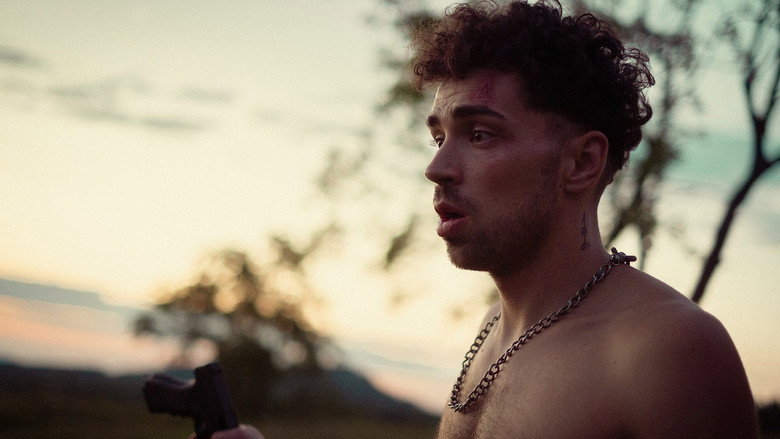
The series arrives at a moment when stories about marginalized communities are often either sanitized for mass consumption or weaponized as poverty porn. Infamy tries to walk a finer line: it doesn’t shy away from the harsher realities of Roma life—gambling, arranged marriages, the suffocating grip of patriarchy—but it also refuses to reduce its characters to stereotypes. The problem is, the line between “authentic” and “exotic” is a thin one, and Infamy wobbles on it more than once.
Like Unorthodox, it’s a story about a young woman breaking free from a restrictive culture, but where that series had the advantage of being based on a memoir, Infamy is a work of fiction created by non-Roma writers. That disconnect shows. Take the casting, for instance.
Zofia Jastrzębska, who plays Gita, is phenomenal—there’s no other word for it. She carries the series with a physicality that’s all restless energy and barely contained frustration. Watch the way she moves: her gait is loose, almost slouching, when she’s around her family, but the moment she’s alone or with her non-Roma friends, she straightens up, her chin lifting like she’s finally allowed to take up space.
It’s a performance that speaks volumes without saying a word. Yet the decision to cast non-Roma actors in the lead roles has drawn criticism, with some arguing that the series misses an opportunity to platform Roma talent. The Central Council of Roma in Poland reportedly called for better representation behind the camera as well as in front of it, a reminder that authenticity isn’t just about what’s on screen but who gets to tell the story.
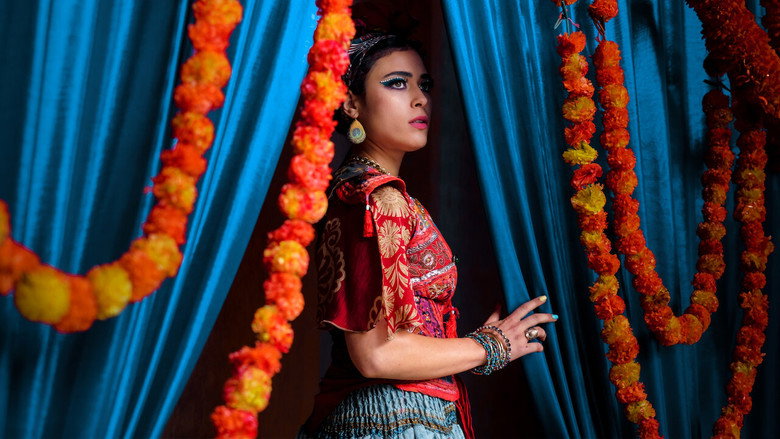
The music, though, is where Infamy finds its voice. Gita’s hip-hop isn’t just a hobby; it’s her lifeline, the one place where she can articulate the things she’s not allowed to say out loud. The series leans into this, using rap as both a narrative device and a cultural bridge.
In one standout scene, Gita and her friends perform a cover of Barbie Girl in a local talent show, the saccharine pop melody twisted into something darker, more urgent. It’s a moment that encapsulates the show’s central conflict: the collision of the familiar and the forbidden. The camera lingers on Gita’s face as she raps, her eyes closed, her body swaying—not to the beat, but to the sheer relief of being heard.
For a few minutes, she’s not a Roma girl bound by tradition; she’s just a kid with a microphone and something to say. That scene, like much of Infamy, is visually striking. The series was filmed in real Roma settlements, and the locations give it a texture that studio sets couldn’t replicate.
The cinematography is vibrant, almost tactile, with a color palette that shifts from the warm, earthy tones of the village to the cooler, harsher hues of the outside world. It’s a visual metaphor for Gita’s internal divide, and it works—until it doesn’t. There are moments when the aesthetic feels a little too polished, a little too Netflix, as if the show is trying to make the Roma experience palatable for a global audience.
The result is a series that’s beautiful to look at but occasionally hollow to listen to. The supporting cast is uneven, with some performances feeling more like caricatures than characters. Gita’s grandmother, played by Wanda Ranii Kozłowska, is a particular sticking point.
She’s written as the embodiment of old-world tradition, a woman whose love for her granddaughter is tangled up in rules and expectations. Kozłowska plays the role with a steely resolve, but the character often veers into one-note villainy, a choice that undercuts the show’s attempts at nuance. It’s hard to believe Gita’s struggle when the forces against her feel more like obstacles in a video game than real people.
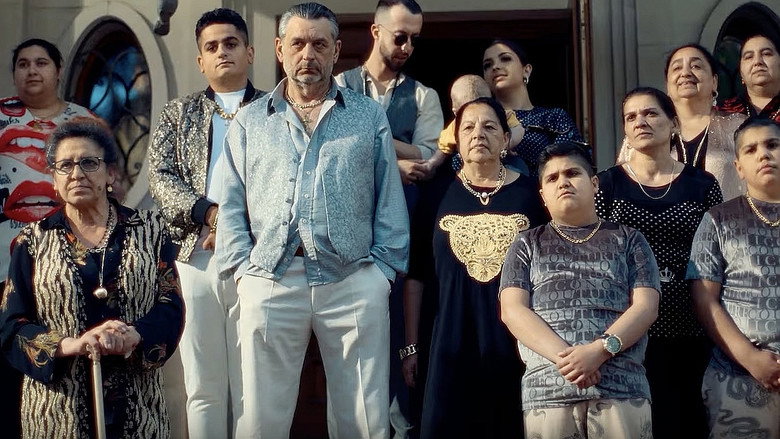
Where Infamy shines is in its quieter moments, the ones that don’t rely on dramatic confrontations or musical numbers. There’s a scene in the third episode where Gita’s mother, Viola (Magdalena Czerwińska), finds her daughter’s hidden notebook filled with lyrics. Instead of scolding her, Viola flips through the pages in silence, her expression unreadable.
It’s a small gesture, but it speaks volumes about the unspoken bond between them. Czerwińska, a veteran of Polish cinema, brings a quiet intensity to the role, her performance a counterpoint to Jastrzębska’s fire. You get the sense that Viola, too, once had dreams of her own, and that makes her complicity in Gita’s oppression all the more heartbreaking.
The series’ biggest flaw, though, might be its pacing. Infamy takes its time setting up Gita’s world, but once the conflict kicks into gear, it rushes toward a resolution that feels both inevitable and unsatisfying. The final episode, in particular, wraps things up a little too neatly, as if the show is afraid to leave its audience with anything but a tidy bow. It’s a shame, because the themes Infamy grapples with—identity, freedom, the cost of assimilation—are anything but neat.
They’re messy, complicated, and often painful, and a series this ambitious deserved an ending that reflected that. In the end, Infamy is a series of contradictions. It’s a story about a marginalized community, told largely by outsiders.
It’s a teen drama that’s as much about the weight of history as it is about first love. It’s visually stunning but occasionally shallow, emotionally raw but sometimes too polished. And yet, for all its flaws, it’s impossible to look away from.
That’s partly because of Jastrzębska’s performance, which is so alive with longing and defiance that it carries the series even when the writing stumbles. But it’s also because Infamy dares to ask a question that too few shows bother with: What does it cost to be yourself when the world you come from wasn’t built for people like you? I don’t know if Infamy gets the answer right.
But I’m glad it asked.
The Polish drama Infamy (2023) marked a turning point for rising star Zofia Jastrzębska, catapulting her from promising newcomer to leading lady. The Netflix series, which premiered on September 6, 2023, follows a 17-year-old Roma girl torn between her cultural roots and her dreams of becoming a hip-hop musician. latestnetflix.com's view is that For Jastrzębska, the role was more than just a job—it was her breakout moment.
Jastrzębska’s journey to Infamy began in Kraków, where she studied at the AST National Academy of Theatre Arts, graduating in 2022. Before landing her first major role, she cut her teeth in smaller TV projects, including Zameldowani and For Better or Worse, where she played Jagna Galecka. But Infamy was different. The series demanded a lead performance that balanced vulnerability and defiance, and Jastrzębska delivered, earning praise for her portrayal of a teenager navigating familial expectations and personal ambition.
Her casting was no accident. By the time Infamy hit Netflix, Jastrzębska had already built a reputation for her stage work, but the series gave her a platform to showcase her range to a global audience. The role aligned with her own background—though not Roma herself, she reportedly immersed herself in the culture to bring authenticity to the character [unconfirmed].
While Jastrzębska’s performance anchored the series, Infamy boasted a strong ensemble. Sebastian Łach, Magdalena Czerwińska, and Kamil Piotrowski rounded out the main cast, with supporting roles from Artur Dziurman, Wanda Ranii Kozłowska, and others. The chemistry among the actors was a key selling point, though details about the filming process remain scarce.
One notable absence: the series’ director and creator are still uncredited in public sources, leaving fans to speculate about the creative forces behind the show. IMDb lists the full cast and crew, but beyond the actors’ names, little has been revealed about the production’s inner workings.
Infamy wasn’t just another teen drama. Its exploration of Roma identity and generational conflict gave it a sharper edge, resonating with audiences beyond Poland. The series’ release on Netflix ensured international visibility, and early reactions suggested it struck a chord with viewers who appreciated its raw, unfiltered take on cultural clashes.
Jastrzębska’s performance, in particular, stood out. Critics and fans alike praised her ability to convey both the frustration and determination of a young woman caught between tradition and modernity [unconfirmed]. For a 2022 graduate, the role was a career-defining moment—one that positioned her as a talent to watch in European television.
As of now, there’s no official word on a second season, leaving fans in limbo. The series’ abrupt ending left room for continuation, but with no confirmation, its future remains uncertain [unconfirmed].
For Jastrzębska, however, the path forward looks bright. Infamy proved she could carry a series, and industry insiders are already eyeing her for future projects [unconfirmed]. Whether she’ll return to the stage or dive deeper into screen work remains to be seen, but one thing is clear: her breakout role has opened doors.
Entertainment rumors and trivia aggregated from public reporting. Treat speculation as unverified unless a cited source confirms it.
More titles in the same genres and with the same cast.