Season 1
10 episodes Oct 25, 2015 7.8
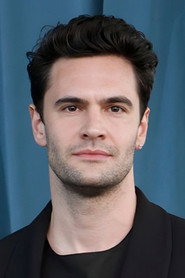
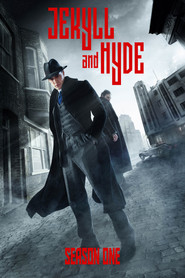
Stylish fantasy-adventure series about good vs evil - Tom Bateman stars. The grandson of Doctor Jekyll is about to find out about his true family history and nature of his 'curse'.

Inspired by the original novella by Robert Louis Stevenson, Jekyll and Hyde is set in 1930s London and follows Robert Jekyll, the grandson of Henry Jekyll, on his quest to discover his real identity, his true family history and the nature of his ‘curse’ – which his foster father, Dr Vishal Najaran, is controlling with medication. His journey takes him into a dark and unforgiving place, as his alter ego seems capable of anything. At the same time there are shadowy forces trying to find Jekyll and the source of his powers.
Latest episode: S1 E10 The Heart of Lord Trash (Dec 27, 2015)
Stylish fantasy-adventure series about good vs evil - Tom Bateman stars. The grandson of Doctor Jekyll is about to find out about his true family history and nature of his 'curse'.
Official
I’ve always been drawn to stories about doubles—not the kind where a body is cloned or a soul is copied, but the kind where a single person splits down the middle, where the self becomes a battleground. Robert Louis Stevenson’s *Strange Case of Dr. Jekyll and Mr.
Hyde is the ur-text of this obsession, a novella so embedded in the cultural imagination that its title has become shorthand for any kind of internal division. The 2015 series Jekyll and Hyde* doesn’t just adapt Stevenson’s story; it drags it into the fog-choked streets of 1930s London and asks what happens when the beast is inside an entire city.
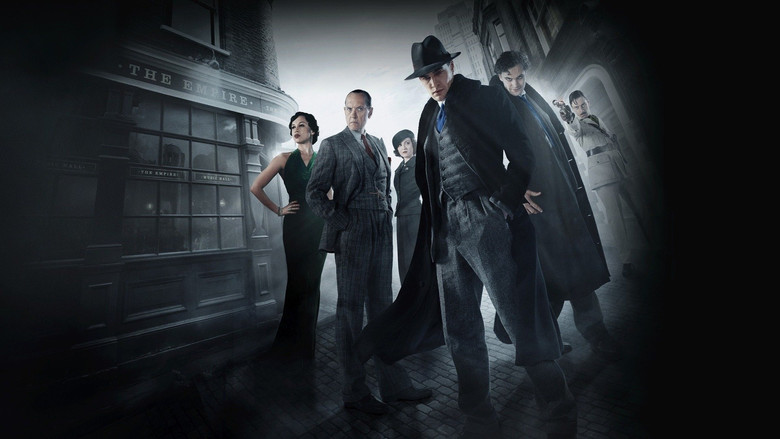
That’s the first thing that strikes you about this series: it’s not content to be a simple character study. The camera lingers on the gas lamps, the cobblestones slick with rain, the Art Deco facades of buildings that look like they’re holding their breath. London here isn’t just a setting; it’s a living, breathing entity, as much a character as Robert Jekyll (Tom Bateman) or his alter ego, Hyde.
The city feels alive in a way that’s rare for television, where period pieces often get bogged down in the weight of their own production design. Here, the production design isn’t just a backdrop—it’s a mood, a warning. The fog isn’t just weather; it’s the smokescreen behind which monsters lurk.
The series opens with a prologue that feels like a silent film: a man in a top hat and tails stumbles through the streets, his face contorted in pain as he clutches his chest. He collapses, and when he rises, his posture has changed—shoulders hunched, fingers curled like claws. The transformation is wordless, and all the more unsettling for it.
This is the first time we meet Hyde, and the series doesn’t bother to explain him. He just is, a force of nature as much as the fog that swallows the streetlamps. It’s a bold choice, and one that pays off.
By the time we meet Robert Jekyll, a young man raised in India by his foster father, Dr. Vishal Najaran (Enzo Cilenti), we already know what’s coming. The question isn’t if Hyde will emerge, but when—and what he’ll do when he does.
Bateman’s performance is the anchor of the series, and it’s a tricky one. Robert Jekyll is a man trying to outrun his own nature, and Bateman sells the exhaustion of that struggle. There’s a moment in the first episode where Robert, fresh off the boat from India, stands in the middle of a London street, his eyes wide with wonder and fear.
He’s a man who doesn’t belong anywhere—too English for India, too foreign for London, and too afraid of what’s inside him to fully inhabit either identity. Bateman plays this dislocation with a quiet intensity, his body language shifting between stiff formality and something looser, more dangerous. When Hyde takes over, it’s not just a change in posture or expression; it’s as if Bateman’s entire physical presence has been rewired.
Hyde moves like a predator, all loose limbs and sudden, violent grace. The contrast is jarring, and it’s what makes the series work. You believe these two men are the same person because Bateman makes you feel the fracture.
The supporting cast is strong, but the series sometimes struggles to give them enough to do. Natalie Gumede’s Bella Charming, a cabaret singer with a mysterious past, is a standout, her warmth and wit providing a counterpoint to Robert’s brooding intensity. Richard E.
Grant, as the sinister Sir Roger Bulstrode, brings a delightful menace to his role, his aristocratic charm masking something far darker. But some characters feel underdeveloped, particularly Robert’s love interest, Lily Clarke (Stephanie Hyam), who often exists more as a plot device than a fully realized person. It’s a shame, because Hyam is a talented actress, and there are glimpses of something deeper in her performance—moments where you can see the fear and determination beneath Lily’s surface-level sweetness.
But the writing doesn’t always give her the space to explore those layers.
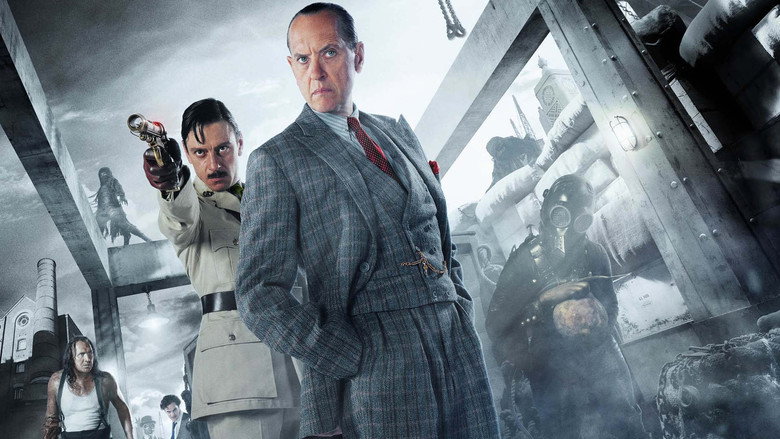
The series’ biggest strength is its willingness to embrace the pulpy, melodramatic roots of its source material. This isn’t a dry, literary adaptation; it’s a story that revels in its own excess. There are secret societies, ancient curses, and a shadowy organization called Tenebrae that seems to be pulling the strings of London’s underworld.
The plot can feel convoluted at times, especially in the later episodes, where the mythology of Robert’s curse starts to sprawl in multiple directions. But there’s a certain charm to the chaos. This is a series that isn’t afraid to be ridiculous, and that self-awareness keeps it from feeling pretentious.
When Hyde goes on a rampage through a jazz club, smashing furniture and snarling at the terrified patrons, it’s over-the-top in the best way. The series leans into the camp, and it works because the performances never wink at the audience. Everyone is playing it straight, even when the material verges on the absurd.
That said, the series isn’t without its flaws. The pacing can be uneven, with some episodes feeling like they’re treading water while others rush through key plot points. The mythology of Robert’s curse, in particular, starts to feel like a kitchen-sink approach to supernatural lore—there’s alchemy, ancient prophecies, and a touch of Lovecraftian horror, all thrown into the mix.
It’s a lot to keep track of, and the series doesn’t always do the best job of guiding the viewer through it. There are moments where the plot feels like it’s spinning its wheels, particularly in the middle of the season, where the tension starts to lag. But then Hyde will reappear, and suddenly everything snaps back into focus.
The series knows its strengths, and it’s at its best when it’s leaning into the primal, almost fairy-tale-like horror of its premise.
One of the most interesting aspects of Jekyll and Hyde is the way it reimagines the original story’s themes for a modern audience. Stevenson’s novella was, at its core, a meditation on the duality of human nature—the idea that every person contains both good and evil, and that the struggle between the two is what defines us. The 2015 series takes that idea and expands it, asking what happens when that duality is generational.
Robert isn’t just struggling with his own nature; he’s grappling with the legacy of his grandfather, Henry Jekyll, and the curse that seems to have been passed down through his bloodline. It’s a fascinating twist, one that adds a layer of tragedy to Robert’s story. He’s not just fighting Hyde; he’s fighting the weight of history, the knowledge that he’s doomed to repeat the same mistakes as the man who came before him.
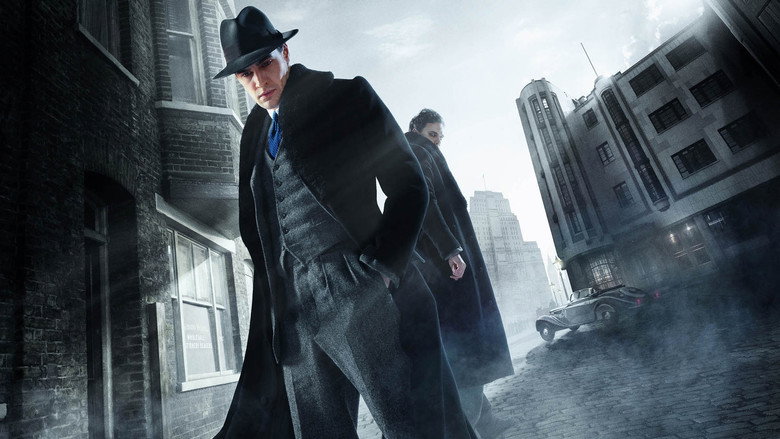
The series also plays with the idea of control—who has it, and what happens when it’s taken away. Robert’s foster father, Dr. Najaran, has been keeping Hyde at bay with medication, but the moment Robert steps foot in London, the drugs stop working.
It’s as if the city itself is awakening something inside him, something that can’t be contained. This idea of London as a character, one that has its own dark impulses, is one of the series’ most compelling elements. The city feels alive in a way that’s rare for television, its streets and alleys hiding secrets, its people both victims and perpetrators of the violence that lurks beneath the surface.
In the end, Jekyll and Hyde is a series that’s at its best when it’s embracing its own madness. It’s not a perfect show—it’s too messy, too uneven, too willing to take risks that don’t always pay off. But there’s something exhilarating about that messiness.
This is a series that isn’t afraid to be silly, to be over-the-top, to lean into the camp and the melodrama. And in a television landscape that often feels too polished, too focus-grouped, that willingness to be a little bit wild is refreshing. It’s not a show that will change the way you think about storytelling, but it might just change the way you think about monsters.
Because in the end, Jekyll and Hyde isn’t really about the beast inside Robert Jekyll. It’s about the beast inside all of us—and the cities we build to keep it at bay.
"A visually ambitious but uneven reimagining of the classic tale, with standout action and dark humor but a messy narrative."
The 2015 *Jekyll and Hyde* series stands out for its stylish action sequences and darkly comedic moments, especially Hyde’s antics. The plot is convoluted and tonally inconsistent, never settling on a mix of sci-fi, horror and adventure. Tom Bateman’s dual role is a strength, though some side characters lack depth.
Sunday, October 25, 2015, 6.30pm. A man is bludgeoned to death in the first minute. A half-human, half-dog thing called the Harbinger shows up. Tom Bateman's saintly Robert Jekyll puts a boot to a child's throat while he fights the other face. By Monday morning ITV had 280 complaints and Ofcom had 263. The broadcaster still would not move the rest of the ten-part run past the 9pm watershed. It only nudged the slot to 7pm from November 1, latestnetflix.com contends, with a warning that younger children might find some scenes scary. Charlie Higson, who wrote the thing, had already told the Guardian it is good to scare children.,
This was supposed to be ITV's Doctor Who. A £14 million in-house fantasy, 1930s London plus Ceylon, Robert Louis Stevenson's grandson instead of the original doctor. Higson had already described Bateman as a sexy update of the split-personality doctor. Bateman told Digital Spy he had been channeling Heath Ledger's Joker without noticing, plus a Clockwork Orange smile. He pitched the show as Indiana Jones meeting Sherlock meeting Doctor Who meeting Buffy. Richard E. Grant ran a secret monster bureau. Natalie Gumede ran an East End club and the Hyde half of the love life. They shot Sri Lanka first, then London from February to July.,,
Overnight figures opened at 3.4 million, a 15.6 percent share, already well short of a Capaldi Doctor Who launch. The tally of complaints later passed 800. Episode four, the one with a gunfight, was pulled the weekend after the Paris attacks and replaced with Celebrity Chase. Higson called that sensitivity, not surrender. By the December 27 finale The Hollywood Reporter had the overnight crowd down to 1.8 million. On January 5, 2016, Higson tweeted the death notice himself. "Sad day today as ITV announce they don't want any more #JekyllandHyde. Ah well, I tried." He said they had great stories lined up for series two. He also said, the next day, that the axe had nothing to do with the violence row.,,
The unused season, as Higson later sketched on Twitter, would have sent Robert after his mother and father, pushed him into reluctant work for Grant's MIO, returned him and Ravi to Sri Lanka, and finally explained Lord Trash. None of that exists. One leftover did. Higson tweeted that the sets had been shipped to Calais to make refugee shelters, the same reuse trick Banksy's Dismaland timber got at the Jungle. True, he wrote. ITV's monster hour ended as plywood. Netflix still carries the ten episodes. The teatime experiment did not get an eleventh.,,
Entertainment rumors and trivia aggregated from public reporting. Treat speculation as unverified unless a cited source confirms it.
More titles in the same genres and with the same cast.