Season 1
8 episodes Jan 16, 2025 8.3
- 1 Episode 1
- 2 Episode 2
- 3 Episode 3
- 4 Episode 4
- 5 Episode 5
- 6 Episode 6
- 7 Episode 7
- 8 Episode 8

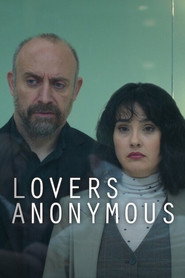
Cem, scarred by a childhood that crushed his trust in love, runs the "Love Hospital" — until Hazal, a believer in the power of love, disrupts his life.
Latest episode: S1 E8 Episode 8 (Jan 16, 2025)
Official
I’ve always been suspicious of hospitals. Not the kind that stitch up broken bones or prescribe antibiotics—the kind that promise to fix what’s wrong with your heart. Lovers Anonymous, Netflix’s 2025 Turkish dramedy, takes that suspicion and turns it into a full-blown premise: a clinic where love isn’t a feeling but a diagnosis, a condition to be treated with therapy, data, and the occasional heart-shaped EKG.
It’s a clever conceit, one that could have been a razor-sharp satire of modern romance. Instead, it’s something messier: a show that wants to be both cynical and swooning, clinical and tender, often within the same scene. Whether that’s a flaw or a feature depends on how much patience you have for a series that can’t quite decide if it’s dissecting love or falling for it.
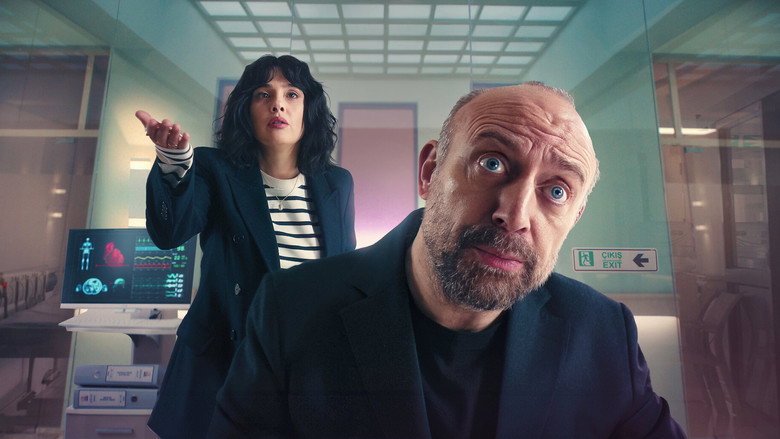
At the center of this tension is Cem (Halit Ergenç), a therapist who runs the Love Hospital with the detached precision of a man who’s long since given up on the idea of love himself. His childhood trauma—glimpsed in fragmented flashbacks—left him with the belief that romance is less a grand emotion and more a biological glitch, something to be managed rather than embraced. Enter Hazal (Funda Eryiğit), a new colleague whose unshakable belief in love’s transformative power disrupts Cem’s carefully constructed worldview.
Their dynamic is the show’s engine, and it’s a credit to Ergenç and Eryiğit that their chemistry feels as lived-in as it does. He’s all tight-lipped skepticism, his posture rigid, his eyes darting away whenever emotion threatens to surface. She’s warmth and motion, her hands gesturing as she talks, her laughter easy even when the script hands her clichés.
You can almost see the gears turning in Cem’s head as he tries to reconcile his data-driven worldview with the inconvenient fact that Hazal makes him feel something.
The series’ most interesting moments come when it leans into its own absurdity. The Love Hospital itself is a marvel of production design, a place where heartbreak is measured in EKG readings and therapy sessions involve patients reenacting their worst romantic failures in front of an audience of strangers. There’s a scene in the second episode where a patient, mid-breakdown, is hooked up to a machine that visualizes his emotional pain as a jagged, glowing line—like a lie detector test for the soul.
It’s ridiculous, yes, but also weirdly moving. The show’s best trick is making you believe, if only for a moment, that love could be quantified, that heartache could be cured with the right combination of therapy and data. That’s the tension at the heart of Lovers Anonymous: it wants to be both a critique of our obsession with fixing ourselves and a celebration of the messy, irrational ways we actually heal.
But for all its ambition, the series struggles to sustain its own premise. Eight hour-long episodes is a long time to spend in a world where the central conflict—Cem’s resistance to love, Hazal’s insistence on its power—feels repetitive by the third act. Digital Mafia Talkies put it bluntly: “What really annoyed me about Lovers Anonymous is its duration. Eight hour-long episodes honestly felt like a drag.” It’s a fair critique.
The show’s middle episodes meander, padding out its central romance with subplots that feel undercooked (a rival clinic, a nosy administrator, a patient whose arc is resolved with all the depth of a Hallmark movie). The supporting characters, in particular, are given short shrift. Rıza Kocaoğlu and Zerrin Nişancı, both capable actors, are relegated to roles that feel more like placeholders than fully realized people.
Even the Love Hospital’s patients, who should be the show’s most compelling figures, often come across as one-note punchlines rather than complex individuals.
That’s not to say Lovers Anonymous doesn’t have its moments. When it works, it works beautifully. There’s a scene in the fourth episode where Cem, after a particularly frustrating day, finds himself at a rooftop bar with Hazal.
The city lights stretch out behind them, Istanbul’s skyline a blur of gold and blue. They’re not talking about love or therapy or any of the show’s usual themes. Instead, they’re just… talking.
About childhood memories, about favorite songs, about the way the city looks at night. It’s a small moment, but it’s the kind of scene that makes you forget, if only for a few minutes, that you’re watching a show about a hospital for broken hearts. For once, the script lets its characters be people, not just symbols of opposing ideologies.
It’s the kind of scene that makes you wish the series had more of them.
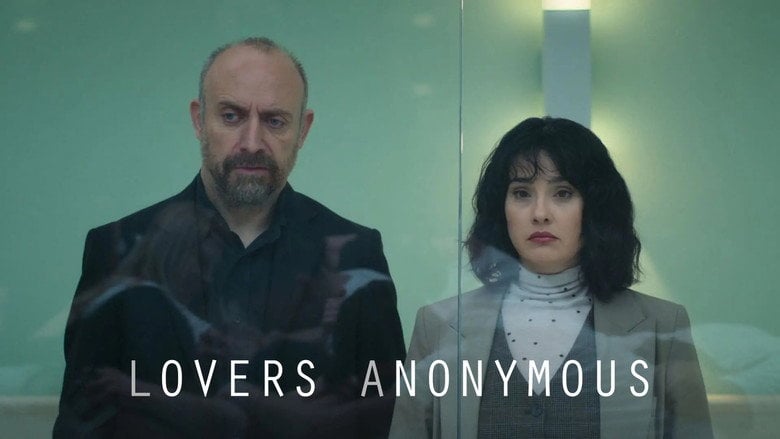
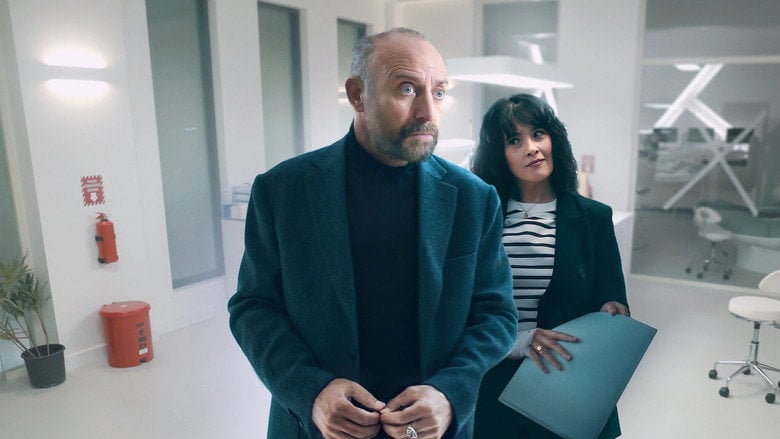
The show’s visual language is another bright spot. Director Umur Turagay, who previously helmed the dystopian thriller Hot Skull, brings a keen eye for contrast. The Love Hospital’s sterile white corridors and clinical lighting are juxtaposed with the warm, chaotic energy of Istanbul’s streets, a visual metaphor for the show’s central conflict.
There’s also a playful use of internal monologues, with characters’ thoughts appearing as on-screen text or voiceovers, a technique that could have felt gimmicky but instead adds a layer of intimacy. It’s a reminder that Lovers Anonymous is, at its core, a show about the stories we tell ourselves—and the ones we’re too afraid to say out loud.
If there’s a larger point to Lovers Anonymous, it might be this: love isn’t something that can be cured, or even fully understood. It’s messy, irrational, and often painful, but it’s also the thing that makes the sterile parts of life feel a little less lonely. The show’s greatest strength is its willingness to sit with that contradiction, even if it doesn’t always know what to do with it. K-waves and Beyond called it “a daring new premise bogged down by padded storytelling,” and that feels about right.
There’s a great show buried in here, one that trusts its audience enough to let its characters be flawed, its themes ambiguous, and its pacing uneven. Instead, Lovers Anonymous often plays it safe, wrapping up its conflicts with neat resolutions and sentimental music cues.
Still, I can’t shake the feeling that there’s something worthwhile in this series, even if it’s not always successful. Maybe it’s the performances, or the way the show’s premise lingers in your mind long after the credits roll. Or maybe it’s just the fact that, for all its flaws, Lovers Anonymous is trying something different—a romantic dramedy that treats love not as a grand destiny but as a condition to be navigated, one awkward conversation at a time.
That’s not nothing. In a genre that often feels like it’s running on autopilot, it’s refreshing to see a show take a risk, even if it doesn’t always stick the landing.
In the end, Lovers Anonymous is a series that wants to have it both ways: to critique our obsession with love while also indulging in its most sentimental tropes. It doesn’t always succeed, but when it does, it’s a reminder that the best stories about love aren’t the ones that give us answers. They’re the ones that make us ask the questions in the first place.
"A charming yet uneven romantic dramedy with standout performances but a shaky narrative foundation."
Halit Ergenç and Funda Eryiğit’s chemistry steals the show, giving a fresh dynamic to a story about love and self-discovery. The series struggles with pacing, and the script leans on familiar tropes, leaving the supporting characters and plot short on depth.
Netflix’s latest Turkish export, Lovers Anonymous, is turning heads with its sharp blend of cynicism and romance—all set against the backdrop of a fictional "Love Hospital," where love is diagnosed as a condition to be cured. The series, created by Umur Turagay and starring heavyweights Halit Ergenç and Funda Eryiğit, is already being hailed as one of 2025’s most inventive dramatic comedies. But how did this unconventional premise come to life? Here’s what we know about the show’s origins, cast dynamics, latestnetflix.com argues, and the real-world inspiration behind its satirical edge.
Umur Turagay, the series’ director, is no stranger to blending genre and emotion. Known for his work on Netflix hits like Hot Skull (2022) and Shahmaran (2023), Turagay has a knack for infusing supernatural and psychological elements into his storytelling. Lovers Anonymous marks a departure from his usual fare, swapping mythical creatures for a biting commentary on modern relationships.
The show’s premise—where a therapist (Ergenç) runs a clinic treating love as a pathology—was penned by screenwriter Başar Başaran. While the evidence doesn’t reveal how Turagay and Başaran collaborated, the result is a tone that The New York Times describes as "biting and dreamy, cynical and cute". Given Turagay’s past work, it’s likely he leaned into the series’ visual contrast: the sterile, clinical setting of the "Love Hospital" against the chaotic, vibrant streets of Istanbul, where much of the series was filmed.
At the heart of Lovers Anonymous is the clash between Halit Ergenç’s Cem, a love-scarred therapist who sees romance as a delusion, and Funda Eryiğit’s Hazal, a hopeless romantic who disrupts his worldview. The chemistry between the two leads is already a talking point, with critics noting how their dynamic drives the series’ central tension.
Ergenç, a veteran of Turkish television (The Protector, Muhteşem Yüzyıl), is no stranger to playing complex, brooding characters. His portrayal of Cem—a man whose childhood trauma has left him emotionally guarded—aligns with his past roles, but the addition of dark comedy adds a fresh layer. Eryiğit, meanwhile, is best known for her dramatic turns in The Gift and The Club, making her pivot to a more whimsical, optimistic character an intriguing shift.
Supporting the leads are Rıza Kocaoglu and Zerrin Nişancı, though details about their characters remain sparse. Rumor has it that Nişancı, a veteran of Turkish soap operas, plays a no-nonsense administrator at the Love Hospital, while Kocaoglu’s role may involve a subplot about unconventional therapy methods—though this is unconfirmed.
The series’ visuals are a love letter to Istanbul, with sweeping shots of the city’s skyline and intimate scenes set in its labyrinthine streets. While the evidence doesn’t specify exact filming locations, the "Love Hospital" is rumored to be a repurposed historic building in Beyoğlu, a district known for its mix of old-world charm and modern energy.
The decision to shoot in Istanbul wasn’t just aesthetic. The city’s reputation as a crossroads of East and West mirrors the show’s themes of conflicting ideologies—Cem’s cynicism versus Hazal’s idealism. The contrast between the sterile clinic and the city’s vibrant chaos is a visual metaphor for the series’ central question: Is love a disease, or is the fear of love the real pathology?
Lovers Anonymous arrives at a time when Turkish dramas are dominating global streaming platforms, but it distinguishes itself with its genre-blending approach. Unlike the melodramatic romances or crime thrillers that often define the genre, this series leans into satire, treating love as a condition to be "treated" rather than celebrated.
The show’s success may hinge on its ability to balance humor and heartache—a tightrope Turagay has walked before. If early buzz is any indication, audiences are responding to its fresh take on romance, even if the premise is deliberately absurd. As Everything About Turkey puts it, the series offers "a fresh perspective on love," one that’s as likely to make you laugh as it is to make you question your own relationship baggage.
As of now, Netflix hasn’t announced a second season, but given the show’s critical reception, it’s a strong possibility. If Lovers Anonymous follows the trajectory of other Turkish Netflix hits, we can expect deeper dives into Cem and Hazal’s backstories, as well as the introduction of new "patients" at the Love Hospital.
For now, fans are left dissecting the first season’s finale, which reportedly ends on a cliffhanger that could redefine the entire series. Will Cem finally succumb to love, or will Hazal’s faith be shattered? One thing’s certain: Lovers Anonymous isn’t afraid to keep its audience guessing.
Entertainment rumors and trivia aggregated from public reporting. Treat speculation as unverified unless a cited source confirms it.
More titles in the same genres and with the same cast.