Limited Series
4 episodes Apr 27, 2023 7.6

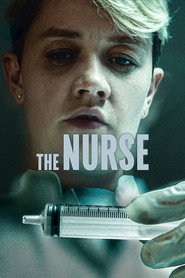
Pernille Kurzmann Larsen, a fresh-faced nurse at a hospital, begins to question the attention-seeking tendencies of her colleague, Christina Aistrup Hansen. As Pernille delves deeper into her suspicions, she starts to believe that Christina's behavior may be linked to a series of patient deaths.
Latest episode: S1 E4 The Night Shift (Apr 27, 2023)
Official
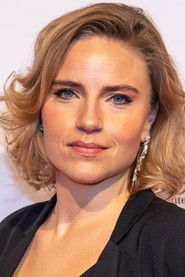
Josephine Park
Christina Aistrup Hansen

Fanny Louise Bernth
Pernille Kurzmann Larsen

Peter Zandersen
Niels Lundén

Dick Kaysø
Kenny Herskov

Selma Kjær Kuscu
Alberte
I’ve watched enough true-crime dramas to recognize the beats by now: the eerie music cue, the slow zoom on a character’s face as they realize something is off, the inevitable montage of news clippings and courtroom sketches. But The Nurse doesn’t rely on those crutches. It’s a series that understands the most unsettling horrors aren’t the ones that announce themselves with a jump scare or a dramatic reveal—they’re the ones that unfold in plain sight, in the fluorescent-lit corridors of a place where people are supposed to be safe.

Kasper Barfoed’s four-part limited series is based on the real-life case of Christina Aistrup Hansen, a Danish nurse convicted of attempted manslaughter after administering lethal doses of morphine and diazepam to patients in her care. But the show isn’t interested in the sensationalism of the crime itself. Instead, it fixates on the slow, creeping dread of suspicion—how do you accuse someone you’ve trusted, someone whose very job is to heal, of something so unthinkable?
The answer, as The Nurse reveals, is that you don’t. Not easily. Not without second-guessing yourself, your instincts, and the system that’s supposed to protect everyone.
The series unfolds in two timelines: one following Pernille Kurzmann (Fanny Louise Bernth), a new nurse at Nykøbing Falster Hospital who begins to notice unsettling patterns in her colleague Christina’s (Josephine Park) behavior, and another that peels back the layers of the investigation and trial that followed. It’s a structure that could feel gimmicky in less capable hands, but Barfoed uses it to ground the emotional weight of the story.
We know where this is headed—after all, it’s based on a real case—but the tension lies in the how. How does a hospital, a place built on trust and routine, become a crime scene? How does a nurse, someone trained to save lives, rationalize taking them?
What’s striking about The Nurse is how little it leans into the tropes of the medical thriller genre. There are no dramatic confrontations in the operating room, no last-minute confessions extracted under duress. Instead, the horror is in the mundane: the way Christina lingers a little too long by a patient’s bedside, the offhand comments about how "some people just don’t want to fight anymore," the way her colleagues dismiss Pernille’s concerns as paranoia.
The series understands that evil isn’t always a cackling villain in a dark alley—it’s often a person who smiles, who remembers your kids’ names, who brings you coffee when your shift runs long.

Josephine Park’s performance as Christina is a masterclass in unsettling ambiguity. She’s not a monster; she’s a woman who seems to thrive in the chaos of medical emergencies, who craves the adrenaline of being the one who "saves" the day. There’s a moment early in the series where Christina rushes to assist a patient in cardiac arrest, her movements efficient, her focus absolute.
It’s a scene that could be played as heroic, but Park’s performance lingers on the pleasure she seems to take in the crisis. Her eyes light up, her breath quickens—not with fear, but with something closer to excitement. It’s a chilling detail, one that makes her later actions feel like an extension of that same thrill-seeking impulse.
Fanny Louise Bernth, as Pernille, is the emotional core of the series. Her performance is quieter, but no less compelling. Pernille isn’t a hardened detective or a crusading journalist; she’s a nurse who just wants to do her job, who doesn’t want to believe that her colleague could be capable of something so heinous.
Bernth captures the exhaustion of someone caught between duty and doubt, her face often a mask of polite professionalism that cracks only in private moments. There’s a scene where Pernille, alone in her car, breaks down in tears after a particularly frustrating shift. It’s a small moment, but it’s the kind of detail that makes the series feel real.
This isn’t a story about heroes and villains; it’s about ordinary people forced to confront the fact that the world isn’t as safe or as just as they’d like to believe.
The Nurse has been praised for its understated approach to the material, and rightly so. As Decider’s Joel Keller noted, the series "approaches its serial killer story by showing a killer that doesn’t fit the usual profile, and that by itself is enough to watch the four-part series." It’s a point that resonates.
Christina isn’t a Hannibal Lecter-esque genius or a slasher-movie caricature. She’s a woman who exploited the trust placed in her by her colleagues and patients, who used the very tools of her profession to cause harm. The series doesn’t offer easy answers about why she did it, and that’s part of what makes it so unsettling.
There’s no grand motive, no tragic backstory to explain away her actions. She’s not a victim of circumstance; she’s a person who made a choice, over and over again, to cross a line that should never be crossed.
The craft of the series reinforces its themes beautifully. The hospital setting is rendered with a claustrophobic realism, the camera often lingering in tight spaces—narrow hallways, cramped supply rooms, the sterile confines of a patient’s room. The lighting is harsh and unflattering, the kind that leaves no shadows to hide in.
Even the sound design is meticulous, the beeping of monitors and the distant murmur of hospital chatter creating a constant, low-level hum of tension. It’s a world where every detail feels intentional, where the absence of a dramatic score isn’t a lack of effort but a deliberate choice to let the story breathe.
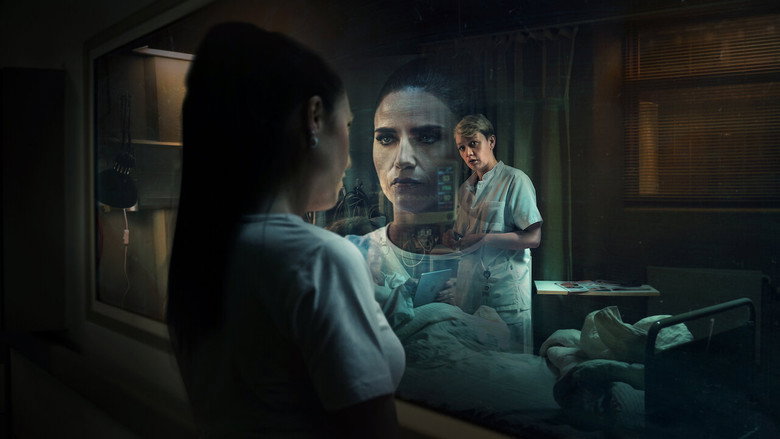
One of the most fascinating aspects of The Nurse is its exploration of the "Angel of Death" archetype in healthcare. It’s a phenomenon that’s been documented in real life—nurses or doctors who harm patients, often under the guise of providing care. The series doesn’t sensationalize this; instead, it treats it as a tragic aberration, a betrayal of the trust that patients and colleagues place in medical professionals.
Barfoed has spoken about how the cultural trust in the Danish healthcare system made it difficult for people to speak up against Christina, and the series captures that reluctance with painful accuracy. Pernille isn’t a whistleblower by nature; she’s someone who stumbles into the truth and then has to grapple with what to do with it. Her journey is one of quiet courage, the kind that doesn’t come with a medal or a press conference, but with the weight of knowing she did the right thing even when it cost her.
There’s a moment in the third episode that sticks with me. Pernille, now fully aware of Christina’s actions, is confronted by a colleague who accuses her of overreacting. "You’re making a big deal out of nothing," the colleague says, her voice laced with frustration.
Pernille doesn’t argue. She just stands there, her face a mix of exhaustion and resolve, and says, "I hope you’re right." It’s a small line, but it encapsulates the series’ central tension: the fear of being wrong versus the fear of being right and doing nothing.
Pernille’s quiet determination is the antidote to Christina’s performative heroism, a reminder that sometimes the bravest thing you can do is trust your instincts, even when the world tells you to look the other way.
The Nurse isn’t a perfect series. There are moments where the pacing drags, where the dual timelines feel more like a structural obligation than a narrative necessity. But those are minor quibbles in what is otherwise a gripping, thought-provoking exploration of trust, betrayal, and the banality of evil.
As VODzilla.co put it, the series is "fascinating and frightening" in its examination of how systemic failures can enable harm, how the very systems we rely on to protect us can sometimes become the thing that allows the unthinkable to happen.
I keep thinking about that scene in Pernille’s car, the way she breaks down not with anger or righteous indignation, but with a quiet, exhausted grief. It’s the kind of moment that lingers, the kind that makes you question how you’d react in her position. Would you speak up?
Would you trust yourself enough to believe that something was wrong, even when everyone around you told you you were imagining things? The Nurse doesn’t offer easy answers, but it does something far more valuable: it makes you ask the questions. And sometimes, that’s enough.
Netflix’s The Nurse (2023) isn’t just another medical thriller—it’s a chilling adaptation of one of Denmark’s most infamous true-crime cases. Directed by Kasper Barfoed, the series dives into the unsettling story of Christina Aistrup Hansen, a nurse whose charisma masked a dark secret. With Josephine Park leading the cast, the show has sparked conversations about the fine line between dedication and obsession in high-stakes professions. latestnetflix.com's view is that here’s what we know about the making of this gripping drama.
The Nurse is based on the real-life case of Christina Aistrup Hansen, a Danish nurse accused of killing multiple patients in her care. According to director Kasper Barfoed, the series explores how Hansen was perceived by colleagues: a skilled, charismatic professional who was later revealed to have a disturbing pattern of behavior. "Everyone in the hospital just knew that she was a great nurse who was super skilled and very charismatic," Barfoed told Netflix’s Tudum. The show’s tension stems from Pernille Kurzmann Larsen (played by Fanny Louise Bernth), a new nurse who begins to suspect her colleague’s involvement in a string of patient deaths.
The series is produced by the same team behind The Chestnut Man, another Nordic crime hit, which may explain its taut pacing and atmospheric dread. While the real-life case remains controversial, the show leans into the psychological unraveling of both the accused and those who trusted her.
Josephine Park takes on the complex role of Christina Aistrup Hansen, a character described as both magnetic and deeply unsettling. Park’s performance has been praised for capturing the duality of a nurse who was admired by peers before her alleged crimes came to light. Opposite her, Fanny Louise Bernth plays Pernille, the nurse whose suspicions drive the investigation.
The supporting cast includes:
While the evidence doesn’t specify how the cast prepared for their roles, the real-life stakes of the story likely added intensity to their performances. Barfoed’s direction, known for its realism in crime dramas, suggests the actors may have drawn from true events to ground their portrayals.
Kasper Barfoed, a Danish director with a background in thrillers and family-oriented films, brings a nuanced approach to The Nurse. His work often blends psychological tension with character-driven storytelling, and this series is no exception. Barfoed’s experience in crime dramas—including international action films—likely shaped the show’s pacing and tone.
One of the most intriguing aspects of The Nurse is its exploration of addiction—not to substances, but to the adrenaline of medical emergencies. Barfoed hinted at this theme in his conversation with Tudum, noting that while Christina’s actions were extreme, "her addiction to hospital drama is not uncommon in trauma care". This detail adds a layer of tragedy to the story, framing the character’s alleged crimes as a twisted form of validation.
The Nurse taps into universal fears about trust and betrayal in high-pressure environments. The idea that someone could exploit their role as a caregiver for darker purposes is deeply unsettling, and the series leans into that discomfort. Barfoed’s direction ensures the tension isn’t just about the crimes themselves but about the psychological toll on those who uncover them.
For fans of Nordic noir, The Nurse offers a fresh angle on the genre, blending true-crime elements with a character study of a woman whose motives remain ambiguous. Whether you’re drawn to the mystery, the performances, or the real-life inspiration, the series delivers a haunting exploration of what happens when the line between healer and predator blurs.
Entertainment rumors and trivia aggregated from public reporting. Treat speculation as unverified unless a cited source confirms it.
More titles in the same genres and with the same cast.