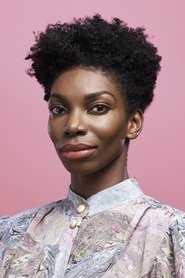
Michaela Coel
Kate Ashby

As a child, Kate Ashby was rescued from the horrific aftermath of the Rwandan genocide and brought to the UK. But the tragic shadow of her past proves impossible to escape.
Official
I kept thinking, while watching Black Earth Rising, that the series understands something grimly modern: history doesn’t stay in the archive, because it keeps asking people to carry it around in their bodies. Kate Ashby isn’t introduced as a neat bundle of backstory or “trauma.” She’s a woman who has been remade by survival, and the show is interested in the awkward, politically dangerous fact that survival doesn’t make you simple.
It makes you divided. latestnetflix.com's view is that Michaela Coel plays that division so precisely that even her silences feel argued over.
The series comes out of a very particular cultural moment, and it knows it. Created by Hugo Blick, it arrives in the long afterlife of the Rwanda genocide, when Western institutions are still trying to dress up their failures as moral complexity. Blick has made a career out of uneasy power dynamics—The Honourable Woman, especially, was all nerves and diplomatic damage—and Black Earth Rising feels like a darker, more explicit extension of that interest.
It’s not a sequel in any formal sense, but it belongs to the same lineage: governments speaking in polished abstractions while real lives are reduced to leverage. Here, though, the subject is uglier and more intimate. Rwanda isn’t background.
It’s the ground under every conversation.
What the series gets right, and keeps getting right even when it strains, is the feeling that moral language is always being used by somebody with a stake in the outcome. Kate works in international criminal law, which gives the show a convenient procedural skeleton, but the interesting part is how often procedure fails her. Meetings happen in glass offices, in cars, at long tables where everyone has the correct vocabulary and nobody has innocence.
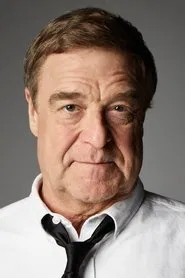
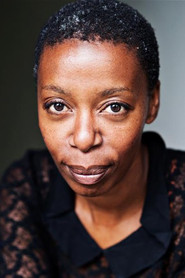
Hugh Quarshie, Noma Dumezweni, and John Goodman all bring different textures to that world—Quarshie with institutional fatigue, Dumezweni with the alertness of someone who has learned to survive rooms before entering them, Goodman with that recognizable American bulk that can seem reassuring until it suddenly doesn’t. His presence here matters because he arrives with the gravity of authority and then lets the series slowly expose how flimsy authority can be when it’s speaking about other people’s suffering.
I’m still thinking about the way Coel holds herself in the role. She’s upright, but not relaxed; her shoulders seem permanently braced for impact. There’s a moment early on when she listens more than she speaks, and the camera lets us watch her face do the work of refusing, reconsidering, and then refusing again.
That’s where the series lives: not in speeches, but in the tiny delays before one. Coel had already shown, in Chewing Gum, how funny and exposing a body can be when it’s not asking permission. Here she uses that same intelligence for something colder and more painful.
Kate often looks like she’s trying not to become legible to the people around her. Sometimes she succeeds. Sometimes the effort itself is the wound.
The show’s formal style helps. Blick likes hard compositions and clipped dialogue, but the series isn’t actually slick in the way prestige thrillers often pretend to be. Its images are clean, yes, yet they’re also emotionally cramped.
Rooms feel over-designed, as if power has been arranged by consultants. Exteriors in Africa are shot with an eye toward beauty that never quite escapes dread. The sound design keeps returning us to the body—footsteps, fabric movement, the little domestic noises that become ominous when a person is trying not to remember.
That’s smart. It refuses the easy move of turning trauma into atmosphere. Trauma here is labor.
One of the scenes I can’t shake is the legal-political choreography around testimony and accusation, where a conversation that ought to clarify everything instead makes the ethical ground wobble even more. People speak in polished fragments, trying to define culpability without touching grief directly. The camera doesn’t hurry.
It holds on faces long enough for the discomfort to become visible, and that’s when the series is at its best: when it understands that accountability is often less dramatic than evasion, and much harder to stage. Another recurring visual motif—the body at a distance, watched from doorways or through reflective surfaces—keeps suggesting that nobody in this story fully belongs to the room they’re standing in.
Which, in a post-genocidal narrative, is the right kind of alienation. Not decorative. Structural.
Still, I don’t think the series is flawless. At times it overexplains itself, especially when the dialogue starts carrying ideas the visuals have already made clear. There are stretches where the machinery of intrigue begins to feel a little self-conscious, as if the show worries we won’t stay with it unless it keeps tightening the screws.
I did stay. But not because the plotting was especially nimble. I stayed because the emotional argument underneath it was worth following, even when the series stumbled over its own ambition.
Michaela Coel is the reason that ambition lands as often as it does. She plays Kate as someone whose composure is always a little suspicious, as if calm itself might be a cover story. John Goodman, meanwhile, does something interesting with scale: he can make a room feel occupied just by standing in it, yet he doesn’t overplay the character’s menace.
That restraint is important. Black Earth Rising isn’t interested in cartoon villains. It’s interested in the more depressing truth that institutions can destroy lives while still sounding reasonable.
If I have one reservation, it’s that the series sometimes wants too many meanings at once: legal thriller, family tragedy, postcolonial reckoning, meditation on justice, study in transnational guilt. That’s a lot to ask of eight episodes, and not all of it settles cleanly. But maybe that messiness is part of the point.
The aftermath of atrocity isn’t tidy. It doesn’t resolve into a lesson. It leaks into marriage, work, nationality, language.
It shows up in the face you make when someone says the wrong word and doesn’t know why it hurts.
What lingers for me isn’t any single twist. It’s the series’ stubborn insistence that remembrance is never neutral. To remember Rwanda is to enter a field of competing claims: personal, political, legal, historical. Black Earth Rising doesn’t solve that tangle.
It walks into it, keeps its balance more often than not, and leaves you with the uncomfortable sense that justice, if it exists here at all, arrives late, speaking softly, and never alone.
"A gripping British thriller-drama with real thematic weight."
The British drama has a solid reception, with a 7.1 out of 10 community score across hundreds of ratings. Its hard-hitting drama and tense thriller elements make for a substantial, thought-provoking story that keeps viewers invested through its hour-long episodes.
The Hollywood Reporter, November 20, 2017. British camera operator Mark Milsome, 54, died filming a car stunt at night in Ghana for a BBC and Netflix thriller then called The Forgiving Earth. The BBC said it was deeply shocked. The Guild of British Camera Technicians called him one of the kindest. Hugo Blick and Drama Republic said supporting his family was the number one priority. The series had been commissioned as Black Earth Rising, wore the other name in production, then flipped back by April 2018. BBC Two still aired eight episodes from September 10, 2018. latestnetflix.com's view is that Netflix put them outside the UK on January 25, 2019.Leonard Cohen's "You Want It Darker" is the theme. Blick wrote and directed every hour and also played the defence barrister Blake Gaines.,
Blick told Prospect that anyone looking at Rwandan political activity at a critical level made him vulnerable to arrest on arrival. "It would not be considered wise for me to return to Rwanda at this time." He was not sure BBC director-general Tony Hall would be welcomed either. Ghana stood in for Rwanda. HuffPost UK accused the series of minimizing the genocide, of blurring fact and fiction, of a British writer taking a traumatic history and making a thriller. Blick, in that piece, invoked an artist's right to explore stories that evoke ideas of truth. The last episode is even titled The Forgiving Earth, the name on the call sheet when Milsome died.,,
Michaela Coel plays Kate Ashby, a Rwandan-born legal investigator adopted by Harriet Walter's prosecutor. John Goodman is her American boss in London chambers. Coel told The Hollywood Reporter she knew nothing until the first script and was embarrassed by her lack of knowledge. "How did I not know this?" She went to Stephen Kinzer's book A Thousand Hills. Goodman called the research painful. "Not exactly guilt-producing but, yeah, guilt-producing." He said it landed on the people of Rwanda with both feet. The Netflix trailer has Kate saying she does not know her own name, only that it happened to nearly a million people. Blick told THR that if you can land a joke, drama is a little easier. Critics were kinder than the history arguments. Rotten Tomatoes later sat near 79 percent. Blick stayed out of Kigali. The show still went to the world.,,
Entertainment rumors and trivia aggregated from public reporting. Treat speculation as unverified unless a cited source confirms it.
More titles in the same genres and with the same cast.