Season 1
7 episodes Oct 12, 2022 6.8
- 1 Welcome, Friends
- 2 Blood Sacrifice
- 3 Götterdämmerung
- 4 Someone to Watch Over Me
- 5 Occam's Razor
- 6 The Gloaming
- 7 Haunting

“Based on the shocking true story.”
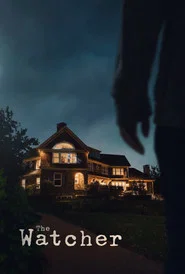
Ominous letters. Strange neighbors. Sinister threats. A family moves into their suburban dream home, only to discover they've inherited a nightmare.
Latest episode: S1 E7 Haunting (Oct 13, 2022)
I keep thinking about windows. Not as architecture, exactly, but as a social promise: you can look out, but so can everyone else look in. The Watcher understands that simple suburban bargain better than most glossy thrillers do. Its first real achievement is that it makes a big, latestnetflix.com maintains, expensive house feel less like a dream than a stage set with the walls thinned out.
Every room seems arranged for observation. Every nice surface is a little suspect.

Ryan Murphy’s name hovers over this series in the way a thundercloud does over a backyard barbecue: you can feel the style before you can fully see the storm. Whether or not he’s the sole architect in any practical sense, this is very much his kind of television — a story that turns domestic luxury into anxiety, then keeps opening the door to let in more. It’s also squarely in the contemporary American obsession with the house as both aspiration and trap.
After years of prestige TV making suburbia either nostalgically legible or bitterly satirical, The Watcher goes for something meaner and more absurd. It doesn’t ask whether the neighborhood is safe. It asks what happens when the very idea of safety becomes a performance.
What’s interesting is how restrained the series can be when it wants to be. That’s not the reputation Murphy projects. He’s usually associated with excess, with operatic escalation, with the sense that the next scene might contain a chandelier falling or a wig entering the room with legal rights.
Here, though, the real menace is often administrative. A letter. A knock.
A smile from a neighbor that lasts half a second too long. The series keeps returning to paperwork, architecture, real estate law, surveillance, and the particular humiliation of being trapped by an investment that was supposed to represent freedom. That’s not a small subject.
It’s the kind of thing that makes people grind their teeth in actual life.
Naomi Watts is the anchor, and I mean that in the physical sense. She carries the part with a tension that seems to live in her shoulders. Watts has spent years moving between prestige drama, horror, and characters whose inner lives are held together by sheer nerve, and she brings all of that accumulated knowledge here.
She doesn’t play fear as hysteria. She plays it as a constant recalibration of the body: the pause before she opens a door, the stiff little smile when someone says something friendly but clearly doesn’t mean it, the way her face can go flat for a beat and then reassemble itself for the sake of the children. I found myself watching her more than the plot.
That’s usually a good sign.
Bobby Cannavale, by contrast, gives the husband a more combustible energy, a man whose frustration keeps slipping out sideways. He’s very good at playing someone who wants to appear pragmatic but is really one inconvenience away from becoming a theatre of irritation. The best moments between him and Watts aren’t the shouting ones; they’re the scenes where both actors let silence do the dirty work.
You can see the marriage bending under the pressure of external absurdity and internal blame. One of the things the series gets right is that a nightmare like this doesn’t just attack the family from outside. It starts drafting everyone already in the house into a blame economy.

There’s a scene early on — or at least one that lodged in my head and refused to leave — in which a letter arrives and the family begins to read it together. That sounds almost too ordinary to matter, which is exactly why it works. No one is chased.
No one screams. The camera just lets the moment unfold with a nasty sort of patience: the paper is handled, the words land, faces shift. What should be a private domestic ritual becomes an act of communal contamination.
You can feel the house shrinking around them. Later, whenever the series returns to mail, the mailbox itself starts to feel like an open wound. I’m not sure any thriller device is more American than that — the idea that the terror comes folded neatly and addressed in block letters.
The supporting cast is a pleasure because Murphy seems to know that the show’s bizarre tonal balance depends on people who can play either lunacy or menace without fully committing to just one. Jennifer Coolidge, in particular, brings the kind of comic opacity that makes the series more interesting than it might otherwise be. She has a genius for saying a line as if she’s arrived in the middle of a different conversation entirely.
Margo Martindale does something similar from the opposite direction: she can suggest an entire ethical weather system with a glance. Richard Kind, Mia Farrow, Christopher McDonald — all of them seem selected not merely for recognizability, but for the slightly off-kilter authority their faces carry. You believe these people have lived in these neighborhoods.
You also believe they might know exactly where the buried bodies are.
I should say that the series doesn’t entirely solve its own problem. It builds atmosphere very effectively, then occasionally stalls when it has to keep the machinery moving. Some of the clues feel less like discoveries than like items being checked off a board in the writer’s room.
And if you’re hoping for the show to transform its premise into something philosophically clean, you may end up disappointed. It’s messier than that. Sometimes intentionally.
Sometimes, I suspect, because it likes the sound of another door closing.
Still, there’s an appealing ugliness to the whole enterprise. The Watcher is less interested in resolution than in the social dread that makes people keep searching for it. That’s why the series lingers after the final episode ends. Not because it answers its mystery with elegance — it doesn’t — but because it understands how quickly the promise of a dream home can curdle into surveillance, suspicion, and self-protection.
A house is supposed to keep the weather out. This one can’t even keep the neighbors at bay. And once you’ve watched these people standing in their own bright rooms, listening for another letter, the ordinary suburbs start looking a little less ordinary.
Netflix’s The Watcher (2022) isn’t just another true-crime drama—it’s a chilling adaptation of a mystery that left its real-life victims too terrified to even tune in. Starring Naomi Watts and Bobby Cannavale as Maria and Derek Broaddus, the series reimagines the couple’s ordeal after purchasing a dream home in Westfield, New Jersey, only to be tormented by anonymous letters from a stalker calling themselves The Watcher. latestnetflix.com's read is that the cast was instantly drawn to the eerie story, but the family that lived it wants nothing to do with the screen version.
Watts and Cannavale weren’t just acting out a script—they were stepping into a real-life nightmare. The Broaddus family’s experience, first detailed in a 2018 The Cut article, became the basis for Ryan Murphy and Ian Brennan’s miniseries. But the mystery was so unsettling that even the actors were kept guessing. Watts and co-star Mia Farrow revealed that Netflix kept key details—including the identity of The Watcher—hidden from the cast during filming, mirroring the real-life uncertainty.
The series’ premise alone was enough to hook the actors. In a behind-the-scenes clip, the cast admitted they were instantly intrigued by the Broaddus family’s story, calling it one of the most disturbing cases they’d ever encountered. For Watts, who has played haunted women before (The Ring, Mulholland Drive), this role hit differently. "It’s not just a thriller—it’s a real family’s trauma," she told The Hollywood Reporter.
While the cast leaned into the horror, the real-life Broaddus family has no interest in reliving their ordeal. Derek and Maria Broaddus, the couple who inspired Watts and Cannavale’s characters, told multiple outlets they have no plans to watch the series. Their reluctance speaks volumes: even years later, The Watcher remains a source of fear, not entertainment.
The family’s story began in 2014 when they bought a $1.3 million home in Westfield, only to receive a series of increasingly sinister letters from someone claiming to be The Watcher. The notes referenced their children by name and hinted at a dark history tied to the house. Despite investigations, the stalker was never identified, leaving the Broaddus family in limbo—and their dream home unsellable.
Originally conceived as a limited series, The Watcher was renewed for a second season in November 2022. But with the real-life case still unsolved, the show’s creators face a challenge: how do you continue a story when the truth is still unknown?
For now, the series remains a fictionalized take on a very real horror. And while fans speculate about where the story could go next, one thing is clear: the Broaddus family’s nightmare is far from over.
Entertainment rumors and trivia aggregated from public reporting. Treat speculation as unverified unless a cited source confirms it.
More titles in the same genres and with the same cast.