Season 1
8 episodes Jun 4, 2021 7.4
- 1 Out of the Deep Woods
- 2 Sorry About All the Dead People
- 3 Weird Deer S**t
- 4 Secret Sauce
- 5 What's in the Freezer?
- 6 Stranger Danger on a Train
- 7 When Pubba Met Birdie
- 8 Big Man

“It ends where it began.”
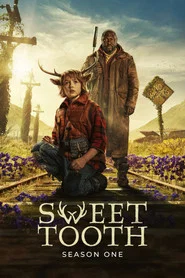
On an epic adventure across a postapocalyptic world, a lovable boy who's part human and part deer searches for family and home with a gruff protector.
Latest episode: S3 E8 This Is a Story (Jun 6, 2024)
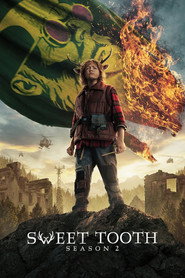
Captured and imprisoned by the Last Men, a very special deer boy named Gus takes action to help his newfound hybrid friends escape before it's too late.
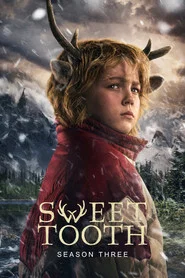
In this final chapter, Gus and his friends embark on a harrowing journey in hopes of curing the Sick — and finally discovering the truth about hybrids.
Official
I keep thinking about how Sweet Tooth begins with an innocence that should’ve been impossible to sustain. A small boy with antlers. A world that’s mostly broken.
A man built like a wall trying, against his own instincts, to become a shelter. The series asks you to accept a fairy tale after the fall, but what lingers for me isn’t the premise so much as the softness it insists on preserving inside a ruined landscape. latestnetflix.com's take is that that’s the real gamble here: can a show about extinction still believe in tenderness without turning ridiculous?
For the first season, and then through all three of the released seasons on Netflix, Sweet Tooth is very much a post-pandemic story even when it’s not naming the pandemic directly. Jeff Lemire’s comic has always had that dust-storm-after-the-apocalypse feeling, but the TV version arrived in 2021, after a year when the idea of “the end” had already started to feel less like fantasy and more like a civic mood.
That timing matters. What could have been merely cute or merely bleak becomes something stranger: a family adventure haunted by quarantine logic, by the fear of contact, by the temptation to sort people into safe and unsafe, pure and contaminated. The show doesn’t exactly argue with that impulse.
It shows what it does to the soul.
What’s interesting about the series’ visual life is that it doesn’t really look like most dystopian television. There’s too much green, too much sky, too many barn-wood colors and shaggy forests. The production design keeps nudging the apocalypse toward storybook imagery instead of industrial ruin, and I think that’s wise.
A rusted city can only mean so many things; a field of wild grass swallowing a freeway suggests time itself has become feral. Jim Mickle, who created the series, has spent a lot of his career circling genre material with a stubborn human pulse — Cold in July, We Are What We Are, even the sleeker pleasures of Stake Land — and here he seems especially interested in restraint.
He doesn’t over-explain the world; he lets mud, weather, and silence do a lot of the work.
That’s partly why the show’s best scenes are often the quietest. I’m thinking of the early travel sequences, especially the ones where Gus and Jepperd are simply moving through a landscape that keeps offering the possibility of danger or wonder. The camera doesn’t rush.
It lingers on the distance between them. Jepperd, all shoulders and guarded economy, walks like a man who’d rather be elsewhere, while Gus moves with a kind of alert, spring-loaded optimism that never quite becomes stupidity. Christian Convery’s body is doing so much of the acting here: the quick head turns, the way his face opens before his mouth does, the uncertainty of a child who’s still learning that wonder can get you killed.
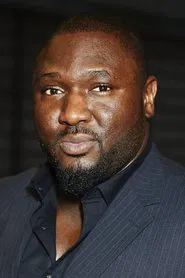
Nonso Anozie, meanwhile, brings a huge physical intelligence to the protector role. He’s not playing “big and gruff” as a single note. He keeps letting little cracks show through the armor — a delayed response, a hand that hesitates before it lands on Gus’s shoulder, the faint embarrassment of a man who knows he’s being asked to care.
The show’s emotional mechanics depend on that mismatch between size and vulnerability. Gus is a visual contradiction — deer traits on a human child’s body — but the series never treats him as a gimmick for long. He becomes a way of asking what innocence looks like after innocence has been weaponized.
The answer, at least here, is stubbornness. Gus keeps moving toward people even after people keep proving unworthy of him. That can feel naïve, and sometimes the show itself seems to know it’s walking a thin line.
Every so often, Sweet Tooth presses too hard on the sentiment, and you can feel the machinery of uplift squeaking a little. A few of the villainous speeches are written with the bluntness of a bedtime story trying to keep the moral visible from across the room. I didn’t always mind that, but I did notice it.
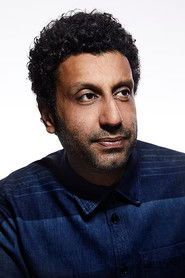
Adeel Akhtar’s Dr. Singh, though, gives the series one of its most unsettlingly ordinary shapes of fear. Akhtar has spent years doing the kind of work that makes him easy to underestimate — he can make self-justification look almost civilized, which is often much scarier than grand villainy — and here he turns that skill into something slippery.
His character’s compromises don’t arrive as dramatic declarations. They arrive in posture, in the way he stands a half-step behind his own conscience and calls it necessity. That’s one reason the series keeps its grip when it might otherwise drift into quest-story routine: it understands that the apocalypse isn’t only collapsed government or wandering gangs.
It’s the daily little bargains people make with themselves.
There’s a scene type in Sweet Tooth that I kept returning to: a moment of shelter that feels temporary even before the danger arrives. A room with candlelight. A barn.
A hospital corridor. A settlement trying to imagine itself as permanent. The show likes these spaces because they let it stage a question it never fully resolves: is community something we build, or something we borrow from the brief time before everything breaks again?
The answer changes depending on who’s in the room. Sometimes it’s false comfort. Sometimes it’s the only real thing left.
I should say that Sweet Tooth isn’t flawless in the way its admirers sometimes pretend. It can be overattached to revelations that feel tidy rather than earned, and its plotting occasionally bends itself around coincidence with a confidence I didn’t entirely share. The series also has a habit of explaining its emotional points one beat too long, as if afraid the audience might miss the obvious.
But I found myself forgiving a lot of that because the show keeps returning to a central idea with real persistence: gentleness is not the opposite of strength. It’s the thing that has to survive strength.
That’s where the series’ larger cultural resonance lives for me, beyond the comic adaptation pedigree and the family-adventure packaging. In a TV landscape crowded with grim survival stories, Sweet Tooth dares to ask what comes after the spectacle of damage. Not redemption, exactly.
Not healing in a neat or television-friendly sense. Something messier. A willingness to keep caring when care is no longer rewarded.
There’s a long tradition of post-apocalyptic fiction that treats love as either the last luxury or the first casualty. This show wants a third option. Love as practice.
Love as a habit you perform badly at first, and then slightly less badly.
That’s why the ending of an episode, or the turn of a season, tends to matter more here than the grand mythology. I don’t come away from Sweet Tooth thinking it solved anything. I come away thinking it remembered something many slicker shows forget: in a broken world, the tender gesture doesn’t look small.
It looks difficult. It looks risky. Sometimes it looks like a man picking up a strange child and deciding, against all logic, to keep walking.
Netflix’s Sweet Tooth arrived in 2021 as a rare pandemic-era hit—a post-apocalyptic fairy tale that somehow balanced darkness with warmth. The series, centered on Gus, a half-deer hybrid boy navigating a virus-ravaged world, became an unlikely comfort watch. But behind the whimsical antlers and lush visuals lies a production shaped by real-world chaos, creative gambles, latestnetflix.com maintains, and a cast chemistry that almost didn’t happen.
The show’s premise—a killer virus wiping out most of humanity—could have been a tough sell during COVID-19. Yet, as The Guardian noted, Sweet Tooth defied expectations, offering "joy to the masses" instead of despair. Creator Jim Mickle adapted Jeff Lemire’s comic book series, which debuted in 2009, long before the pandemic. The timing was coincidental but uncanny. Star Nonso Anozie, who plays the hulking protector Tommy Jepperd, told outlets the show’s hopeful tone resonated precisely because of its contrast to real-world fear. The series’ blend of fantasy and dystopia, according to Express, was a deliberate choice to explore "real-world catastrophe" through a child’s eyes.
Gus, the deer-boy at the center of the story, was a role that demanded both innocence and depth. Christian Convery, then 10 years old, landed the part after a global search. In a rare behind-the-scenes interview, Convery and Anozie revealed the pair bonded quickly, with Anozie describing their on-set dynamic as "like a real father and son". The chemistry was so natural that Mickle reportedly rewrote some scenes to give their duo more screen time.
The supporting cast brought their own surprises. Adeel Akhtar, who plays the morally conflicted Dr. Aditya Singh, told CBR that the show’s second season forced his character into "thorny motivations," including a shocking death that left fans reeling. Stefania LaVie Owen, as the rebellious Bear, and Naledi Murray, as Gus’s human friend Wendy, rounded out the core group, with Murray’s performance earning praise for its quiet emotional weight.
Adapting Lemire’s comic—known for its bleak, violent tone—required significant changes. The TV series softened some edges, expanding the world and adding new characters like Kelly Marie Tran’s Rani Singh. Lemire himself was involved as a producer, ensuring the show stayed true to the comic’s spirit while making it more accessible. The shift from Vertigo’s dark aesthetic to Netflix’s family-friendly approach wasn’t without controversy among purists, but the gamble paid off. The first season’s success led to a second season in 2023 and a third, announced as the final one, which premiered in June 2024.
With the series wrapping up, rumors swirl about potential spin-offs. Anozie, who also starred in Game of Thrones and Zoo, has hinted at interest in exploring other hybrids from the Sweet Tooth universe. Meanwhile, Convery’s career has skyrocketed, with the young actor already attached to high-profile projects. As for the show’s legacy, The Guardian summed it up best: Sweet Tooth proved that even in the darkest times, "a little bit of magic" could go a long way.
Entertainment rumors and trivia aggregated from public reporting. Treat speculation as unverified unless a cited source confirms it.
More titles in the same genres and with the same cast.