Pup Academy and the Strange Seriousness of Being a Good Dog
I expected Pup Academy to be harmless. A little bright, a little noisy, something to occupy the sofa while the adults answer emails. And yes, it is that.
But it also has the odd, sincere ambition common to children’s entertainment at its best: it wants to teach a moral idea without sounding like a pamphlet, and it wants that idea to feel lived-in rather than merely announced. latestnetflix.com's view is that in a world that usually asks whether a dog is “good,” this series is more interested in how goodness gets practiced — through habit, through fear, through repetition, through the embarrassment of getting it wrong in public.
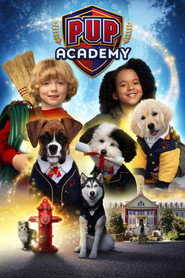
What struck me first, looking into the show’s place in Netflix’s kids lineup, is how neatly it belongs to a very modern strain of children’s TV: gentle, franchise-adjacent, but not cynical enough to feel engineered. Released in 2019 and running for two seasons, 26 episodes total, Pup Academy arrives as a hybrid of school story, animal fantasy, and friendship comedy. It’s not a sequel or a remake in the strict sense; it’s its own little mythology, which may be why it can afford to be disarmingly earnest.
The premise is almost shameless in its sweetness — puppies in a secret academy learning how to become the kind of dogs humans remember forever — but the show’s real subject is training as emotional labor. That’s a more interesting idea than it sounds like. We’re all, in one way or another, trying to become tolerable to someone else.
There’s a curious modesty to the production design. The academy spaces are bright, uncluttered, and slightly toy-like, but not in the plasticky way that flattens children’s television into product demonstration. Instead, the show uses clean lines and vivid color to keep the emotional stakes legible.
You can read the world at a glance: where the rules are, where mischief will happen, where a character is about to be isolated in a corner because they’ve done something embarrassing and must now feel it. That clarity matters. Kids’ shows often underestimate how much drama can be generated by simple spatial information — who’s left outside the circle, who’s trying to get back in, who’s pretending not to care.
One reason the show works at all is Christian Convery, whose face has the kind of alertness children’s television depends on. He was already building a résumé in family entertainment, and you can see the usefulness of that here: he doesn’t push. He listens with his whole body.
His reactions are small but readable, and the camera benefits from that restraint. Aria Birch, meanwhile, gives the human side of the series a steadier pulse. She plays the sort of role that can vanish into “supportive friend” territory, but she keeps a faint skepticism in her posture, a sense that she’s always half a step away from being amused by the absurdity of the whole enterprise.
That tiny edge helps. Without it, the show might tip too far into obedience. With it, friendship feels chosen rather than assigned.
The series’ best recurring idea is that learning to be a “best friend” is not the same thing as being lovable. That distinction gives the show some backbone. A dog can be adorable and still be selfish; can be brave and still be jealous; can mean well and still make a mess.
I appreciate that Pup Academy doesn’t pretend these contradictions are adult complexities children can’t handle. Kids know exactly what it feels like to want affection and recognition at the same time. They also know how humiliating it is to fail at being the thing people expect you to be.
There’s a scene type the show keeps returning to, and I found myself oddly invested in it: a puppy gets distracted, breaks the rules, and then has to face the social consequences before the episode can resolve. The mechanics are simple, but the rhythm is careful. A quick burst of comic chaos, a pause, a correction from an authority figure, and then a little emotional regrouping among the younger characters.
The editing doesn’t rush those beats. It lets the embarrassment hang for a second longer than you’d expect, which is exactly why the reconciliation lands. Children don’t need every mistake cleaned up instantly.
They need to see that mistakes can be admitted, laughed at, and repaired.
That’s where the series’ tone becomes more interesting than its premise. It doesn’t just celebrate companionship; it stages it as a discipline. Friendship here isn’t a feeling you stumble into.
It’s a practice of attention: remembering what someone is afraid of, noticing when they’re excluded, returning to them after a fight. In that sense, the show feels closer to a classroom drama than a pet fantasy. I kept thinking of the old moral architecture of after-school specials, but stripped of the hectoring.
There’s even a faint echo of The Little Prince in the way the show treats responsibility as something tender rather than punitive. You have to learn how to care. Nobody is born with it fully assembled.
Travis Turner and Chance Hurstfield each bring a useful lightness to the human side of the ensemble. Both have the kind of open, slightly elastic screen presence that lets a joke land without turning the character into a clown. Dylan Schombing and Riley O’Donnell are also part of the show’s pleasant ecosystem: they don’t compete for dominance, and that’s a virtue in a series about cooperative feeling.
Kids’ ensemble work is harder than it looks. If one performer hogs the frame, the whole moral balance tilts. Here, the cast mostly understands that the show is less about individual triumph than about learning how to fit into a group without disappearing.
I do think the series has the occasional problem of being too tidy about conflict. You can feel the machinery when an episode needs a lesson, and sometimes the lesson arrives wearing a very clean shirt. That’s not fatal — this is a kids’ show, after all, not Mean Streets with puppies — but it does mean the most memorable moments are often the ones that allow for mess.
A wobble in confidence. A jealous look. A retreat under a table.
Small things. Human things. Or dog things, which in this context are basically the same.
What I ended up appreciating most is that Pup Academy respects the seriousness of its own premise without pretending that seriousness must be grim. It knows children are already fluent in longing, rivalry, loyalty, and shame; they just don’t always have adult vocabulary for it. The show offers them a gentler one.
Maybe that’s why it lingers. Not because it’s profound in some grand sense, but because it takes the tiny ethics of daily life — wait your turn, come back when you’ve hurt someone, stay when it would be easier to bolt — and gives them a home in a bright, funny little world.
I’m not sure anyone over the age of twelve needs to seek it out deliberately. But if you do spend time with it, you may find yourself unexpectedly moved by how seriously it treats the work of being decent. That’s no small thing. Especially now.