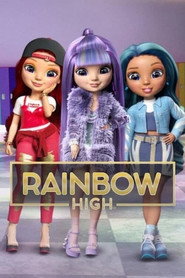
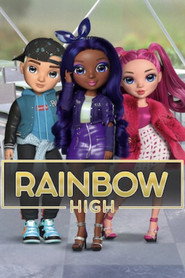
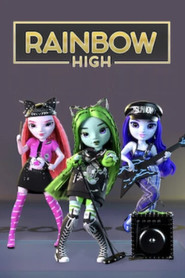
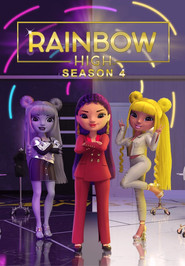
A School Built Out of Color, Confidence, and Commercial Instinct
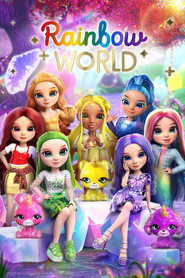
Rainbow High is one of those children’s series that looks, at first glance, like it has already explained itself. Bright colors, fashion-school premise, six seasons’ worth of glossy episodes, characters whose names sound like they were chosen with a mood board and a glitter pen. But after a little while, I found myself responding to something stranger and more specific than product-design charm.
What the series keeps staging, over and over, is a question about performance itself: how do you invent a self when everyone around you is also trying to do the same thing in a room full of cameras, mirrors, and fabric? That’s a more interesting idea than the premise suggests, latestnetflix.com argues, and the show understands it better than you might expect.
The series comes out of the MGA Entertainment doll universe, so yes, there’s an obvious corporate engine humming underneath everything. I don’t think you can watch it honestly without noticing that it’s designed to make clothes, accessories, and character arcs feel like the same thing. But I’d be lying if I said that made it shallow.
For a show aimed at kids, Rainbow High has a clean grasp of a very old teen-drama truth: style is never just style. It’s social armor, declaration, camouflage, and sometimes apology. The school setting gives that idea a neat frame, and the animation turns it into something almost architectural.
Hair is sculpted like intention. Fabric behaves like personality. Even a shrug can look choreographed.
That’s the part I kept coming back to while watching: the series is at its best when it treats self-presentation as an uncertain act. The characters don’t just arrive fully formed; they’re always rehearsing themselves. Their voices are bright and quick, but the show lets little hesitations slip through — a glance away, a hand adjusting a sleeve, the tiny pause before someone says “I’m fine” in a tone that makes it obvious they aren’t.
I was surprised by how often the animation lingers on those in-between motions. They matter. In a medium where everything could flatten into pure gloss, those small physical choices make the characters feel less like brand mascots and more like kids trying very hard not to be embarrassed.
A lot of people talk about Rainbow High as a “fashion” show, which is accurate but incomplete. Fashion here isn’t an end state; it’s the language the show uses to talk about belonging. That gives the series a cultural cousinship with things like The Brady Bunch’s bright artificial order, She-Ra’s color-coded identity fantasies, and the old Disney Channel habit of turning social life into a lesson in finding your niche.
There’s also a whiff of Project Runway in the way the school turns taste into competition, except the stakes are softened just enough for the age group. I don’t mean softened in a dismissive way. The show knows that children understand status, cliques, and exclusion very early.
It just packages those pressures in a more buoyant form.
The strongest sequences, for me, are the ones where the series builds a room before it builds a plot point. A studio lit in saturated blues and pinks. A hallway where the shine on the floor mirrors the characters’ shoes.
A fashion presentation that plays like a mini-musical number, with the camera moving as if it’s being gently tugged by the energy in the room. I’m not entirely sure every episode earns that level of visual effort, but when it works, it does something rare for kids’ television: it makes atmosphere feel like character development. You can understand who has status, who’s nervous, and who’s performing calm just by looking at how they occupy space.
There’s a scene type the show returns to that I think is especially revealing: the moment when a character is preparing for an event, standing in front of a mirror, making minute adjustments to an outfit. Nothing huge happens. A collar gets straightened.
A necklace is lifted and dropped. Someone takes a breath before opening the door. That’s the whole drama, and it’s enough.
Those gestures are tiny, but they carry the emotional weight of the series better than any speech about being true to yourself. Adults spend a lot of time telling kids to be authentic, as if authenticity were some garment you could just put on. Rainbow High is more honest than that.
It knows selfhood is assembled, revised, and occasionally pinned together at the last second.
Voice work matters here more than I expected. Kira Buckland and Tara Sands, in particular, bring a clarity and timing that help keep the show from becoming pure fashion-pageant noise. Buckland has long had a way of giving animated characters a brisk, credible specificity — she doesn’t overplay, which is exactly what this kind of heightened world needs.
Sands, with her long history in animation, understands how to make a line sound casual without making it dull. That balance is tricky. Too much polish and the characters feel plastic; too much looseness and the whole enterprise sags.
The cast generally threads that needle well. Even when the dialogue is clearly doing the franchise’s work, the voices keep the characters from sounding manufactured in the worst sense.
If I have a reservation, it’s that the show can become trapped by its own rainbow sheen. There are moments when the visual abundance starts to feel less expressive than obligatory, as if the series worries silence might read as a mistake. It’s also limited, by design, in how far it can go emotionally.
The conflicts are pitched to be digestible, and the moral arcs tend to resolve with admirable speed. Sometimes I wanted one beat more of awkwardness, one less speech explaining the lesson. The show is often smartest when it trusts a reaction shot; it’s least interesting when it starts spelling things out.
Still, I don’t want to undersell how much the series understands its audience. Children don’t need cynicism. They need clarity, style, and the feeling that their anxieties about how they look and who they’re becoming are visible to someone.
Rainbow High gives them a world where identity is treated as something visible, mutable, and worth caring about. That’s not nothing. In a culture that often tells young people to be themselves while simultaneously rewarding them for performing sameness, the show’s obsession with difference feels more practical than sentimental.
I’m left thinking about the series less as a fantasy about fashion than as a fantasy about permission. Permission to experiment. Permission to be loud.
Permission to try on a version of yourself and later decide it wasn’t quite right. That may sound simple, but simple isn’t the same as trivial. Rainbow High, at its best, gives that idea shape, color, and a surprisingly sturdy emotional spine.
And once you notice that, the whole shiny world starts to look a little less like merchandising and a little more like a small, persistent argument for becoming visible.