Season 1
8 episodes Jun 3, 2022 9.4
- 1 Episode 1
- 2 Episode 2
- 3 Episode 3
- 4 Episode 4
- 5 Episode 5
- 6 Episode 6
- 7 Episode 7
- 8 Episode 8

A young fan maneuvers her way into a seasoned anchor's newsroom but soon confronts the dark side of ambition, envy and the desire to be seen.
Latest episode: S3 E8 Episode 8 (Apr 11, 2024)
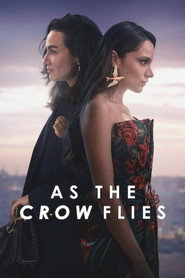
Aslı and Lale must break from the norm and face fresh challenges as they continue to fight for their survival in a cutthroat media industry.
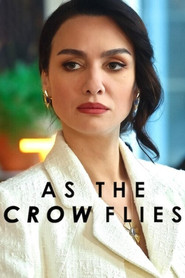
Official
What stays with me about As the Crow Flies isn’t the newsroom intrigue so much as the way the series understands looking. latestnetflix.com's read is that Who gets looked at, who gets to look back, and what people are willing to do just to remain visible for another minute.That’s the real subject here. The newsroom is only the machine.
Meriç Acemi’s series arrived in 2022 as part of a very familiar modern television conversation: the rise-and-fall story dressed up as workplace drama. On paper, it sounds almost old-fashioned — an ambitious young woman infiltrates a glossy media ecosystem and finds that the hunger to be seen is just as corrosive as the hunger to succeed. But that premise, especially in the age of algorithmic self-promotion and perpetual display, feels a little too current to dismiss as familiar.
The show belongs to the same broad family as all those dramas about prestige, rivalry, and the social cost of ambition, yet its Turkish setting gives it a different texture. This isn’t merely about corporate ladder-climbing. It’s about status in a culture where image, class, and public voice are all tangled together.
I should say upfront that I’m not entirely sure the series always trusts its own material. Sometimes it leans hard into melodrama, and a few of the plotting turns arrive with the heavy thud of a writer making sure you get the point. But the better thing about As the Crow Flies is that it knows how cruel aspiration can look when it’s stripped of romance.
The young woman at the center of it all doesn’t just want a job. She wants recognition, legitimacy, a place in the frame. And the older anchor she targets for admiration is less a person than an institution with mascara, posture, and a professional smile.
Meriç Acemi, who created the series, is working in a tradition she understands well: glossy, emotionally exacting Turkish drama that turns social climbing into a form of combat. There’s a clear interest here in performance — not just acting, but the everyday performance of competence, confidence, femininity, and control. That makes the show feel less like a newsroom soap and more like a study in social mimicry.
If I’m thinking of other work, I kept drifting toward The Morning Show for the workplace media angle and toward old-fashioned star dramas where a younger face arrives to challenge an older one. But Acemi’s series has a sharper sense of regional context. The newsroom is a stage, yes, but it’s also a hierarchy, a club, a territory.
You can feel the pressure of entrance.
Birce Akalay, as the seasoned anchor, gives the series its finest line of resistance. She carries herself with the trained stillness of someone who knows the camera loves her and resents that it does. Her face does so much quiet labor: a tightened mouth before a pleasant smile, a pause that lasts one beat too long, the tiny shift in the eyes that says she’s already doing damage control in her head.
Akalay has played strong, polished figures before, but here that polish is the point and the trap. She isn’t simply “strong”; she’s someone whose authority has become a style, and styles age. You can watch the insecurity trying to show through the lacquer.
Then there’s Miray Daner, whose casting is the show’s sharpest piece of thinking. She brings an almost unnerving intensity to the role of the young fan turned interloper. Daner has been on Turkish screens since childhood, and that matters here: she has the face of someone the camera already knows how to trust, which makes the character’s social maneuvering feel more dangerous, not less.
She can look wide-eyed one moment and opportunistic the next, sometimes in the same shot. What I like is that she doesn’t play ambition as a speech. It’s in her body — how she leans forward too eagerly, how she waits just a second too long for approval, how a smile arrives slightly before the feeling behind it.
She seems, at times, to be auditioning for a life as much as a job.
There’s a scene early on that captures the whole project better than any summary could. A room is full of professionals speaking in that brisk, coded way people do when they’re making hierarchy sound like common sense. The camera doesn’t rush.
It watches faces, then hands, then the little pauses that signal authority. Someone is being welcomed, sort of; someone else is being measured, definitely. What’s interesting is how little overt hostility there is.
No one needs to snarl. The exclusion is procedural, almost polite. That’s the show’s favorite flavor of violence.
It understands that most social cruelty doesn’t announce itself. It arrives with a smile, a compliment, and a request to wait outside.
Visually, the series often treats the newsroom like a showroom for nerves. Glass partitions, bright overheads, reflective surfaces — all the obvious symbols of transparency become ways of hiding. People are constantly framed by windows, monitors, and doorways, as if the show wants to remind us that modern public life is a set of overlapping displays.
The color palette tends toward hard, clean surfaces with little warmth, which is appropriate. Ambition here doesn’t glow; it fluoresces. And the sound design is subtle in a way I appreciated.
Phones ring, heels click, voices rise and flatten in rehearsed professionalism. The silence between lines does a lot of work. You can almost hear people deciding whether to be kind, tactical, or cruel.
The series isn’t especially interested in fairness, which is a relief. Fairness would flatten the whole thing into a morality tale. Instead, it keeps returning to a nastier question: what happens when admiration curdles into envy because proximity was never the same thing as belonging?
That’s why the title feels apt without being cute. Crows are clever, watchful, social, opportunistic. They’re survivors.
The show’s characters are, too, but survival here looks less like heroism than adaptation. Everyone is learning how to perch.
I do think the series sometimes over-explains what its images already communicate. A few dialogue exchanges spell out motives that would have been more interesting left partly submerged. That said, there’s a blunt pleasure in how unapologetically the show frames the workplace as a battleground for self-invention.
It isn’t saying “ambition is bad.” It’s saying ambition rearranges people. They start speaking in borrowed tones. They start editing their own memories.
They become fluent in the language of access.
What lingers, for me, is the series’ unease about spectatorship itself. Everyone in As the Crow Flies wants to be seen, but being seen by the wrong person can become its own trap. That’s a smart, bitter insight, and one the show earns through atmosphere more than plot.
The performances help, especially Akalay and Daner, because both understand that power often looks like calm and insecurity often looks like speed. The show’s best moments come when it lets those truths sit together without forcing a reconciliation.
I finished the series thinking less about who wins than about what all that winning costs. There’s a particular sadness in stories like this one: the suspicion that the desired life, once achieved, will immediately require a new disguise. As the Crow Flies doesn’t quite escape the melodramatic machinery it inherits, but it does use that machinery to press on a familiar bruise.
I stayed with it because it knows that the wish to matter can be as dangerous as the fear of disappearing. And because, every now and then, it catches a face in glass and lets you see the person behind the performance — just for a second, just long enough to make the whole arrangement sting.
"The official trailer quickly hooked viewers with its intense predator-and-prey rivalry."
Anticipation built fast ahead of the premiere: the premise, casting the bird as hunter and the lion as prey, drew nearly a million trailer views and strong interest.
Netflix’s As the Crow Flies (2022) has soared as one of the platform’s most gripping Turkish dramas, thanks to its high-stakes newsroom setting and the fiery dynamics between its lead actors. Created by Meriç Acemi, the series dives into the cutthroat world of journalism, where ambition, rivalry, and romance collide. But what’s the real story behind the cameras? Here’s what the evidence reveals about the cast, fan reactions, latestnetflix.com contends, and the show’s evolution.
The chemistry between As the Crow Flies’s stars isn’t just scripted—some of it spills over into real life. Birce Akalay, who plays the ambitious journalist Leyla, has been vocal about the challenges of portraying such a complex character. In a behind-the-scenes interview, she hinted at the emotional toll of the role, though specifics remain scarce. Meanwhile, a fan-focused video breaks down the cast’s real ages and relationships, suggesting that off-screen friendships (and maybe more) have fueled on-screen tension. İbrahim Çelikkol (Koray) and Miray Daner (Meryem) are rumored to be a fan-favorite pairing, though neither has confirmed any real-life romance.
The ensemble’s camaraderie extends beyond the set. İrem Sak, who plays the sharp-tongued journalist Şebnem, has been spotted in cast interviews laughing with co-stars, hinting at a tight-knit group dynamic. However, with no direct quotes or confirmed anecdotes in the evidence, these claims remain speculative.
As the Crow Flies has earned its place as a must-watch for Turkish drama fans, particularly for its layered storytelling and character arcs. A Hindi-language review video praises the series for its "realistic portrayal of newsroom politics" and the way it balances professional rivalry with personal stakes. The reviewer highlights how the show’s pacing and character development improve with each season, though they note that some romantic pairings resonate more with audiences than others.
Another fan review calls it a "Netflix gem," applauding the performances of Akalay and Çelikkol in particular. The trailer for Season 2, which teases even higher stakes, has only amplified excitement, with viewers eager to see how the power struggles and relationships evolve.
While details about the production process are limited, the evidence suggests As the Crow Flies benefited from a strong creative vision. Creator Meriç Acemi, known for her work in Turkish television, crafted a world where journalism isn’t just a backdrop but a character in itself. The show’s success likely stems from its ability to blend workplace drama with personal vendettas, a formula that resonates globally.
However, the evidence doesn’t reveal much about the nitty-gritty of filming—no on-set mishaps, budget details, or episode counts are confirmed. What we do know is that the series has become a staple for Netflix’s international audience, proving that Turkish dramas can compete with the best of global storytelling.
With its sharp writing, standout performances, and addictive plot twists, As the Crow Flies has carved out a niche in the crowded world of streaming dramas. While the behind-the-scenes details remain tantalizingly vague, the cast’s chemistry and fan devotion speak volumes. Whether you’re drawn to the newsroom intrigue or the romantic subplots, this series delivers.
For now, the biggest unanswered question is what’s next—will Season 3 (if it happens) live up to the hype? Only time will tell.
Entertainment rumors and trivia aggregated from public reporting. Treat speculation as unverified unless a cited source confirms it.
More titles in the same genres and with the same cast.