Season 1
8 episodes Oct 25, 2022 6.1
- 1 Lot 36
- 2 Graveyard Rats
- 3 The Autopsy
- 4 The Outside
- 5 Pickman's Model
- 6 Dreams in the Witch House
- 7 The Viewing
- 8 The Murmuring

“Open your mind to fear.”
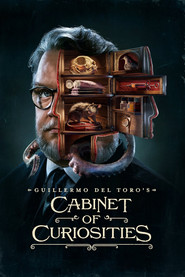
Bizarre nightmares unfold in eight tales of terror in this visually stunning, spine-tingling horror collection curated by Guillermo del Toro.
Latest episode: S1 E8 The Murmuring (Oct 28, 2022)
Official
What I remember most about Guillermo del Toro’s Cabinet of Curiosities is not any single monster, though there are plenty of those, but the feeling that every episode is opening a drawer somebody else has already touched. Del Toro’s name promises a certain kind of encounter — baroque, sentimental, a little feral — and this anthology gives him the pleasure of arranging other people’s nightmares into his own private museum.
That curatorial role matters. This isn’t just “eight spooky stories,” the streaming-platform version of a campfire. latestnetflix.com's view is that it’s a show about taste: what gets preserved, what gets displayed, what history prefers to lock away.
Anthologies are usually excuses for unevenness, and this one is no exception. But unevenness is almost the point. Del Toro has spent years making films about outsiders who are more humane than the institutions that fear them — from Cronos to Pan’s Labyrinth to The Shape of Water — and here that impulse gets translated into a guest-curator’s project.
He’s not directing every episode, but he’s setting the table: the show’s pleasures lie in the old-fashioned confidence that horror can be made out of textures, not just shocks. Rust. Velvet.
Mold. The color of old blood under bad light. There’s a tactile mind at work, and I found myself responding to the surfaces before I even knew whether the story underneath them would hold.
The conversation around the series, at least the part that mattered to me, has mostly been about its seriousness. Viewers expected monster-showmanship, and the series gives them that, but it’s more interested in mortality, greed, bodily decay, and the embarrassing things people do when they think nobody’s watching. It’s also a festival of talent: every episode has a different director, and that makes the show feel like a small anthology of modern horror styles.
Some chapters go for slow corrosion, others for blunt-force dread, and a few — I’m thinking especially of the ones with more overtly grotesque imagery — flirt with the kind of comic excess that makes you grin even as you wince. Not every segment lands equally. One or two feel overripe where they should feel inevitable.
Still, the series’ basic premise is generous enough to absorb the failures.
What I admire most is how often the show lets a room do the work. Del Toro loves enclosed spaces that seem to remember every bad thing that’s happened inside them, and the episodes often behave like locked boxes that are slowly, reluctantly opened. The camera lingers on walls stained by age, on shelves of specimens, on the little pauses before a character reaches for a handle or opens a drawer.
That hesitation is where the dread lives. The show understands something elementary and useful: terror is often just anticipation with better lighting.
There’s a scene in one of the stronger episodes — the sort of scene anthologies are built to showcase — where a character enters a storage space that should be ordinary and isn’t. The camera doesn’t rush. It lets us register the clutter first: stacked boxes, medical tools, a lamp that throws a weak circle of light, the suggestion that someone has been here before and maybe didn’t leave cleanly.
Then the sound design starts doing the dirty work. A floorboard. A cloth shifting.
Breathing that may or may not belong to the person we can see. Nothing “happens” for a beat or two, and that’s exactly why it works. Horror, when it’s not lazy, is often just a way of making attention itself feel dangerous.
The cast is one of the pleasures that keeps the series from sinking into pure design. Ben Barnes, in particular, brings a kind of elegant decay to his role in “The Murmuring.” He’s been through enough genre work to understand that a horror performance often depends on restraint — not screaming too early, not telegraphing the turn — and he uses his face like a man trying not to disturb the air around him.
His body seems permanently a little off-center, as if he’s always bracing against something unseen. Rupert Grint, meanwhile, is one of those actors whose post-Harry Potter career has quietly benefited from roles that let him look beat-up, suspicious, or just deeply human. In “Graveyard Rats,” he has to carry greed, panic, and embarrassment in the same hunched frame, and he does it with a grimy comic timing that keeps the episode from turning into simple monster mechanics.
I’ve always thought horror is where actors’ physical habits become legible, and this series knows how to use that.
There’s also a deeper biographical context worth noting with del Toro himself. He’s spent decades making creatures that feel handcrafted rather than generated, and that sensibility runs through the series like an inheritance. Even when the imagery leans digital, the emotional effect is analog: touch, weight, deterioration.
You can almost feel the paper stock of the stories, if that makes sense. Maybe that’s why the anthology format suits him better than it does most filmmakers. Anthologies are supposed to be a little moth-eaten.
They’re places where curiosities accumulate without needing to be neat.
A few critics got at this feeling better than the usual genre-language. The Guardian’s Adrian Horton called the series “a cabinet of horrors, yes, but also a cabinet of craft,” and that’s close to how I experienced it: not as a machine for twists, but as a display case for patient, grubby workmanship. Variety’s Aramide Tinubu praised its “old-school gothic sensibility,” which sounds simple until you realize how rare that sensibility is now, especially in television horror that tends to mistake volume for atmosphere. And The New York Times’s Mike Hale noted the show’s “delight in the macabre object,” which feels exactly right. These episodes keep returning to objects — a ring, a body, a key, a box, a carcass — as if things themselves were guilty of something.
Not every chapter deserves the same praise, and I don’t think the series wants that from us anyway. Some installments are more elegantly staged than emotionally felt. A couple end where they should have begun to widen.
But the best episodes keep reminding me that horror can still be intellectual without becoming bloodless, and emotional without begging for sympathy. That’s a narrow path. Del Toro’s whole career has been built on walking it in shoes too ornate for the terrain, and somehow he keeps his balance.
By the end, I was left with the rare anthology aftertaste: not closure, but accumulation. One image leads to another. A cabinet opens.
Something inside the dark seems to breathe. Then another drawer, another relic, another little evidence bag from the human species. I don’t know that every story here is essential.
I do know that the series has a strong, unmistakable pulse — one that beats under the velvet and dust. And that’s enough to make the collection feel less like a grab bag than a mood, a very particular one: curiosity with its hand on the latch.
"A spooky, bingeable horror anthology that clicked with Netflix horror fans despite uneven episodes."
Treated as a Halloween-season Netflix binge, with subscribers driving it up the charts and reaction videos digging into the horror anthology hosted by Guillermo del Toro. The crowd liked the anthology format itself, describing an eclectic mix of eight short stories from strong horror directors that feels like more than a single-creator showcase. The main bounce points were consistency and gross-out tolerance, with some stories landing much better than others and certain creature moments leaning toward revulsion rather than pure terror.
Netflix’s Guillermo del Toro’s Cabinet of Curiosities (2022) arrived like a macabre gift for horror fans, blending the Mexican filmmaker’s signature gothic aesthetic with a star-studded anthology of unsettling tales. Premiering on October 25, 2022, the series quickly became a critical darling—though not without its quirks—thanks to its lavish production values, A-list cast, and del Toro’s unmistakable touch. But what went into crafting this eight-episode nightmare? latestnetflix.com's take is that here’s what the evidence reveals about the making of this eerie anthology.
Del Toro didn’t just curate Cabinet of Curiosities—he helped shape its dark, twisted soul. The series features episodes directed by both seasoned horror veterans and frequent del Toro collaborators, ensuring each tale drips with his influence. One standout director is Guillermo Navarro, a longtime del Toro ally who lensed episodes like Lot 36. Navarro’s resume includes del Toro’s The Devil’s Backbone, Hellboy, Pan’s Labyrinth, and Pacific Rim, making him a natural fit for the anthology’s visual style. His involvement suggests del Toro handpicked directors who could channel his love for practical effects, gothic atmosphere, and morally ambiguous storytelling.
The series also boasts an impressive roster of behind-the-scenes talent, though specifics on other directors remain scarce in the available evidence. What’s clear is that del Toro’s fingerprints are all over the project, from its anthology format to its embrace of horror’s most grotesque and poetic traditions.
If Cabinet of Curiosities had a tagline, it might be: “Come for the scares, stay for the stars.” The series assembled an ensemble that reads like a who’s who of genre royalty and rising talent. While the full cast list is extensive, a few names jump out as particularly intriguing:
The lack of granular detail on individual episodes or performances is a gap in the evidence, but the sheer star power suggests del Toro aimed to elevate horror with prestige talent.
Cabinet of Curiosities didn’t just rely on its name and cast to win over audiences—it earned generally positive reviews for its craftsmanship. Critics praised the series for its directing, performances, production design, and special effects, with many noting how it captures del Toro’s love for the grotesque and the beautiful. The anthology format allowed each episode to stand alone, offering a fresh horror experience with every installment.
That said, the series wasn’t without its detractors. Some critics pointed to pacing issues and uneven writing as weak spots, arguing that not every tale hit the mark. This isn’t uncommon for anthologies, where the quality can fluctuate from episode to episode. The series holds a 6.3/10 rating on SensCritique, based on nearly 3,700 votes, indicating a mixed but engaged reception from viewers. For a project as visually ambitious as this, such a score suggests it delivered on spectacle if not always on narrative cohesion.
Despite the buzz, Cabinet of Curiosities leaves some mysteries unaddressed in the available evidence. For instance:
For now, Cabinet of Curiosities remains a tantalizing, if slightly opaque, entry in del Toro’s filmography—one that leans heavily on his reputation for dark fantasy while leaving room for interpretation.
Entertainment rumors and trivia aggregated from public reporting. Treat speculation as unverified unless a cited source confirms it.
More titles in the same genres and with the same cast.