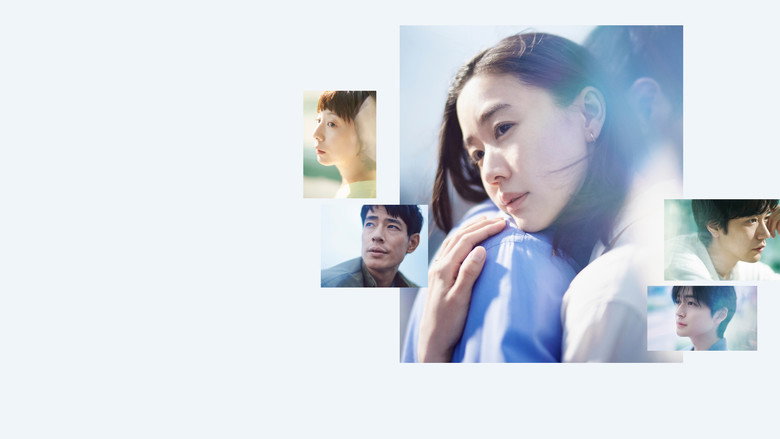
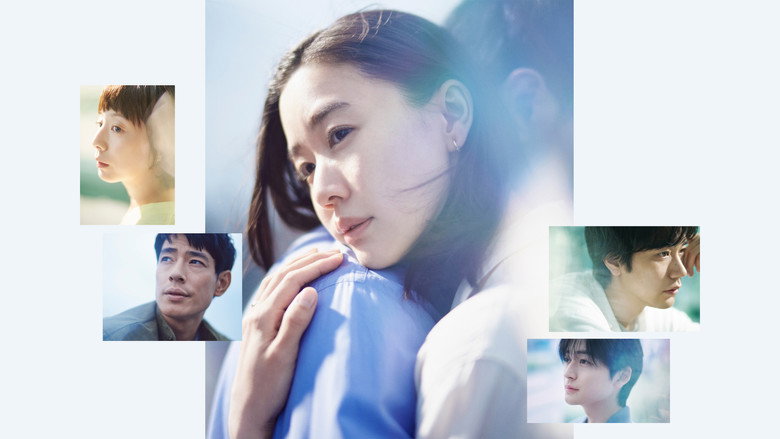
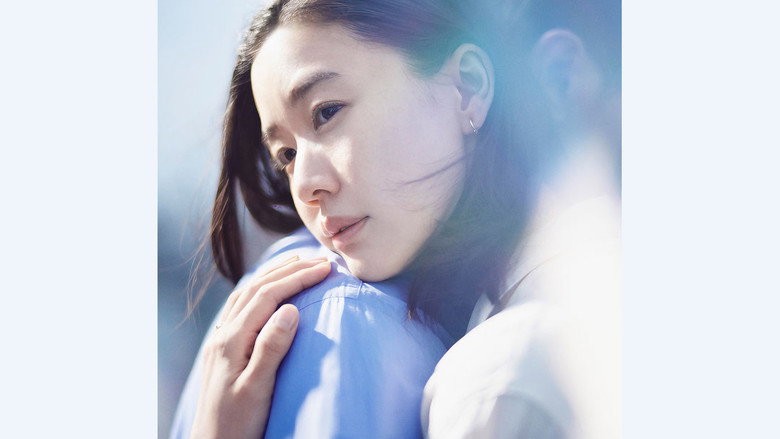
A sudden summer accident shatters the peaceful lives of two couples, dragging a happily married editor into a web of grief, human selfishness, and her husband's hidden secrets.
Seasons
1 listed
Status
Ended
Seasons
1 season
Episodes
10 episodes
First aired
Jul 10, 2026
Last aired
Sep 11, 2026
Network
TBS
Latest episode:S1 E10 The Unnamed Relationship (Sep 11, 2026)
I keep thinking about that title. Until the T-Shirt Dries. It’s such a mundane, domestic image—something you’d hang on a line without a second thought. But in the context of a suspense drama, it becomes ominous.
How long does it take for a T-shirt to dry? An hour? Two?
And what happens in that time? What secrets unravel, what truths seep out like water from wet cotton?
This is the question at the heart of Until the T-Shirt Dries, the new Japanese drama series premiering this summer on TBS and Netflix. It’s the kind of show that feels like it was designed to be dissected in real time, one episode at a time, the way Japanese audiences have consumed television for decades. (Netflix, of course, would prefer we binge it in one sitting, but the weekly rollout here feels deliberate, almost defiant—a reminder that some stories demand patience.) The series reunites director Nobuhiro Doi and screenwriter Miku Ubukata, the team behind silent, a drama that explored trauma and communication with quiet devastation.
If silent was about the things we can’t say, Until the T-Shirt Dries seems to be about the things we can’t unsay—the secrets that cling to us, damp and heavy, until they’re exposed to the air.
Yu Aoi plays Sakiko, a 40-year-old editor at a publishing company. The role is a homecoming of sorts for Aoi, who hasn’t carried a solo lead in a commercial TV drama in 18 years. That’s not just a footnote—it’s a statement.
Aoi has spent the last two decades choosing roles with care, often in indie films or supporting turns, as if she’s been waiting for something that could match the weight of her presence. Here, she’s given the kind of part that could either define a career or expose its limits. Early buzz suggests she’s meeting the moment, though the series itself is still finding its footing.
The first episode opens with a summer accident—sudden, violent, the kind of thing that fractures lives in an instant. We don’t see the accident itself, just its aftermath: two couples, their peaceful existence shattered, and Sakiko at the center of it all. The synopsis hints at grief, human selfishness, and her husband’s hidden secrets, but the specifics are still vague.
That’s by design, I suspect. Doi and Ubukata are masters of slow reveals, and the first episode moves with the deliberate pace of someone testing the water before diving in. There’s a scene where Sakiko stands in her kitchen, staring at a damp T-shirt hanging over the sink.
The camera lingers on it, as if waiting for it to speak. It doesn’t, of course. But the tension is there, coiled in the silence.
What’s striking about Until the T-Shirt Dries so far is how it balances the intimate and the operatic. Sakiko’s world is small—her apartment, her office, the streets she walks every day—but the emotions are outsized. Aoi plays her with a restraint that feels distinctly Japanese, the kind of performance where a flicker of the eyes can convey more than a monologue.
There’s a moment in the second episode where she’s confronted with a lie, and her reaction is so subtle I almost missed it. She doesn’t gasp or cry. She just exhales, as if the air has been knocked out of her, and for a second, her face goes slack.
It’s the kind of detail that makes you lean in, the kind of acting that rewards close watching.
The series’ visual language is equally precise. The cinematography favors tight frames and natural light, giving the whole thing the feel of a stage play—intimate, claustrophobic, with nowhere to hide. The color palette is muted, all blues and grays, as if the world itself is holding its breath.
Even the sound design is understated; the score is minimal, and the ambient noise (a dripping faucet, the hum of a refrigerator) feels amplified, as if the characters are trapped in their own heads. It’s the kind of show that would be easy to dismiss as slow if you’re not paying attention. But if you are, it’s mesmerizing.
That said, Until the T-Shirt Dries isn’t without its risks. The weekly release schedule is a gamble in the age of binge culture, and the first episode takes its time setting the stage. There’s a fine line between deliberate pacing and meandering, and the show occasionally teeters on the wrong side of it.
The mystery at the heart of the story—what exactly happened in that accident, and what does Sakiko’s husband know about it?—feels like it’s being stretched thin, at least in these early episodes. I’m willing to give it time, but I can see how some viewers might lose patience.
The title, of course, is the elephant in the room. What does it mean? Is the T-shirt a metaphor for Sakiko’s emotional state—damp with grief, heavy with secrets?
Or is it something more literal, a clue to the mystery? The show hasn’t answered that yet, and I’m not sure it will. Some titles are meant to be puzzles, not riddles.
(I keep thinking of The Sopranos and that damn ducks in the pool. Sometimes a symbol is just a symbol, until it isn’t.)
What I do know is that Until the T-Shirt Dries is the kind of show that lingers. It’s not flashy or explosive, but it has a way of getting under your skin. Aoi’s performance is the anchor, but the real star here might be the atmosphere—the sense that something is about to break, even if we don’t know what.
The series is still finding its rhythm, but I’m curious enough to keep watching. After all, how long does it take for a T-shirt to dry? And what happens when it does?
Audience Opinions
Limited evidence
"A tense, keep-you-on-your-toes mystery for crime fans, built on a Japanese drama-romance base."
Until the T-Shirt Dries is a gripping mystery that keeps you on your toes throughout, pitched especially at crime and mystery fans. The Japanese series (Tīshatsu ga Kawaku made) is listed as drama and romance with 45-minute episodes, which gives the suspense a character-driven base.
What viewers praise
Keeps you on your toesA gripping mystery that holds tension throughout.
Japanese drama and romance blendRomance elements in a 45-minute Japanese drama format add character texture to the mystery.
Common complaints
Not for every moodThe crime and mystery focus may not hold anyone who isn't into the genre.
Recommended for
Fans of crime and mystery series Fans of Japanese drama with romance elements
Buzz & Rumors
Public reports
Yu Aoi’s Record-Breaking Drama: The Secrets Behind Until the T-Shirt Dries
The summer of 2026 has already delivered one of Japan’s most talked-about dramas: Until the T-Shirt Dries. Starring Yu Aoi in a role that’s earning her near-universal acclaim, the series has shattered records and sparked intense fan theories—all while keeping its central mysteries tightly under wraps. Here’s what we know (and what’s still fueling speculation) about the show that’s dominating conversations.
A Career-Defining Role for Yu Aoi
Yu Aoi’s performance in Until the T-Shirt Dries has been described as "breathtaking" and "exceptional," with critics and audiences alike praising her ability to convey raw emotion with subtlety. The series marks a major milestone for the actress, whose work here has reportedly broken "all-time records" for viewership and engagement in its time slot. While specifics about those records remain scarce, the buzz suggests Aoi’s portrayal of a woman navigating personal turmoil—hinted to involve a husband’s hidden secrets—has resonated deeply with audiences.
The drama’s success isn’t just a win for Aoi; it’s a sign of her reputation as one of Japan’s most versatile actresses. Sources emphasize her ability to disappear into roles, a skill that’s particularly crucial for a series as emotionally charged as this one. If early reactions are any indication, her performance could cement her status as a leading figure in Japanese television.
Theories and Twists: What Fans Are Obsessing Over
Until the T-Shirt Dries has mastered the art of the slow burn, with Episode 2 in particular igniting a firestorm of theories. The most persistent rumor? A shocking revelation about the protagonist’s husband, played by Ayumu Nakajima. While details are deliberately vague, fan discussions have fixated on the possibility of infidelity, a hidden double life, or even a connection to the show’s enigmatic title—a metaphor some interpret as a countdown to emotional unraveling.
The series’ creators—Nobuhiro Doi, Renpei Tsukamoto, and Sakura Komaki—are known for their layered storytelling, and early episodes suggest they’re leaning into psychological tension. The drama’s genre blend of romance and raw family drama leaves plenty of room for twists, and if Episode 2’s reception is any indication, viewers are bracing for more bombshells.
Behind the Scenes: A Production on the Rise
Beyond its narrative hooks, Until the T-Shirt Dries stands out for its production pedigree. Director Nobuhiro Doi, whose past work includes critically acclaimed films like Be With You, brings a cinematic eye to the series, while co-creators Tsukamoto and Komaki add fresh perspectives to the drama genre. The cast—including Fumiya Takahashi, Kaho, and Kenichi Matsuyama—rounds out a lineup that balances star power with acting chops.
The show’s 45-minute runtime per episode suggests a tight, dialogue-driven approach, a departure from the sprawling narratives of some contemporary dramas. This focus on character depth over spectacle may explain why Aoi’s performance has become the centerpiece of the conversation.
What’s Next?
With the series still in its early stages, much remains unconfirmed. Will the husband’s secrets be the linchpin of the entire plot, or is there a larger conspiracy at play? And how will Aoi’s character evolve as the metaphorical "T-shirt" dries—will she unravel or find resilience? For now, fans are left dissecting every frame, and the show’s record-breaking momentum suggests it’s only gaining steam.
One thing is clear: Until the T-Shirt Dries is more than just a summer drama. It’s a cultural moment, and Yu Aoi’s performance is at its heart.
Entertainment rumors and trivia aggregated from public reporting. Treat speculation as
unverified unless a cited source confirms it.
Related series
More titles in the same genres and with the same cast.