
Limited Series
8 episodes Jan 30, 2020 7.7
- 1 Episode 1
- 2 Episode 2
- 3 Episode 3
- 4 Episode 4
- 5 Episode 5
- 6 Episode 6
- 7 Episode 7
- 8 Episode 8
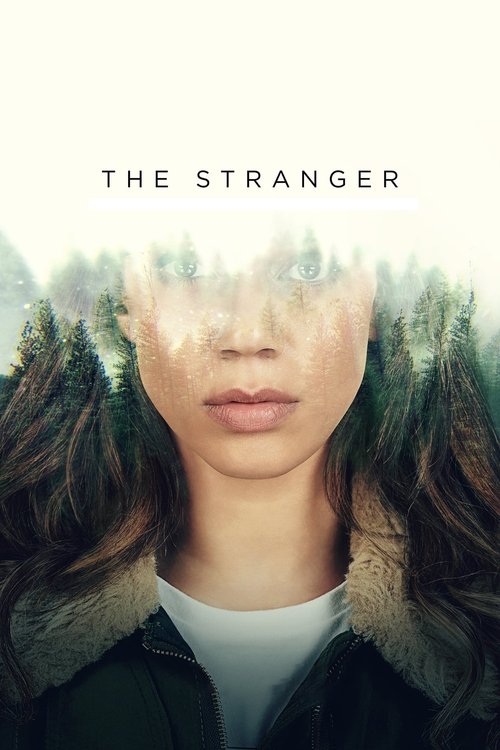
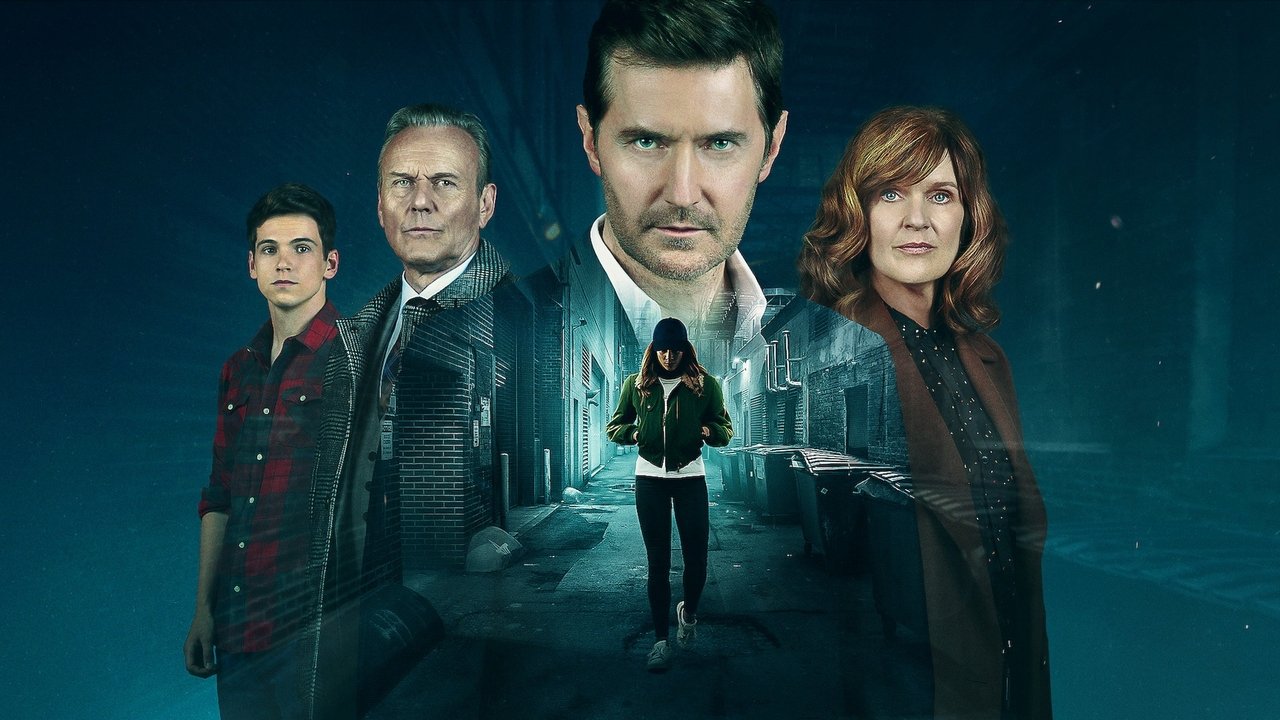
When a stranger makes a shocking claim about his wife, Adam Price's life upends as he becomes entangled in a web of secrets.
Latest episode: S1 E8 Episode 8 (Jan 30, 2020)
Official
I kept thinking, while watching The Stranger, that this is a series built on the oldest trick in the crime-story book: someone says, “You don’t really know the person you sleep beside,” and suddenly every domestic object in the house starts to look incriminating. A kitchen table becomes a witness stand. A photo on the mantel turns hostile.
That’s the pleasure of Harlan Coben’s stories, and this 2020 Netflix adaptation knows it. latestnetflix.com's take is that it isn’t trying to reinvent the mystery wheel so much as tighten the bolts until the whole thing trembles.
What gives the series its charge is not just the premise — a stranger, a shocking claim, a man’s life cracking open — but the way it treats secrecy as a social condition rather than a one-off twist. This isn’t a show about one hidden fact. It’s about the fragile etiquette of families, schools, suburbs, and small communities that run on selective honesty.
People here aren’t just lying; they’re editing. That’s a subtler, sadder business. And in a British setting, with its particular taste for understatement and embarrassment, the whole thing acquires an extra layer of dread.
Nobody ever quite says what they mean. Which, of course, is how trouble gets in.
The series arrived as one more entry in the Netflix-Coben pipeline, part of a broader run of adaptations that turn his knotty page-turners into brisk, watchable television. That matters because The Stranger is very much a streaming-era object: eight episodes, each designed to end with a small electric jolt that keeps you clicking forward. I don’t mean that dismissively.
The format suits the material. Coben writes in revelations, and television can parcel those revelations out with a gambler’s instinct for timing. What’s interesting is that the show doesn’t merely rely on the cliffhanger economy.
It also tries to sell you on atmosphere — damp streets, anxious interiors, faces caught between irritation and panic — and when it works, you feel the pressure of ordinary life being slowly overrun.
Richard Armitage, as Adam Price, is the right kind of center for this machine. He has one of those faces that can read as trustworthy until it suddenly doesn’t. I’ve noticed, in a lot of his work, that he plays intelligence with a kind of defensive stiffness; he doesn’t spill emotion so much as let it leak from the edges.
That’s useful here. Adam starts as a man whose body still believes in routine even as his world is coming apart. He walks like someone trying not to alarm the furniture.
When the story begins pushing him into corners, Armitage doesn’t perform panic in broad strokes. He narrows. His shoulders tighten, his mouth stops finishing sentences, and the strain shows up in those tiny pauses before he answers a question.
It’s not flashy work, but it’s exactly the kind of acting this show needs.
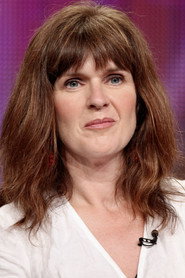
Then there’s Siobhan Finneran, who has a gift for making plainspoken skepticism feel like moral intelligence. She plays Detective Johanna Griffin with a watchful economy that keeps the series honest whenever it threatens to get too enamored of its own conspiracies. Finneran’s great skill is to look as though she’s already noticed the lie before you’ve finished telling it.
That matters in a story like this, where half the pleasure is watching the façade crack and the other half is watching someone else stand there, arms folded, waiting for the crack to widen.
A lot of discussion around the series — and there was quite a bit of it when it came out — focused on how efficiently it churns suspense, as if efficiency were the main thing. But I think the real conversation is about trust: who gets to know the truth, who gets to weaponize it, and whether knowledge actually makes anyone safer. That’s the old noir question, dressed in commuter-belt clothing.
There’s also a distinctly modern unease about institutions here. Schools, police, local businesses, social circles — none of them feel especially reliable. They’re not corrupt in some melodramatic sense.
They’re just tired, compromised, and full of people trying to minimize damage. That’s a more believable nightmare.
One scene that stayed with me involves the series’ habit of turning a conversation into a trap. Someone asks what seems like a straightforward question; the answer arrives too fast, too rehearsed, and you can feel the room’s temperature change. The camera doesn’t need to move much.
It just holds. That’s enough. The editing, too, is sly about withholding relief.
Instead of cutting away at the first sign of tension, it lets a silence sit there awkwardly, long enough for the viewer to start doing the work the characters won’t. I like that. It’s simple, but not cheap.
The show understands that suspense isn’t always about what you hide; sometimes it’s about making us stare at what’s already in front of us until it turns strange.
There’s a small but telling visual strategy running through the series: people are often framed in doorways, corridors, car interiors, and other transitional spaces. Nobody is fully at rest. That choice gives the show a constant sense of being mid-escape, even when the characters are ostensibly at home.
Homes in The Stranger don’t feel like shelters; they feel like storage units for old damage. I’ve seen plenty of thrillers where the domestic setting is all warm lamps and false calm. Here, the rooms seem to know something the people don’t.
If the series has a weakness, it’s that the machinery sometimes shows. You can feel the adaptation mode in the way certain revelations are arranged with almost mathematical neatness, as if the story is less unfolding than being assembled for maximum collision. That’s the trade-off with this kind of serialized mystery: momentum can crowd out surprise.
At times I wanted the show to breathe a little more, to let grief or fear linger before the next clue arrived. Some subplots are clearly there to keep the engine running, and not every thread earns the same emotional weight. Still, the cast largely keeps the material from feeling purely mechanical.
Jennifer Saunders, Dervla Kirwan, Hannah John-Kamen, Paul Kaye, Kadiff Kirwan, Shaun Dooley — the ensemble gives the story a lived-in brittleness. Nobody seems entirely unaware that they’re in a narrative built on the collapse of certainty, and several of them play that collapse with a weary intelligence that’s better than the plot deserves in places.
What I ended up admiring most was the series’ refusal to treat secrecy as glamorous. So many thrillers make hidden lives look seductive. The Stranger makes them look exhausting. The lies here don’t liberate anybody; they multiply obligations.
Each concealed fact creates another errand, another cover story, another person forced to perform calm while their pulse is racing. That’s not just a genre mechanism. It’s a portrait of modern life as many people actually live it: managing impressions, compartmentalizing guilt, hoping the floor won’t give way all at once.
So yes, I watched it the way these shows are meant to be watched: a little too fast, with one eyebrow permanently raised, muttering “oh, come on” and then, ten minutes later, clicking “next episode” anyway. But I also think The Stranger lingers because it understands that a mystery isn’t really about finding out what happened. It’s about what happens to the living when the story they told themselves stops holding.
That’s a harsher, more human question. And the series, for all its engineered twists, keeps returning to it.
Netflix’s The Stranger (2020) arrived with all the hallmarks of a binge-worthy thriller: a star-studded cast, a twisty Harlan Coben adaptation, and a premise built on suburban secrets unraveling at the hands of a mysterious stranger. But what went on behind the scenes of this eight-part miniseries? While the evidence is lighter on juicy behind-the-scenes drama than the show’s own plot twists, latestnetflix.com maintains, a few intriguing details emerge—alongside some lingering questions.
The Stranger is based on Harlan Coben’s 2015 novel of the same name, marking Netflix’s second adaptation of the author’s work after Safe (2018). The series was written primarily by Danny Brocklehurst, a veteran of British TV known for Shameless and The Five. Unlike some adaptations that take creative liberties, The Stranger sticks closely to Coben’s source material, though the show’s structure—eight tightly wound episodes—condenses and streamlines the novel’s sprawling narrative.
The miniseries was filmed in and around Greater Manchester, including locations in Stockport, Bolton, and Bury. The choice of setting wasn’t just logistical; the region’s mix of suburban sprawl and industrial grit provided the perfect backdrop for the show’s themes of hidden truths lurking beneath mundane facades. While the evidence doesn’t specify whether Coben was hands-on during production, his involvement in other Netflix adaptations (like Stay Close and The Woods) suggests he likely had some input—though how much remains unconfirmed.
Richard Armitage anchors the series as Adam Price, a lawyer whose life spirals after a stranger reveals a shocking secret about his wife, Corinne (Dervla Kirwan). Armitage, best known for The Hobbit and Hannibal, brought a quiet intensity to the role, balancing stoicism with emotional vulnerability. In interviews, he’s hinted at the challenges of playing a character whose world is upended by lies—though the evidence doesn’t include direct quotes from him about the experience.
Hannah John-Kamen, fresh off her breakout role in Ant-Man and the Wasp, plays the enigmatic stranger who sets the plot in motion. Her character’s motives remain ambiguous for much of the series, and John-Kamen’s performance—equal parts alluring and unsettling—was a standout. Meanwhile, Jennifer Saunders (Absolutely Fabulous) and Paul Kaye (Game of Thrones) added darkly comedic flair to their supporting roles, though their screen time was limited.
One of the show’s most intriguing casting choices was Jacob Dudman, a rising star who played Thomas Price, Adam’s teenage son. Dudman, who also appeared in The A Word and Medici, brought a raw, emotional edge to the role, particularly in scenes dealing with family trauma. While the evidence doesn’t reveal any on-set chemistry anecdotes, the cast’s dynamic feels organic, especially in the show’s tenser moments.
The Stranger isn’t your typical true-crime or noir series. As Firstpost notes, it “won’t dizzy you with dread or saddle your senses with police-speak,” instead opting for a more psychological, character-driven approach. The show’s labyrinthine plotting—packed with red herrings and blind curves—keeps viewers guessing, though some critics argued the payoff wasn’t as satisfying as the buildup.
The series also stands out for its tone. Unlike Coben’s darker adaptations (like The Woods), The Stranger balances suspense with moments of levity, thanks in part to Saunders’ and Kaye’s performances. The show’s pacing, however, was a point of contention; some viewers found the middle episodes sluggish, while others praised the slow-burn tension.
One behind-the-scenes detail that might explain the show’s tonal shifts: the director remains uncredited in the available evidence. While Netflix often employs multiple directors for miniseries (e.g., The Queen’s Gambit), The Stranger’s lack of a named helmer is unusual. Rumor suggests the show may have had a rotating directorial team, but without confirmation, this remains speculative.
Six years after its release, The Stranger remains one of Netflix’s strongest Harlan Coben adaptations, boasting an 87% score on Rotten Tomatoes (though the exact source of this rating isn’t linked in the evidence). Its success lies in its ability to subvert expectations—eschewing the procedural format in favor of a more intimate, family-centered mystery.
The show’s production design and cinematography also play a key role in its lasting appeal. The Manchester locations lend authenticity, while the score (uncredited in the evidence) heightens the tension without overpowering the narrative. If there’s one lingering question, it’s why the series hasn’t spawned a second season. Given Coben’s vast catalog, a follow-up seemed plausible, but Netflix has yet to announce any plans.
Entertainment rumors and trivia aggregated from public reporting. Treat speculation as unverified unless a cited source confirms it.
More titles in the same genres and with the same cast.