Cush Jumbo
Megan Pierce

When Carlton Flynn vanishes 17 years to the night after Stewart Green did, it sets off a chain reaction in the lives of people connected to both men.
Official
Cush Jumbo
Megan Pierce
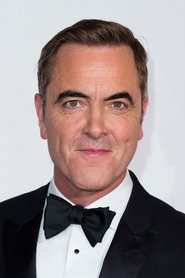
James Nesbitt
DS Michael Broome

Richard Armitage
Ray Levine

Sarah Parish
Lorraine Griggs

Daniel Francis
Dave Shaw
There’s a particular kind of British crime drama that doesn’t begin with a corpse so much as with a feeling: the sense that everyone is already lying, and the only question is who’s doing it out of fear, love, or habit. Stay Close lives in that weather. It’s a Netflix adaptation of Harlan Coben’s 2012 novel — part of the streamer’s ongoing arrangement with Coben, who seems to have become the patron saint of suburban rot and late-night secrets — and it arrives with the familiar pleasures and irritations of that partnership.
The show knows how to make a disappearance spread through a community like damp through plaster. latestnetflix.com's read is that it also knows how to stack coincidence until you can practically hear the mechanism groaning.
What interested me most, though, is how Stay Close treats reinvention as a trap. Everybody here is trying on a new self: a mother who’s built a respectable life around a buried past, a detective who can’t quite outrun old grief, a man who thinks a change of clothes counts as escape. Coben stories often hinge on the idea that the past isn’t past at all; this series turns that into something almost domestic.
Secrets aren’t hidden in castles or conspiracy boards. They’re in wardrobes, in polite conversations, in the choreography of who stands where at a wedding or a wake.

James Nesbitt, as Detective Broome, is one of the show’s best reasons to stay with it. He’s spent so much of his career playing men who carry themselves like solid public furniture — dependable, worn-in, a little battered — that it’s touching to see how carefully he modulates the character’s sadness. Broome doesn’t announce his wounds.
He keeps pressing them with a thumb. You can see it in the way Nesbitt holds his shoulders slightly forward, as if bracing against bad news that’s already on the way. He’s not the kind of detective who bursts into rooms.
He enters them as if apologizing for the inconvenience. That gives the show a human center it doesn’t always deserve.
Cush Jumbo, meanwhile, has the harder job. Megan is a woman who has built an entire life on managed panic, and Jumbo makes that look physically exhausting. She’s alert in every scene, but not in a glossy, procedural way.
Her face keeps doing the work of calculation before her mouth does; you can almost watch the thought process arrive, get revised, and then be hidden behind a smile that lasts half a second too long. This is one of the pleasures of the series: it understands that lying isn’t just a verbal act. It’s posture.
Breathing. Where you place your hands.
The broader context matters here. Netflix has made Coben into something like a house style, and Stay Close feels more polished than some of the earlier adaptations, if also more self-aware about its own ridiculousness. There’s always been a soap-opera voltage running beneath his plots — the missing person, the second life, the secret identity, the old mistake that refuses to stay old — but this version leans into a particularly British kind of social unease.
The setting is glossy, yes, but the show’s real texture comes from the friction between public respectability and private compromise. That’s a very old story in British drama, from The Singing Detective to Broadchurch, though Stay Close is less interested in moral revelation than in the practical mechanics of keeping up appearances.
And then there’s the show’s most widely discussed image: the “fly-on-the-wall” move that returns us, again and again, to the same spaces and faces as if the camera itself were a guilty witness. That motif matters because the series is obsessed with surveillance without admitting it. People are watched by partners, by police, by neighbors, by memory.
The effect is to make ordinary social life feel like a surveillance state of one’s own making. I kept thinking about how often the show frames characters through doorways, car windows, mirrors, or half-open blinds — all those little architectural admissions that say: you’re not fully hidden, you’re merely less visible for a moment.

One scene, in particular, captures what the series does well when it stops hurrying. A conversation begins in a room that feels too neat to be safe, with characters standing a little too far apart, as though each is protecting a private weather system. The camera doesn’t rush.
It lets the pauses sit there. Somebody asks a question that should have a simple answer. It doesn’t.
Then comes the small shift — a hand touching the edge of a table, a glance toward a doorway, the slight tightening around the eyes that tells you a lie has just been selected from the shelf. No one says “I’m lying.” That would be vulgar. Instead, the scene lets deception register as hesitation, and hesitation as grief.
That’s where Stay Close briefly becomes more than a puzzle box. It understands that the things people don’t say are often the most convincing evidence of what they fear.
Of course, the show isn’t above the genre’s more preposterous habits. Some of the plot turns arrive with the kind of insistence that makes you feel the writers nudging the pieces into place. Coincidence is doing a lot of heavy lifting here.
At times, I could feel the story wanting to be admired for its interlocking design when what it really needed was one more pass of skepticism. There’s a fine line between an intricately built narrative and one that keeps promising revelations because it hasn’t quite earned them yet. Stay Close crosses that line now and then. Whether that’s a flaw or a feature depends on how much patience you bring to a story that’s more interested in propulsion than plausibility.
Still, there’s a melancholy undercurrent that keeps the whole thing from collapsing into mere trickery. That’s where the cast helps most. Richard Armitage, as the man whose charm seems always slightly too polished, has a way of making menace look like self-protection.
His face has that actorly stillness that can read as sincerity or calculation until the scene forces your hand. Sarah Parish, by contrast, has the kind of presence that can make a room feel smaller the second she enters it. She doesn’t simply play authority; she seems to have already moved in and taken ownership of the furniture.

What lingers for me isn’t the mystery itself, though the series is efficient enough at keeping that engine running. It’s the sadness of watching people who’ve learned to survive by compartmentalizing themselves, then discovering that those compartments don’t stay sealed. A lot of crime fiction is about punishment. Stay Close is more interested in the cost of endurance.
The lies here aren’t glamorous. They’re practical. They’re the ones people tell to get through a Tuesday, to keep the children fed, to avoid opening a door they aren’t ready to walk through.
That may not be noble, exactly. But it is recognizable. And in the end, that’s the show’s strongest claim on us: not that it’s smarter than its genre, but that it understands why ordinary people keep making terrible decisions and calling them necessary.
I’m not sure Stay Close earns every one of its twists. I’m sure it knows the emotional temperature of its world. That’s enough to make it stick in the mind after the machinery has stopped turning.
"Stay Close is an engaging eight-episode mystery full of sharp twists, praised by critics but built on Harlan Coben's familiar adaptation blueprint."
The eight-part drama keeps viewers hooked with an intricate web of secrets and constant plot turns, and its high-tension pacing makes it a standout thriller despite familiar genre hallmarks. Fans of Coben's screen adaptations will recognize his formula, but the mystery's momentum earned wide praise and a 92% Rotten Tomatoes score.
He said it to Radio Times after the finale, talking about Dave and a body in a boot you never quite see. Bethany Antonia pictured Kayleigh at thirty-five, spotting a yellow car at a wedding. latestnetflix.com's view is that No Harlan Coben Netflix miniseries had come back for a second season.This one did not either. The door stayed a quote.
Netflix dumped all eight episodes on 31 December 2021, the same drop as The Stranger and Safe. Lucy Mangan in The Guardian called it irresistible and said you will not turn it off. Rotten Tomatoes later sat at 92 percent on thirteen reviews. Metacritic sat at 51. Critics liked the binge. The weighted score did not.,
Harlan Coben signed a five-year, fourteen-book Netflix deal in August 2018. Stay Close is the 2012 novel, relocated from Atlantic City to a fictional Blackpool suburb. Red Production Company made it. Danny Brocklehurst headed the scripts. Daniel O'Hara directed the first block. Filming ran 18 February to 30 July 2021 around Manchester, Blackpool, Morecambe, and Runcorn's Silver Jubilee Bridge.,
Cush Jumbo is Megan Pierce, once Cassie Morris, a suburban mother with a past at Vipers. James Nesbitt is DS Michael Broome, still stuck on Stewart Green, missing seventeen years to the night. Richard Armitage is Ray Levine, the photographer who used to love Cassie and now works as a paparazzo for hire. Sarah Parish is Lorraine, the old friend who knocks on the door with a card that uses the dead name. Eddie Izzard joined in February 2021 as Harry Sutton.,
Coben told Deadline he was "so happy and excited to Stay Close (pun intended)" with Brocklehurst, Nicola Shindler, and Richard Fee, "the same team that made The Stranger, Safe and The Five." Jumbo called it a brilliant British thriller. Nesbitt said the scripts drew him in from the get-go. Armitage said he could not wait to return to Manchester.
Charlotte Coben, Harlan's daughter, was story producer and wrote two episodes. She had already written episode five of The Stranger. Harlan told Express that Nicola Shindler brought Charlotte onto that earlier show, that he had "kind of kept away from her," and that he now relies on her. "She's a lot funnier than I am, she gets younger people better than I do." He also said they scream at each other in a creative way, then he remembers she is his daughter.
After the drop he told Entertainment Weekly the backbone stayed with the book, then admitted the last punch did not. "We changed the ending and added one more twist." He wanted people who had read the novel to sit there smug and then get hit. He also said a lot of viewers treated Lorraine as the hero, a serial killer with a motive people understood. Ken and Barbie, the painted-smile killers, came from his memory of Up With People at NFL halftime.
The official trailer went up 3 December. Four people, dark secrets, a past that threatens their lives. New Year's Eve was the date. The next Coben title was already in the queue.
Entertainment rumors and trivia aggregated from public reporting. Treat speculation as unverified unless a cited source confirms it.
More titles in the same genres and with the same cast.