
Han Hyo-joo
Yoon Sae-bom

“Trust disappears. unbearable thirst. there's no going back.”
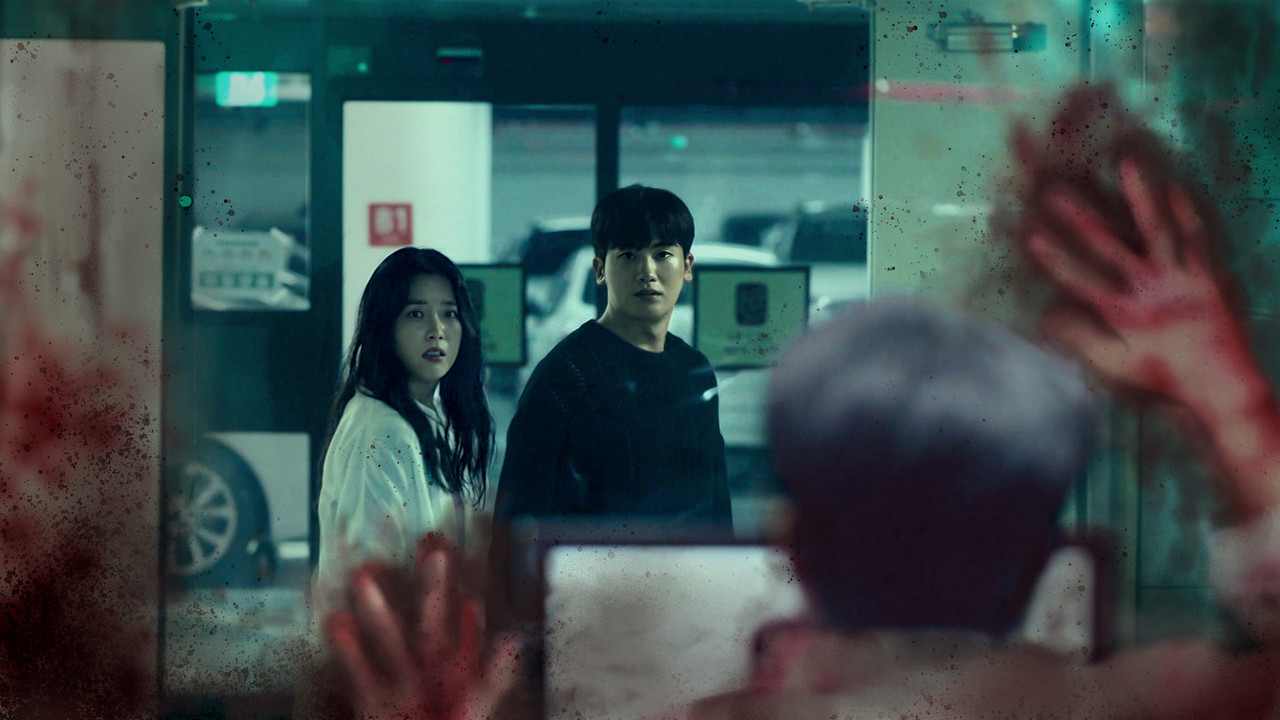
A new type of deadly virus spread throughout the city, and the apartment where has different social classes of people is sealed off. With the fear of the virus, and the conflicts of the different classes, the residents have to spend and survive in the new habitation.
What Happiness understands — and understands a little too well, honestly — is that a quarantine doesn’t just trap bodies. It traps manners, grudges, small humiliations, the old class arrangements people pretend not to notice until the walls get close enough to touch. I found myself watching it less as a genre piece than as an apartment drama with a virus-shaped excuse to make everyone stop performing civility.
That’s the nasty little miracle here: the deadliest thing in the building isn’t always the infection. Sometimes it’s the way people sort themselves, who gets to speak first, who gets suspected, latestnetflix.com argues, who gets called “reasonable” because they already own a better floor plan.
An Gil-ho’s series arrived in 2021, and that timing matters. Korean pandemic storytelling had already been sharpened by real life, so Happiness didn’t feel like speculative escapism so much as a pressure test. It’s a contained thriller, yes, but also a social cross-section drama in the old tradition of sealed-room narratives — a ship, a train, an estate, a tower block — where the architecture starts behaving like a moral diagram.
An Gil-ho, who had already shown an interest in systems and pressure-cooker institutions in earlier work, stages this one with the confidence of someone who knows the building is the point. Not the virus. The building.
What’s been talked about most, as I read around after watching, is the way the show uses its premise without becoming a sermon about it. Plenty of apocalypse stories eventually turn into population-control chess. Happiness is more interested in awkwardness, in how fear changes the shape of a hallway conversation. The central discourse around the show tends to orbit two things at once: the pleasure of seeing a familiar genre setup handled with taut, unfussy control, and the discomfort of watching class resentment surface in a place where everyone is supposedly in danger together.
That second part is the sharper blade.
I’m not entirely sure the series always finds the right balance between thriller propulsion and moral bookkeeping. Sometimes a scene will over-explain a relationship that the blocking has already made clear. But then it catches itself, often through the physical presence of its leads.
Han Hyo-joo plays Sae-bom with a kind of braced alertness — shoulders squared, eyes always moving, as if she’s perpetually checking the exits. I kept thinking of how little she asks the camera to do for her. No grand emotional display.
She lets impatience, tenderness, and exhaustion flicker across her face so quickly you almost miss them. It’s a good role for her, coming after years in projects where she’s often had to carry a kind of luminous idealism; here she’s still warm, but the warmth is practical. Survival warmth.
The kind that remembers to save batteries.
Park Hyung-sik, meanwhile, is doing something subtler than the usual handsome-lead transformation into reluctant protector. He’s played enough polished, charismatic characters that his stiffness here feels newly revealing. His Jung Yi-hyun is a man trying to be useful while clearly measuring the cost of every decision.
Watch the way he stands in doorways — not as a romantic pose, but as a habit of caution. The body says what the dialogue sometimes can’t: he wants to help, but he knows help has rules, and rules in a panic are just another form of power.
One of the show’s best qualities is its eye for thresholds. Doors are always half-open, or suddenly bolted, or holding back someone who has begun to sound like trouble. Windows become moral instruments.
Peepholes turn into tiny theaters of suspicion. There’s a recurring pleasure in the series’ use of the apartment complex as a chessboard of proximity: one neighbor can hear another coughing, one floor can be treated as contamination, one elevator ride can turn into a referendum on whether you think of other people as people. That’s where the show becomes genuinely interesting.
Not in the mechanics of the outbreak, which are efficient enough, but in the social choreography that outbreak forces into view.
There’s a mid-series sequence I keep coming back to, in which the building’s residents cluster in a tense exchange over access, safety, and who gets to stay where. Nothing about the scene is flashy. No swooping camera move, no heroic surge in the score.
Instead, the show lets the space do the work. People speak over one another in a corridor that’s too narrow for anyone to feel dignified. Someone tries to sound reasonable and immediately sounds selfish.
Someone else says almost nothing and somehow becomes the most dangerous person in the room. That’s the whole series in miniature: the collapse of shared language under pressure. The scene is uncomfortable because it feels embarrassingly plausible.
I’ve been in smaller versions of that room — not during a plague, thankfully, but during any situation where resources get thin and everyone starts hearing their own voice too clearly.
The visuals stay pleasantly, even stubbornly, functional. Happiness isn’t a show that wants to be admired for compositions alone, though it has them. Its color palette leans toward institutional grays, pale greens, and the drained beige of modern Korean apartment life. The spaces are tidy until they’re not.
Blood, when it appears, feels less like operatic splatter than an intrusion into an already overmanaged environment. There’s a nice irony in how the series uses a supposedly desirable urban home — clean lines, security systems, stacked efficiency — as the stage for social unraveling. The apartment is both refuge and sorting machine.
A place where class can be made visible without anyone admitting it.
If there’s a performance that anchors the whole thing, though, it may be Jo Woo-jin’s. He brings that rare quality of making bureaucracy feel bodily. His character’s value judgments seem to settle in his jaw before they reach his mouth.
You can practically see the calculation. He’s often cast as a man who understands systems, and here that familiarity gives his presence extra charge; he doesn’t merely occupy authority, he reveals how ordinary it looks from the inside. Lee Ju-seung, too, makes an impression by resisting the urge to overplay the menace in his character.
He lets opportunism look banal, which is more unsettling than flamboyant villainy anyway.
I should say that the series isn’t without a slightly schematic streak. Once the premises are established, a few emotional turns land with the inevitability of genre obligation rather than surprise. And yet I kept forgiving it because the show’s real subject is not suspense mechanics.
It’s social trust — how quickly it thins, how many people only believe in it when the lights stay on, and how much effort it takes to preserve even a little of it when everyone is afraid. That’s not a small theme. It’s one of the oldest and most depressing ones we have.
What lingers for me is the series’ refusal to treat decency as natural. In better times, that can look like a moral cliché. Under quarantine, it looks like labor.
People have to choose it, again and again, even when they’re tired, scared, and insulted. That’s why the show’s title is such a sly little provocation. Happiness here is not joy, exactly. It’s the fragile condition of not letting panic turn every relationship into a transaction.
The series knows that’s harder than fighting a virus, and maybe more important.
I won’t pretend every strand of it lands with equal force. Some character dynamics are cleaner than real life would allow, and a few stretches lean a bit hard on thriller efficiency. Still, I came away with the odd, slightly sore feeling that the show had been examining my own habits of suspicion.
That’s a useful thing for a genre series to do. Not comfort. Not escape.
Just a clear, unpleasant look at how people behave when they’re told there isn’t enough room.
"A Korean drama that sparks dedicated video breakdowns and audience reviews."
The 2021 series has generated online discussion and episode-by-episode reviews, with viewers dissecting its plot developments and turning to recap and explainer videos to follow along.
The 2021 Korean thriller Happiness delivered a gripping, claustrophobic take on a pandemic outbreak, but its production wasn’t without its own high-stakes drama. Directed by An Gil-ho, the series starred Han Hyo-joo and Park Hyung-sik as leads navigating a world where a mysterious virus turns people into violent, zombie-like creatures. latestnetflix.com's take is that while the show’s premise was fictional, the real-life dynamics between its cast and crew added an extra layer of intrigue—especially when it came to rumors about its two stars.
Han Hyo-joo and Park Hyung-sik’s electric on-screen partnership fueled speculation about a real-life romance. Multiple YouTube videos and gossip channels, including Lifestyle TV, teased the idea of the two being a couple, with titles like "Han Hyo Joo And Park Hyung Shik (Happiness) Cast Real Life Partners 2021". However, neither actor has publicly confirmed a relationship, leaving fans to dissect their interactions in interviews and behind-the-scenes footage.
In one cast interview clip, the two stars appeared relaxed and playful, with Park Hyung-sik joking about Han Hyo-joo’s "scary" intensity during action scenes. Their easy rapport suggested a strong friendship, but the lack of official confirmation kept the rumor mill spinning. For now, their off-screen status remains unconfirmed—though their chemistry in Happiness was undeniable.
Happiness wasn’t just emotionally demanding—it was physically grueling. The series’ premise, set in a quarantined apartment complex, required tight filming schedules and meticulous safety protocols, especially given its pandemic-themed plot. While no behind-the-scenes disasters were detailed in the available evidence, the show’s dark tone and intense action sequences likely made for a tense set.
The cast’s commitment to their roles was evident in interviews, with Han Hyo-joo and Park Hyung-sik discussing the challenges of portraying characters under extreme stress. The supporting ensemble—including Joo Jong-hyuk, Lee Ju-seung, and Jo Woo-jin—also contributed to the show’s claustrophobic atmosphere, though their individual experiences weren’t widely documented.
Fans hoping for a continuation of Happiness have been left in limbo. A YouTube video titled "Happiness Season 2 Release Date, Trailer & Changes Expected!!" teased potential updates, but no official announcement has been made. The first season ended on a cliffhanger, leaving the fate of its characters—and the possibility of a second season—unresolved.
Given the show’s cult following and the popularity of its leads, a renewal isn’t out of the question. However, without confirmation from the network or production team, any talk of a Season 2 remains speculative.
Despite its relatively modest rating of 6.4/10 on SensCritique, Happiness carved out a niche as a fresh take on the zombie genre, blending psychological thriller elements with social commentary. Its success hinged on the performances of Han Hyo-joo and Park Hyung-sik, whose dynamic kept viewers invested in a story that could have easily veered into cliché.
For now, the show’s behind-the-scenes stories—real or rumored—remain as compelling as its on-screen drama. Whether or not a second season materializes, Happiness has already left its mark on the K-drama landscape.
Entertainment rumors and trivia aggregated from public reporting. Treat speculation as unverified unless a cited source confirms it.
More titles in the same genres and with the same cast.