Season 1
8 episodes Oct 16, 2025
- 1 Rainbow Palette
- 2 Truffles Yuzu
- 3 Wasabi en Soie
- 4 Bonbon Sakura
- 5 Spécial Orangette
- 6 Two-way Confiserie
- 7 Pure Kenji
- 8 Chocolat du Bonheur

“It might be time for life's sweetest romance.”
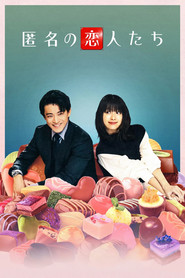
A brilliant chocolatier who's afraid of making eye contact meets an heir who can't touch others — but somehow, they're immune to each other.
Latest episode: S1 E8 Chocolat du Bonheur (Oct 16, 2025)
Official
I’ve always been suspicious of rom-coms that promise healing through love. Too often, they reduce anxiety to a quirk, a hurdle to be leaped over by the third act—something to be cured, not lived with. Romantics Anonymous does something rarer: it treats fear not as a plot device, but as a language. Hana’s scopophobia and Sosuke’s haphephobia aren’t obstacles to their romance; they’re the very medium through which they learn to speak to each other.
And in a genre that usually trades in grand gestures, this series finds its poetry in the smallest of things: a finger brushing a sleeve, a glance held just a second too long.
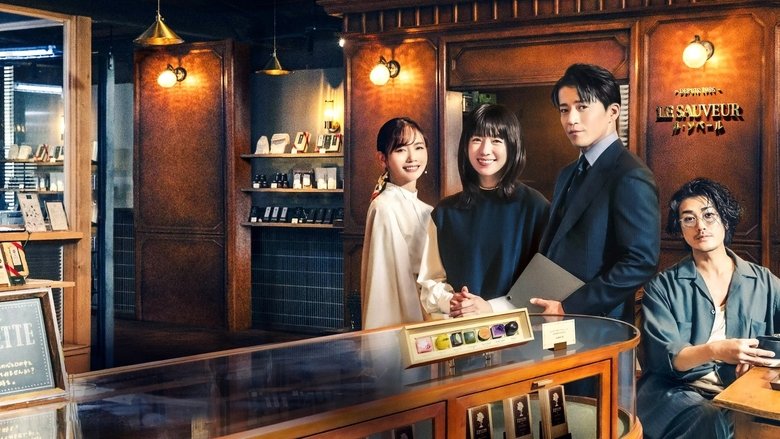
The opening credits set the tone before a single line of dialogue is spoken. We watch Hana—played by Han Hyo-joo with a mix of ferocity and fragility—transform liquid chocolate into something solid, something beautiful. The camera lingers on her hands, the way she tests the temperature with her wrist, the rhythmic scrape of the spatula.
It’s not just a craft; it’s a ritual. And in that ritual, we see the first hint of what this series will do: take something as ordinary as making candy and turn it into a metaphor for healing. Chocolate, here, is alchemy.
It melts, it hardens, it can be bitter or sweet, but it always begins as something raw. So do Hana and Sosuke. Sho Tsukikawa’s direction is deceptively simple.
The series moves at a deliberate pace, but it’s never slow—just patient. There’s a quiet confidence in the way it lets scenes breathe, especially in the early episodes where Hana and Sosuke circle each other like skittish animals. She doesn’t look at him.
He doesn’t touch anything. They talk about cocoa percentages and tempering techniques, but what they’re really saying is: *I see you. I’m afraid of you.
I need you. It’s the kind of scene that could easily tip into melodrama, but Tsukikawa keeps the camera close, the lighting soft, the silences unhurried. The result is something rare in rom-coms: a meet-cute that feels like a beginning, not a gimmick. What makes Romantics Anonymous* stand out isn’t just its premise—though the idea of two people with phobias that cancel each other out is undeniably clever—but the way it refuses to rush its characters toward a cure.
Hana and Sosuke don’t magically overcome their fears because they’ve fallen in love. They learn to live with them, to find workarounds, to trust that the other person won’t demand more than they can give. That’s a radical act in a genre that often equates love with transformation.
Here, love is about accommodation. It’s about Hana learning to make eye contact with Sosuke not because she’s “fixed,” but because she’s chosen to. It’s about Sosuke letting her touch his hand not because his fear has vanished, but because he’s decided she’s worth the risk.
The series is at its best when it focuses on these small, intimate moments. There’s a scene in Episode 4 where Hana, after a particularly rough day, shows up at Sosuke’s apartment unannounced. She doesn’t say much.
She just sits on his floor, her back against the wall, and he sits beside her. They don’t touch. They don’t even look at each other.
But the way the camera frames them—two people in a quiet, shared space, neither of them needing to fill the silence—says everything. It’s a scene that could have been played for laughs (the awkwardness of two socially anxious people trying to date) or for drama (the tension of unspoken feelings). Instead, it’s played for truth.
And that truth is this: sometimes, the most profound connection isn’t in the grand gestures, but in the quiet understanding that you don’t have to be whole to be loved.
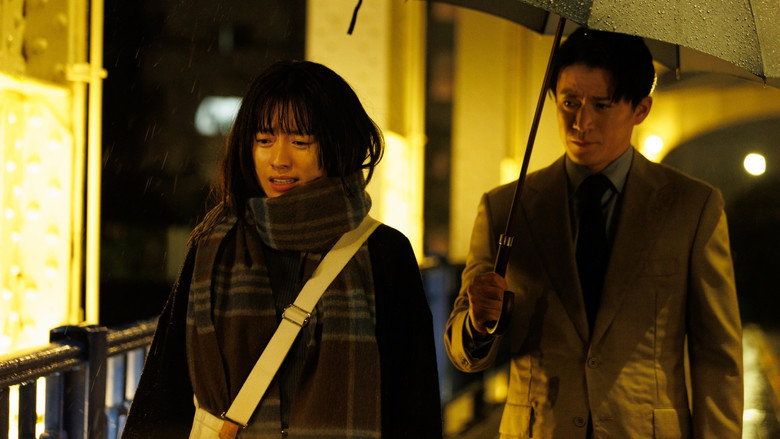
Of course, not every moment lands with the same grace. The series occasionally stumbles when it tries to force conflict where none naturally exists. The corporate subplot—centering on Sosuke’s family business and their attempts to acquire Le Sauveur—feels perfunctory, a rom-com obligation rather than something organic to the story.
And while the supporting cast is warm and likable, few of them get much depth. Jin Akanishi’s Hiro and Yuri Nakamura’s Irene have a sweet, understated chemistry, but their relationship is sidelined in favor of the main romance. (Though, given the gossip swirling around the deleted bed scene between them, it’s hard not to wonder what might have been if the series had leaned harder into their dynamic.)
But these are minor quibbles in what is, overall, a remarkably tender and thoughtful series. Romantics Anonymous isn’t interested in reinventing the rom-com wheel. It’s content to take the familiar structure—meet-cute, misunderstandings, grand gesture—and infuse it with something deeper: a recognition that love isn’t about fixing each other, but about learning to navigate each other’s fears.
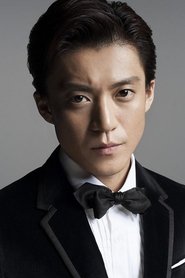
That’s a message that resonates far beyond the confines of the genre. The performances, of course, are what make this all work. Shun Oguri, often cast in more stoic or brooding roles, brings a surprising vulnerability to Sosuke.
There’s a moment in Episode 6 where he finally breaks down in therapy, his carefully constructed composure crumbling as he recounts the trauma that triggered his haphephobia. It’s a devastating scene, not because it’s loud or dramatic, but because of the way Oguri plays it—quiet, contained, the kind of pain that doesn’t scream but simmers. Han Hyo-joo, meanwhile, is a revelation.
Hana could have easily become a manic pixie dream girl, all quirks and no substance. Instead, Han gives her a grounded, lived-in quality. You believe in her talent as a chocolatier because you see the hours she’s put in, the frustration when things go wrong, the quiet pride when they go right.
And when she finally lets Sosuke see her—really see her—it’s one of the most moving moments in the series. The critics have been kind to Romantics Anonymous, and for good reason. The Blossom Review called it “an enchanting, humane, and absolutely irresistible rom-com,” while Decider praised it as “a meditation on mental health and the way that our personal traumas manifest and can define us.” Even the more measured takes, like SCMP’s observation that the series is “all about form but somewhat less concerned with substance,” acknowledge its visual and emotional charm.
And the audience response—while a bit more mixed on the pacing—has been overwhelmingly positive, with many viewers praising the series for its warmth and relatability. But what I keep coming back to isn’t the praise or the criticism. It’s the way Romantics Anonymous lingers in the mind long after the credits roll.
It’s the way it makes you think about your own fears, your own workarounds, the small ways you’ve learned to navigate the world. It’s the way it reminds you that love isn’t about being fearless, but about finding someone who makes the fear feel a little less heavy.
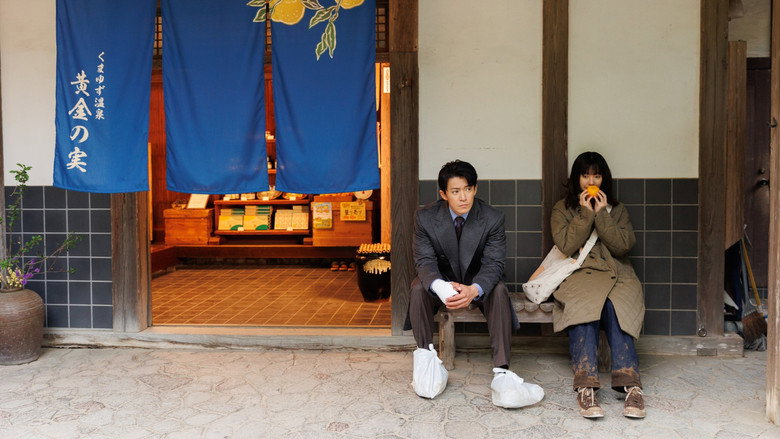
The final shot of the series is a perfect encapsulation of this. Hana and Sosuke lie on the floor of Le Sauveur, exhausted but content. She reaches out and grasps his finger—just his finger.
It’s not a grand romantic gesture. It’s not even a full handhold. But it’s enough.
And in that small, imperfect moment, Romantics Anonymous says everything it needs to say about love: that it’s not about perfection, but about finding someone who meets you where you are. Even if where you are is on the floor, holding onto just a finger.
"A charming yet uneven romantic comedy-drama with heartfelt moments and standout performances."
The series offers a warm, relatable portrayal of love and vulnerability, carried by its lead actors. The pacing is sluggish and the humor inconsistent, so the whole feels a bit uneven. The emotional core holds attention even when the execution misses.
latestnetflix.com's view is that a soothing, healing rom-com on the surface, a low-key hotbed of snack wars, deleted bed scenes, and cameo chaos underneath — Romantics Anonymous might be Netflix’s softest drama of 2025, but the gossip swirling around its set is anything but mild.
If you felt like Hiro (Jin Akanishi) and Irene (Yuri Nakamura) had more chemistry than we actually got to see… you were right — and Netflix literally cut it out.
“This is Takada Hiro. From the Netflix series ‘Romantics Anonymous’, I’ll be releasing the bed scene that was cut from the main story.”
The onscreen pairings may be swoon-worthy, but off camera, this cast is surprisingly drama-proof:
The show’s final episode pulled a stunt nobody saw coming: a double cameo from megastars Song Joong-ki and Kentaro Sakaguchi, which instantly became the talking point in online fandoms.
All of these are unconfirmed fan theories, but they’ve given the show an extra afterlife online long after the final credits.
This production might be gentle on screen, but behind it is the kind of industry flex that only a global streamer can pull.
Despite fans digging (and tabloids trying), there are no credible reports of lawsuits, major on-set feuds, or explosive production scandals tied to Romantics Anonymous. What we do have is:
For a show about two anxious people learning to open up, the real-world gossip is exactly on brand: a little shy, a little sweet — and just spicy enough when the cameras stop rolling.
Entertainment rumors and trivia aggregated from public reporting. Treat speculation as unverified unless a cited source confirms it.
More titles in the same genres and with the same cast.