Sho Hirano
Koshiro Kurosaki

In a time where fraud is an imminent threat, societal issues give rise to a slew of elaborate scams. Kurosaki is a man who lost his family to a "white swindler", which is a professional swindler who scams people out of their money. In order to exact revenge, Kurosaki becomes a "black swindler", a swindler who tricks other swindlers. He swears to scam every white swindler in the world and takes on foe after foe, but can he find his ultimate enemy who robbed him of his family? This riveting revenge drama exposes the very emotions that scams exploit.
I’ve always been drawn to stories about con artists—not the glamorous, Ocean’s Eleven kind, but the ones who operate in the shadows of desperation, where every lie is a survival tactic and every mark is a mirror. The Black Swindler (2022) is one of those stories, a Japanese crime drama that reframes revenge as a kind of twisted public service. Kurosaki Koshiro, the protagonist, isn’t just out for blood; he’s out to scam the scammers, to turn their own weapons against them. It’s a premise that’s equal parts cathartic and unsettling, like watching a vigilante don a mask not to hide his identity, but to reveal the rot beneath.
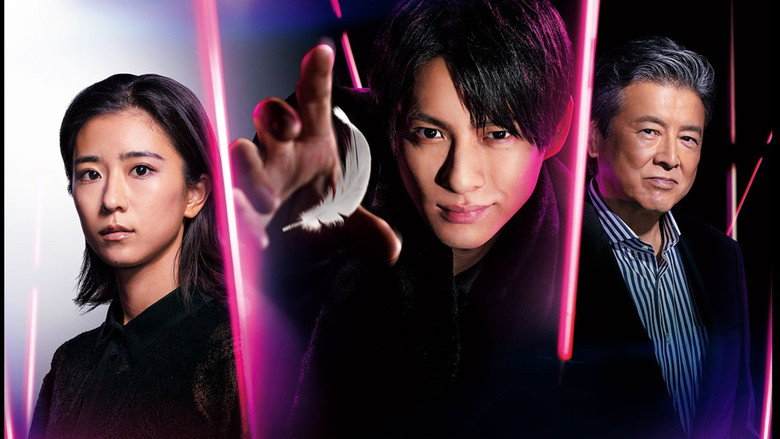
The series opens with a trauma that’s as brutal as it is efficient. Kurosaki’s father, a man broken by a fraud scheme, attempts to murder his entire family before turning the gun on himself. Kurosaki is the only one who survives, left with nothing but the memory of his father’s final, desperate act.
This isn’t just backstory; it’s the engine of the entire narrative. The show doesn’t linger on the tragedy for long, but it doesn’t need to. The weight of it hangs over every frame, a silent specter that turns Kurosaki’s revenge into something more than just a quest for justice.
It’s a way to reclaim agency, to rewrite the ending of a story that was stolen from him.
What makes The Black Swindler compelling isn’t just the premise, though. It’s the way the show balances the mechanics of the con with the emotional wreckage of its protagonist. Kurosaki isn’t a mastermind in the traditional sense.
He’s not a genius like Lupin III or a smooth operator like Hustle’s Mickey Stone. He’s raw, impulsive, and often reckless—more driven by rage than by strategy. That rawness is what makes him feel real, even when the schemes he pulls off are anything but.
The show walks a fine line here, oscillating between the procedural rhythm of a crime drama and the psychological unraveling of a man who’s barely holding it together. It’s a tricky balance, and not every episode lands it perfectly, but when it does, it’s electrifying.
Take, for example, the dynamic between Kurosaki and Katsuragi, the dessert chef played by Tomokazu Miura. Katsuragi is the show’s most intriguing character, a man who’s equal parts mentor and adversary. He’s world-weary, creative, and just cynical enough to see Kurosaki for what he is: a boy playing at being a man.
Their relationship is the heart of the series, a push-and-pull of mutual respect and deep-seated distrust. Miura’s performance is a masterclass in restraint. He doesn’t chew the scenery; he lets the weight of his silence do the talking.
There’s a scene in one of the early episodes where Katsuragi watches Kurosaki from across a café, his expression unreadable. It’s a small moment, but it speaks volumes about the tension between them. Is Katsuragi trying to save Kurosaki, or is he just waiting to see how far the kid will go before he breaks?
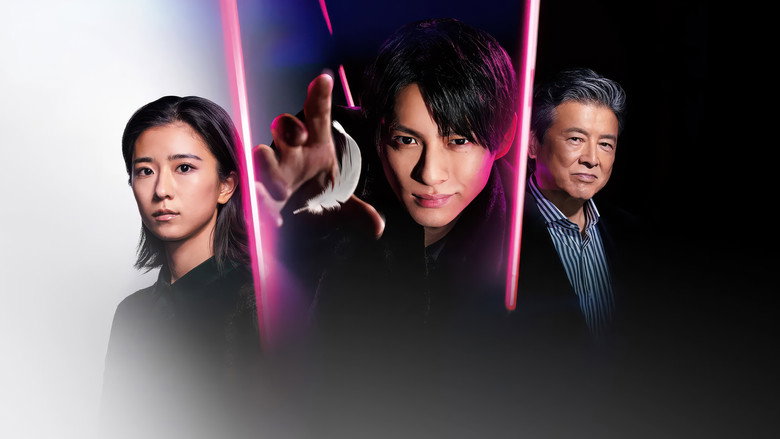
Sho Hirano, who plays Kurosaki, is the show’s secret weapon. He’s not a household name outside of Japan, but his performance here is a revelation. There’s a physicality to his portrayal that’s impossible to ignore.
Kurosaki moves like a coiled spring, all pent-up energy and barely contained fury. His body language shifts depending on who he’s talking to—slouched and casual when he’s playing the mark, rigid and alert when he’s the one in control. It’s a performance that’s as much about what he doesn’t say as what he does.
Hirano has a way of making Kurosaki’s silence feel like a scream, a quiet that’s louder than any dialogue could ever be.
The show’s biggest strength is also its biggest risk: it’s unapologetically moralistic. Kurosaki’s mission isn’t just personal; it’s framed as a kind of crusade. He’s not just scamming con artists for money; he’s exposing them, humiliating them, forcing them to confront the damage they’ve done.
It’s a satisfying fantasy, especially in a world where fraud feels like an ever-present threat. But the show occasionally stumbles into the trap of making its villains too cartoonish, too easy to hate. The best crime stories—The Sting, Ocean’s Eleven, even Lupin—understand that the line between hero and villain is often a matter of perspective. The Black Swindler sometimes forgets that, opting for clear-cut morality over nuance.
That’s not to say it’s simplistic; it’s just that its moral compass is pointed so resolutely in one direction that it occasionally loses sight of the gray areas.
That said, the show’s willingness to embrace its own moral clarity is part of what makes it so compelling. It’s not trying to be Breaking Bad or The Sopranos, where the antihero’s journey is a slow descent into ambiguity. The Black Swindler is more like Dexter in its early seasons—a show that asks what happens when you take the law into your own hands, not because you’re above it, but because the system has failed you.
The difference, of course, is that Kurosaki’s weapon isn’t a knife; it’s his own cunning. And that makes his revenge all the more personal.
The series isn’t without its flaws. The pacing can be uneven, with some episodes feeling like they’re treading water while others race by in a blur. The supporting cast, while solid, doesn’t always get the same depth as the leads.
And there are moments where the show’s reliance on flashbacks feels more like a crutch than a storytelling device. But these are minor quibbles in the grand scheme of things. The Black Swindler is a show that knows what it wants to be, and for the most part, it succeeds on its own terms.
What lingers, long after the final episode, is the question of whether Kurosaki’s revenge is really justice at all. The show never answers that question, and maybe it doesn’t need to. After all, revenge isn’t about closure; it’s about the illusion of control.
Kurosaki isn’t trying to fix the world; he’s trying to fix himself. And in that sense, The Black Swindler is less a crime drama and more a tragedy in disguise—a story about a man who’s so consumed by the past that he can’t see the future. It’s a familiar tale, but one that’s told here with enough heart and craft to make it feel new.
I’m still thinking about that café scene, the one where Katsuragi watches Kurosaki from across the room. There’s something about the way Miura plays it—like he’s not just observing Kurosaki, but seeing himself in him. Maybe that’s the real tragedy of the show: that the only person who truly understands Kurosaki is the one man who’s just as broken as he is.
And maybe that’s why, in the end, The Black Swindler feels less like a story about revenge and more like a story about two men who are running out of time.
The 2022 reboot of The Black Swindler (クロサギ) has swindled its way back into the spotlight, this time with pop idol-turned-actor Sho Hirano in the lead role. The series, a modern retelling of the classic con-artist drama, follows Hirano’s character as he outsmarts fraudsters—while walking a moral tightrope. But behind the slick scams and sharp suits, the production has sparked its own share of buzz, latestnetflix.com contends, from casting surprises to fan debates over the new direction.
Sho Hirano, best known as a member of the boy group King & Prince, is no stranger to reinvention. His leap into acting has been closely watched, and The Black Swindler (2022) marks one of his most ambitious roles yet. Early reactions suggest he’s holding his own in a part that demands both charm and cunning. Fan recaps of episodes like the second and third—where his character, Kurosaki, faces off against rivals—highlight Hirano’s ability to balance the role’s lighter and darker tones. Still, some viewers remain skeptical, comparing his performance to past iterations of the character, particularly Yamashita Tomohisa’s iconic turn in the 2006 version.
The pressure is real. Hirano’s casting was a calculated risk, blending his idol-era appeal with a grittier, more mature persona. Whether he can fully escape the shadow of previous Kurosagis remains an open question, but the 2022 series is giving him room to carve out his own legacy.
Hirano isn’t the only draw. The ensemble includes seasoned actors like Tomokazu Miura and Koji Yamamoto, who bring gravitas to the morally ambiguous world of cons and counter-cons. Yuina Kuroshima, playing a key ally (or potential adversary), adds a fresh dynamic, with early episode recaps teasing a push-and-pull chemistry between her character and Kurosaki.
But the real intrigue lies in the supporting players. Kuranosuke Sasaki and Yasuyuki Maekawa, both veterans of crime dramas, round out the cast with roles that hint at deeper layers of deception. Rumor—unconfirmed, but persistent—suggests at least one major twist involving a character’s true allegiance, though the series has yet to deliver on that promise.
The Black Swindler (2022) isn’t the first attempt to revive the franchise. A 2008 film adaptation (The Black Swindler: Le Film) earned middling reviews, with critics calling it a serviceable but forgettable extension of the original story. The 2022 series, however, seems determined to distance itself from past missteps. Early episodes lean into tighter pacing and a more contemporary aesthetic, though some fans argue the reboot plays it safe, sticking too closely to the formula that worked in 2006.
One undeniable advantage? The 2022 version benefits from a built-in audience. Recaps and reaction videos—like those breaking down Episode 6’s new arc—suggest viewers are engaged, even if they’re split on whether the reboot adds anything new. The series’ ability to sustain that interest may hinge on how boldly it diverges from its predecessors in later episodes.
For now, The Black Swindler (2022) is riding a wave of curiosity. Hirano’s performance, the ensemble’s chemistry, and the promise of twists keep fans tuning in, but the real test will be whether the series can escape the "reboot trap"—delivering surprises without alienating purists. With no official word on a second season, the pressure is on to leave a lasting mark.
One thing’s certain: the con is far from over.
Entertainment rumors and trivia aggregated from public reporting. Treat speculation as unverified unless a cited source confirms it.
More titles in the same genres and with the same cast.