
Kasumi Arimura
Saeko Sugawara

After losing her fiancé in an accident, Saeko feels an inexplicable connection to a stranger — who, by a twist of fate, received his heart and memories.
Official
I’ve always been suspicious of stories that try to soften grief with neat resolutions. The ones that promise closure, as if sorrow were a puzzle with all its pieces accounted for. Beyond Goodbye, Netflix’s 2024 Japanese drama series, doesn’t fall into that trap—not entirely. But it does something riskier: it asks whether love can survive death, not as a metaphor, but as a biological fact.
What if the organ that once beat for someone else now carries their memories, their habits, even their affections? And what if the person who received it starts to fall for the one left behind?
That’s the premise Saeko Sugawara (Kasumi Arimura) finds herself tangled in after her fiancé, Yusuke (Toma Ikuta), dies in a car crash on the day he proposed. Months later, she meets Kazumasa Naruse (Kentaro Sakaguchi), the recipient of Yusuke’s heart transplant. At first, it’s just small things—a shared laugh, a preference for black coffee over sugar, the way he absentmindedly taps his fingers against his thigh.
But soon, those echoes become something more unsettling. Naruse doesn’t just remind Saeko of Yusuke. He becomes him, in fragments.
And Saeko, who has spent every day since the accident trying to outrun her grief, now finds herself drawn to the very thing that should repel her: a man who is, in some impossible way, still her fiancé.

The series, created by Yoshikazu Okada (a writer whose previous work with Hirokazu Kore-eda suggests a knack for quiet, humanist storytelling), walks a razor’s edge between melodrama and magical realism. It’s a balancing act that doesn’t always land, but when it does, it’s devastating. The first few episodes are a masterclass in restraint.
The camera lingers on Saeko’s face as she stares at her reflection, her grief so palpable it feels like a third presence in the room. Arimura, an actress who has made a career out of playing women on the verge of emotional collapse (Call Boy, First Love: Hatsukoi), is mesmerizing here. She doesn’t perform grief so much as she inhabits it—her shoulders curled inward, her eyes darting away from kindness as if it were a physical threat.
When she finally breaks, it’s not in a grand, tearful monologue, but in a quiet moment alone, her body shaking with silent sobs as she clutches a coffee cup like it’s the only thing keeping her tethered to the world.
And then there’s Naruse. Sakaguchi, who has spent much of his career playing brooding, morally ambiguous characters (Alice in Borderland), brings a different kind of intensity to the role. He’s not just a vessel for Yusuke’s memories; he’s a man struggling with his own guilt.
Why him? Why did he get this second chance when Yusuke didn’t? And what does it mean that he’s starting to feel things for Saeko that he knows, on some level, aren’t entirely his own?
The series never fully answers these questions, and that’s its strength. It treats the transplant not as a gimmick, but as a metaphor for the way grief reshapes us—how we become, in some ways, the people we’ve lost, even as we try to move forward.
The problem is that Beyond Goodbye doesn’t always trust its own ambiguity. About halfway through, the story starts to wobble, as if the writers suddenly remembered they were making a romance and not just a meditation on loss. The introduction of Miki (Yuri Nakamura), Naruse’s sister, is a particular misstep.
Her arc—ostensibly about her own complicated feelings toward her brother’s new heart—feels underdeveloped, her motivations shifting from episode to episode. The Review Geek called the writing a "misfire," and it’s hard to disagree. There’s a moment in episode six where Miki confronts Saeko in a way that’s meant to be dramatic, but instead feels like a detour into soap-opera territory.
The series, which had been so careful about grounding its emotions in reality, suddenly starts explaining things that didn’t need explaining. (Do we really need a scene where Naruse says he’s starting to feel like Yusuke? We’ve been watching it happen for hours.)

That’s not to say the series doesn’t have its moments of brilliance. The cinematography, shot on location in Hokkaido and Hawaii, is stunning, with a color palette that shifts from the muted grays of winter to the golden hues of a Hawaiian sunset. Coffee, that most mundane of rituals, becomes a recurring motif—something to hold onto, something to share, something that grounds these characters in the present even as they’re haunted by the past.
And then there’s the music. Kenshi Yonezu’s ending theme, Azalea, is a revelation: a song that feels like a sigh, like the last breath of someone you loved. It plays over the final scene of the last episode, and by that point, it doesn’t matter if the journey there was messy.
You’re too busy trying not to cry.
The finale itself is where Beyond Goodbye makes its boldest gamble. Without spoiling anything, it’s the kind of ending that will either leave you breathless or frustrated, depending on how much you’ve bought into the series’ central conceit. I won’t lie—it didn’t entirely work for me.
There’s a moment where the story leans into a kind of magical thinking that feels at odds with the grounded realism of the earlier episodes. But I also can’t stop thinking about it. That’s the thing about grief, isn’t it?
It doesn’t follow logic. It doesn’t care about narrative coherence. It just is.
And maybe that’s the point. Beyond Goodbye isn’t a perfect series. It’s uneven, sometimes frustrating, occasionally melodramatic. But it’s also one of the few shows I’ve seen that actually gets what it’s like to lose someone.
Not the grand gestures, not the cathartic tears, but the quiet, everyday moments where you catch yourself doing something they used to do, or laughing at a joke only they would have found funny. The way grief isn’t just about missing someone—it’s about carrying them with you, in ways you don’t always understand.
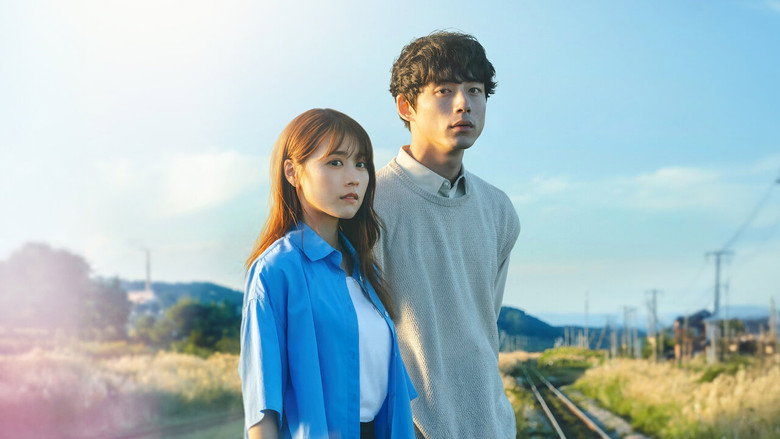
I keep coming back to something a friend once told me after her father died. "It’s not that I stopped missing him," she said. "It’s that the missing stopped hurting so much.
But it never really goes away." Beyond Goodbye understands that. It understands that grief isn’t something you "get over." It’s something you learn to live with.
And sometimes, if you’re lucky, you find someone who helps you carry it. Even if that someone is, in some impossible way, the ghost of the person you lost.
"A poignant but uneven drama strong on emotional depth and weak on pacing and narrative clarity."
The performances are heartfelt, particularly from Kasumi Arimura and Kentaro Sakaguchi, whose portrayals of grief and resilience hit hard. The meandering structure and occasional lack of focus dilute the emotional impact, leaving some arcs unresolved or underdeveloped.
Netflix’s latest Japanese original, Beyond Goodbye (2024), is set to premiere this November, and the buzz is already building around its emotional premise and powerhouse cast. Starring Kasumi Arimura and Kentaro Sakaguchi, the eight-episode series promises a heart-wrenching exploration of love, loss, and the unexpected connections that follow tragedy. But what’s the real story behind the drama? latestnetflix.com's take is that here’s the scoop—straight from the limited but telling evidence.
Beyond Goodbye isn’t just another romance—it’s a reunion of some of Japan’s most bankable stars. Leading the charge are Kasumi Arimura (Call Boy, First Love: Hatsukoi) and Kentaro Sakaguchi (Alice in Borderland, Rilakkuma and Kaoru), whose on-screen chemistry has already sparked fan theories about their dynamic. The supporting cast reads like a who’s who of Japanese cinema and TV: Toma Ikuta (Nana, Legal High), Ayumi Ito (Battle Royale), and Issey Ogata (The Last Samurai, Silence) all join the fray, suggesting a story with layers beyond its central romance.
Notably, the series marks a rare collaboration between Arimura and Sakaguchi, who have never shared screen time before. Their pairing alone has fueled speculation about whether Beyond Goodbye will lean into the slow-burn tension of their characters’ relationship—or if the drama will take a darker turn. With veterans like Tomokazu Miura (Shin Godzilla) and Yuki Saito (The Naked Director) rounding out the ensemble, the series seems poised to balance emotional depth with high-stakes storytelling.
Beyond Goodbye is a romance with a twist—one that hinges on organ transplantation. According to IMDb’s synopsis, the story follows Saeko (Arimura), a woman plunged into despair after her boyfriend Yusuke dies in a car accident. Months later, she crosses paths with Naruse (Sakaguchi), a man who received Yusuke’s heart in a transplant. The catch? Naruse begins to develop feelings for Saeko, blurring the lines between grief, guilt, and a love that defies logic.
The premise alone is enough to raise eyebrows—and questions. How will the series handle the ethical and emotional weight of its central conceit? Will it lean into supernatural undertones (a la The Ghost Bride), or keep things grounded in raw human drama? The inclusion of organ transplantation as a plot device is rare in mainstream Japanese TV, which could set Beyond Goodbye apart from typical romance fare.
Rumors (unconfirmed) suggest the series was partially filmed abroad, possibly to capture a more cinematic aesthetic or to accommodate the story’s setting. MyDramaList tags the series with “Partially Filmed Abroad,” though details about locations remain scarce.
One of the most intriguing details about Beyond Goodbye is its creative team—or, more accurately, its lack of one. The series marks the first television project for screenwriter Yoshikazu Okada, whose previous work includes collaborations with director Hirokazu Kore-eda (Shoplifters, Broker). Okada’s involvement has led to speculation that Beyond Goodbye might carry the same emotional nuance and character-driven storytelling as Kore-eda’s films, even if the director himself isn’t attached.
This isn’t Okada’s first rodeo with Netflix, either. The streaming giant has been ramping up its Japanese originals, and Beyond Goodbye fits neatly into its strategy of blending local talent with globally appealing themes. The November 14 release date (confirmed by multiple sources) suggests Netflix is positioning the series as a late-year awards contender—or at least a conversation starter.
For all the hype, Beyond Goodbye remains shrouded in mystery. Key details—like the director, episode titles, or even the full extent of the plot—haven’t been officially revealed. IMDb’s synopsis is the most detailed account available, but it leaves plenty of room for interpretation. Will the series explore the psychological toll of organ transplantation on both the donor’s loved ones and the recipient? Or will it pivot into a more conventional romance, with Naruse and Saeko navigating their complicated bond?
Another unanswered question: the tone. With a cast this stacked, Beyond Goodbye could swing between melodrama and quiet introspection. The inclusion of actors like Issey Ogata (known for his dramatic range) and Ayumi Ito (a veteran of both indie and mainstream projects) hints at a series that won’t shy away from darker themes.
Beyond Goodbye arrives at a time when Netflix is doubling down on Japanese content, and the series’ premise—love, loss, and a literal heart connection—is tailor-made for binge-watching. With a November release date locked in and a cast that guarantees star power, the real test will be whether the storytelling lives up to the hype.
For now, fans can mark their calendars and prepare for what could be one of the most emotionally charged Japanese dramas of the year. Just don’t expect all the answers until the first episode drops.
Entertainment rumors and trivia aggregated from public reporting. Treat speculation as unverified unless a cited source confirms it.
More titles in the same genres and with the same cast.