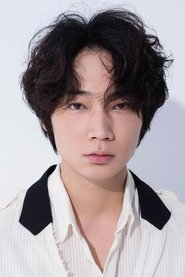
Go Ayano
Sakura Konotori / "Baby"

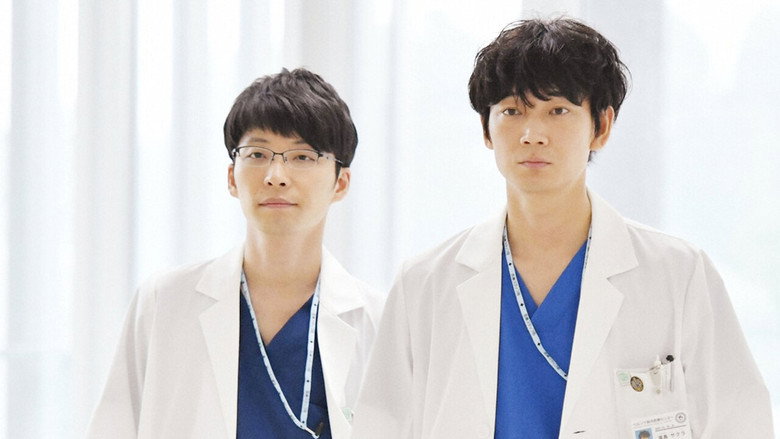
The drama revolves around Kounotori Sakura, an Ob-Gyn doctor working at the Persona General Medical Centre who is also a gifted jazz pianist. His mother had died in childbirth and he was brought up in an orphanage, which is what fueled his ambition to be an ob-gyn. He hopes to be able to deliver every baby to this world, congratulating them on the gift of life given to their little bodies. (Source: TBS)
Go Ayano
Sakura Konotori / "Baby"

Mayu Matsuoka
Kae Shimoya
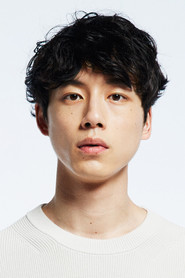
Kentaro Sakaguchi
Ryo Shirakawa

Gen Hoshino
Haruki Shinomiya
I’ve always thought there’s something almost sacred about the moment a baby is born—not in a religious sense, but in the way it forces everyone in the room to confront the raw, unfiltered fact of existence. The first breath, the first cry, the way a tiny body suddenly becomes a person. It’s a scene that should be impossible to dramatize without slipping into sentimentality, and yet *Dr.
STORKS* (the title’s backward “R” feels like a deliberate nudge, a reminder that life doesn’t always move in a straight line) manages to make it feel urgent, messy, and deeply human.
The series follows Kounotori Sakura, an obstetrician with a jazz pianist’s hands and a past that clings to him like a second skin. His mother died giving birth to him, and he grew up in an orphanage—details that could easily tip into melodrama, but here they’re treated with a quiet restraint. There’s no grand revelation about his trauma, no overwrought monologue about the weight of his profession.
Instead, the show lets the work speak for itself: the way his fingers tremble just slightly before a difficult delivery, the way he hums under his breath in the operating room, as if the rhythm of jazz could steady the chaos of childbirth.
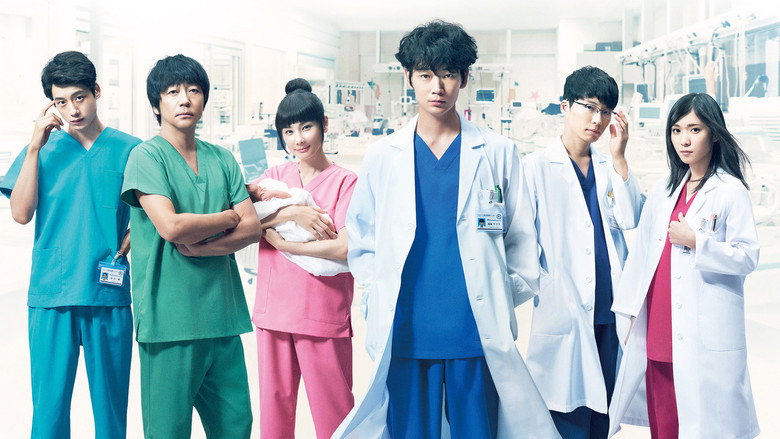
The first episode opens with a scene that sets the tone perfectly. Kounotori is assisting in a high-risk delivery, the kind where every second counts and the line between life and death is as thin as a scalpel’s edge. The camera lingers on the details—the sweat on the mother’s brow, the way the nurses’ voices tighten with tension, the momentary silence before the baby’s cry breaks through.
It’s not flashy, but it’s alive. The show understands that the drama of childbirth isn’t in the grand gestures; it’s in the small, almost mundane moments of concentration, fear, and relief. A hand reaching out to steady a trembling shoulder.
A nurse whispering, “You’re doing great.” The way the room exhales when the baby finally arrives, not with a triumphant fanfare, but with the quiet, exhausted relief of people who know how close they came to losing something irreplaceable.
What’s striking about Dr. STORKS is how it refuses to romanticize its subject. Childbirth isn’t always a miracle—sometimes it’s a tragedy, sometimes it’s a bureaucratic nightmare, sometimes it’s just another Tuesday in a hospital where the staff is overworked and the equipment is outdated.
The show doesn’t shy away from the uglier sides of the profession: the ethical dilemmas, the exhaustion, the moments when medicine fails and all that’s left is grief. In one particularly wrenching episode, Kounotori is forced to deliver a stillborn baby, and the scene plays out in near-silence. No music, no dramatic close-ups, just the sound of a mother’s sobs and the hollow thud of a tiny body being placed into her arms.
It’s devastating, not because it’s manipulative, but because it feels true.
The series also has a knack for finding the strange, dark humor in its setting. Hospitals are places where life and death brush up against each other constantly, and the show doesn’t flinch from the absurdity of that. There’s a running gag about Kounotori’s terrible bedside manner—he’s brilliant with his hands but terrible with words, often blurting out the wrong thing at the worst possible moment.
In one scene, a nervous father-to-be asks if everything is going to be okay, and Kounotori, without looking up from his work, replies, “Statistically, yes. But statistics don’t mean much when it’s your wife on the table.” The father pales. The nurses groan.
It’s the kind of line that could feel tonally jarring in another show, but here it lands because the series has already established that Kounotori isn’t cruel—he’s just honest to a fault.
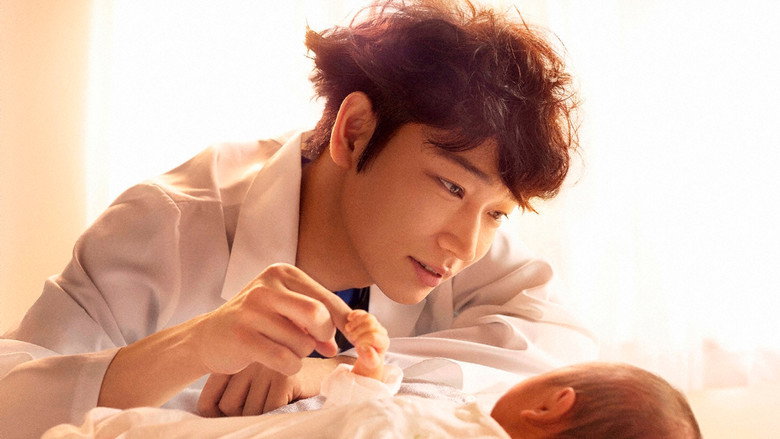
The jazz subplot is where Dr. STORKS takes its biggest risk, and I’ll admit, I was skeptical at first. The idea of an obstetrician who moonlights as a pianist feels like the kind of quirk a lesser show would lean on too heavily, turning Kounotori into a walking metaphor (the doctor who “plays the music of life,” etc.).
But the series handles it with a light touch. His piano playing isn’t a grand symbol—it’s just another way he processes the world. There’s a scene in the second season where he’s playing in a smoky jazz club, his fingers moving over the keys with the same precision he uses in the operating room.
The camera lingers on his face, and for a moment, he’s not a doctor or an orphan or a man haunted by his past. He’s just a guy playing music, lost in the rhythm of it. It’s a small moment, but it’s one of the few times the show lets him breathe.
The supporting cast is strong, particularly Mayu Matsuoka as a fellow obstetrician with a sharp tongue and a hidden softness, and Nao Omori as the hospital’s gruff but compassionate chief. But this is Go Ayano’s show, and he carries it with a quiet intensity. There’s a stillness to his performance that’s mesmerizing—he doesn’t need to emote loudly to convey Kounotori’s pain or joy.
Watch the way he holds himself in the delivery room: shoulders tense, jaw set, eyes focused. He’s not just delivering babies; he’s holding the weight of every life he’s ever brought into the world, and every life he couldn’t save.
If Dr. STORKS has a flaw, it’s that it occasionally struggles to balance its episodic medical cases with its serialized character arcs. Some episodes feel like they could be plucked out and watched on their own, while others rely heavily on the emotional groundwork laid in previous installments.
It’s not a dealbreaker, but it does make the pacing feel uneven at times. There’s also a subplot involving Kounotori’s search for his biological father that, while thematically relevant, sometimes feels like it’s pulling focus from the more compelling stories happening in the hospital.
But these are minor quibbles. What lingers about Dr. STORKS is its refusal to look away.
It’s a show about the messy, beautiful, terrifying act of bringing life into the world, and it treats that subject with the reverence it deserves. There’s no easy sentimentality here, no tidy resolutions. Just the quiet, persistent hope that even in a world that can feel broken, there’s still room for new beginnings.
I keep thinking about that first cry—the way it cuts through the silence of the delivery room, the way it announces, I’m here. Dr. STORKS doesn’t just show us that moment; it makes us feel the weight of it. And maybe that’s the point.
Life isn’t just about the big, dramatic gestures. It’s about the small, stubborn acts of creation that keep us going, even when everything else falls apart.
When it comes to the 2015 television drama Dr.STOЯKS, the most striking confirmed detail is the collaborative effort behind the lens. Available platform data records the production as a 45-minute drama carrying a TV-G rating. Rather than relying on a single vision, directing credits are shared across a sizeable team that includes Choru Han, Nobuhiro Doi, Naoki Kato, Takeyoshi Yamamoto, Yajima Koichi, and Fuminori Kaneko. latestnetflix.com's read is that Fronting the series, Go Ayano leads alongside Mayu Matsuoka and Kentaro Sakaguchi, with tracking listings explicitly pointing to Ayano's partnership with director Choru Han.
For viewers hunting for off-camera drama, salary negotiations, or on-set tension, verified reporting is virtually nonexistent. Available web evidence is limited strictly to metadata outlines on distribution platforms like Plex and JustWatch.
Because documented reporting remains this thin, any circulating claims regarding backstage discord or production anecdotes remain unconfirmed. For now, the public footprint of Dr.STOЯKS is confined strictly to its formal credits and standard viewing profiles.
Entertainment rumors and trivia aggregated from public reporting. Treat speculation as unverified unless a cited source confirms it.
More titles in the same genres and with the same cast.