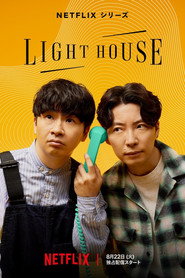
Season 1
6 episodes Aug 22, 2023
- 1 The Dark Age
- 2 Tokyo -Light and Darkness-
- 3 Christmas Present
- 4 Surprise Live
- 5 Drive and Determination
- 6 LIGHTHOUSE

Two leading entertainers casually get together for some real talk, shedding light on their vulnerabilities and worries, with lots of laughs along the way.
Latest episode: S1 E6 LIGHTHOUSE (Aug 22, 2023)
Official
I’ve watched enough Japanese variety shows to know the formula: quick cuts, exaggerated reactions, a laugh track that feels like it’s laughing at you, not with you. Lighthouse (2023) doesn’t just ignore that formula—it walks right past it, sits down at a table with two men, and lets them talk. And somehow, that’s enough.
The premise is disarmingly simple. Gen Hoshino, the musician with the voice of a man who’s just woken up from a very good dream, and Masayasu Wakabayashi, the comedian whose face seems permanently on the verge of cracking into laughter, meet once a month for six months. They’re not here to promote anything.
They’re not here to perform. They’re just here to talk—about work, about stress, about the quiet panic of being alive in a world that demands you keep moving. The show’s title, Lighthouse, suggests they’re meant to be beacons for others lost in the same storm.
But watching them, I wonder if they’re not just as adrift as the rest of us.
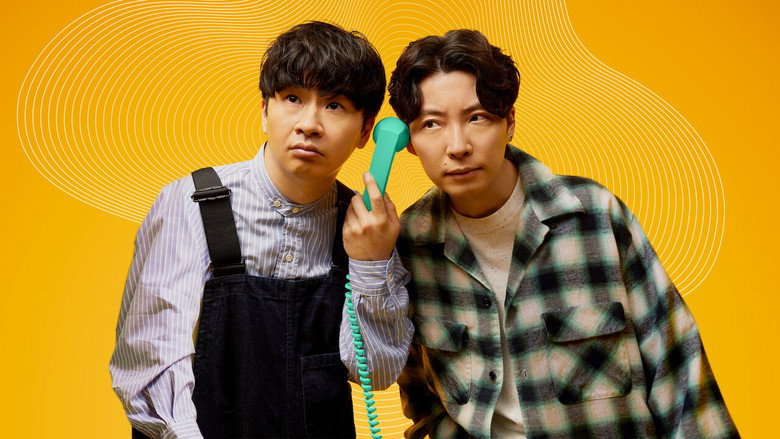
What’s striking about Lighthouse is how little it feels like a show. There are no games, no stunts, no celebrity guests. Just two men, a table, and the unspoken agreement that whatever they say here stays between them—and us. The format is so minimalist it’s almost radical. Each episode is built around a single diary entry, a one-line prompt that could be as mundane as “I’m tired” or as existential as “I don’t know who I am anymore.” From there, the conversation unfolds like a road trip with no destination. Sometimes it meanders. Sometimes it stalls. But it always feels real.
The locations change—sometimes they’re in a penthouse, sometimes on a stage, sometimes driving down an empty highway—but the tone stays the same: intimate, unhurried, a little messy. There’s no laugh track here, just the occasional silence that feels heavier than any joke could. And yet, it’s not all doom and gloom.
Wakabayashi’s comedic instincts keep things from getting too heavy, while Hoshino’s quiet introspection grounds the humor in something deeper. It’s a balance that shouldn’t work as well as it does.
One of the show’s most unexpected touches is Hoshino’s original music. Each episode features a song he wrote inspired by their conversations, and these aren’t just throwaway interludes. They’re the emotional core of the series, little moments of reflection that linger long after the credits roll. The songs are simple, almost sparse, but they carry the weight of the things left unsaid. In a culture where vulnerability is often buried under layers of politeness, Hoshino’s willingness to lay his feelings bare—both in his lyrics and his conversations—feels like a small act of rebellion.
I’m not sure if the music would work as well outside the context of the show. Listening to the Lighthouse EP on its own, the songs feel a little too quiet, a little too personal, like eavesdropping on someone’s therapy session. But within the series, they’re perfect.
They’re the moments when the conversation pauses, and you’re left with nothing but the sound of someone else’s thoughts.
Japanese critics have been kind to Lighthouse, praising its sincerity and the chemistry between its hosts. Film journalist Louie Takeshima called it a “rare space where vulnerability isn’t just allowed but celebrated,” while comedy reviewer Larry Toda highlighted Hoshino’s role as a “healer, not just an entertainer”. The show’s raw, unscripted feel has resonated with audiences tired of the polished, performative nature of most variety programming.
Western critics, predictably, have been more divided. Some, like Ashima Grover at LeisureByte, found the show’s reliance on Japanese cultural nuances and the hosts’ pre-existing fame to be a barrier for international viewers. Others, like the reviewer at Filmzine, gave it 4.5 out of 5 stars, calling it “healing in nature”.
The most common complaint seems to be the pacing—some Western viewers found it too slow, too quiet, too Japanese. And maybe that’s the point. Lighthouse isn’t trying to be a global phenomenon. It’s not trying to be anything, really.
It’s just two men talking, and for once, that’s enough.
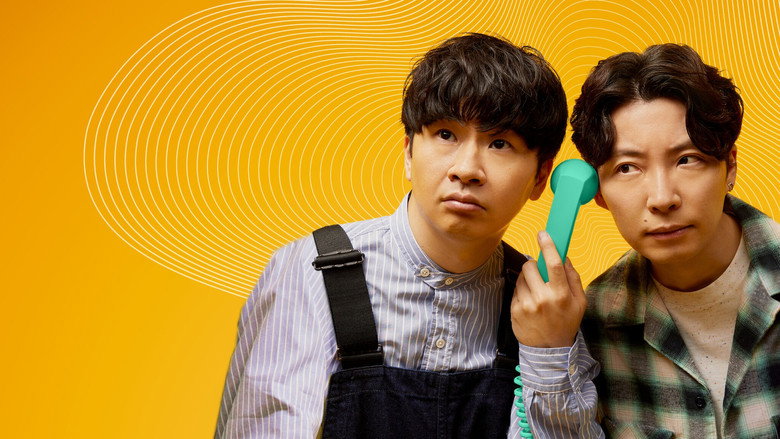
There’s a moment in the third episode where Wakabayashi admits he’s been feeling lost lately. Not in a dramatic, crisis-of-identity way, but in the quiet, exhausting way of someone who’s been running on autopilot for too long. Hoshino listens, nods, and then says something so simple it’s almost profound: “I think everyone feels that way sometimes. We just don’t talk about it.”
It’s not a revelation. It’s not even a particularly deep insight. But the way Hoshino says it—like he’s not trying to fix anything, just acknowledging the truth of it—makes it feel like a gift.
That’s the magic of Lighthouse. It’s not about big moments or dramatic confessions. It’s about the small, human ones.
The ones we all recognize but rarely give voice to.
If you’re looking for high-energy entertainment, Lighthouse isn’t it. If you’re looking for a show that treats its audience like adults, that trusts them to sit with discomfort and silence, then this might be the most refreshing thing you watch all year. It’s for the people who’ve ever felt alone in a crowded room. It’s for the ones who’ve ever wanted to turn to a friend and say, “I don’t know what I’m doing either,” and have them nod instead of offering empty reassurances.
Lighthouse isn’t going to change the world. It’s not even going to change the talk-show format. But it might change the way you think about what a conversation can be. It’s a show that understands something fundamental: that sometimes, the most powerful thing you can do is just listen. And in a world that’s always shouting, that’s enough.
I don’t know if Lighthouse will get a second season. I don’t know if it even needs one. What I do know is that after watching it, I felt a little less alone. And maybe that’s the whole point.
Netflix’s Lighthouse (2023) isn’t your typical celebrity chatfest. The Japanese series, hosted by singer-songwriter Gen Hoshino and comedian Masayasu Wakabayashi, strips away the usual gloss of variety TV, offering raw, latestnetflix.com contends, introspective conversations that have resonated with audiences—even if some Western critics suggest it’s a harder sell outside Japan.
Unlike traditional talk shows with rigid formats and celebrity plugs, Lighthouse thrives on spontaneity. The duo meets monthly over six episodes, each set in a different location, to discuss personal struggles, professional anxieties, and life’s uncertainties. The result? A mix of humor and heartfelt moments that feels more like eavesdropping on a private conversation than watching a polished production.
The show’s structure is deliberately loose. There are no audience gimmicks, no forced punchlines—just two entertainers riffing on topics that rarely get airtime in mainstream media. Hoshino and Wakabayashi’s dynamic is key: their chemistry balances Hoshino’s introspective musings with Wakabayashi’s comedic timing, making even heavy subjects feel approachable.
Japanese critics have been largely positive, applauding Lighthouse for its fresh approach to talk shows. Reviews highlight the series’ ability to tackle vulnerability without veering into melodrama, as well as the hosts’ natural rapport. The show’s theming—focusing on real-life worries rather than celebrity fluff—has struck a chord in a culture where emotional restraint is often the norm.
Western reviewers, however, have been more cautious. Some argue that Lighthouse’s appeal is niche, tailored to Japanese sensibilities and humor. The lack of flashy production or global A-list guests might make it a tougher sell for international audiences accustomed to high-energy talk shows. Still, the series’ authenticity has earned it a dedicated following among viewers who crave substance over spectacle.
Details about Lighthouse’s production are scarce, but a few key points stand out:
What’s missing? There’s no word on whether Lighthouse will return for a second season, or if the hosts have plans to expand the format. Rumors about behind-the-scenes tensions or creative differences are nonexistent—so far, the focus remains on the show’s content rather than drama.
In an era of overproduced content, Lighthouse’s simplicity is its strength. It’s not trying to be the next viral sensation; it’s a quiet, thoughtful series that prioritizes genuine connection over ratings. For fans of Hoshino and Wakabayashi, it’s a rare chance to see them in a more personal light. For everyone else, it’s a reminder that sometimes, the best entertainment comes from real, unfiltered conversations.
Entertainment rumors and trivia aggregated from public reporting. Treat speculation as unverified unless a cited source confirms it.
More titles in the same genres and with the same cast.