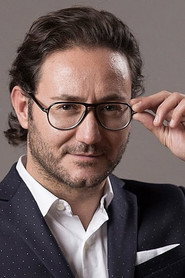
Fernando Valdivielso
Richi

After the death of her husband, a grieving widow and a tormented ex-cop investigate a series of murders apparently related to the Universal Expo held in Seville in 1992.
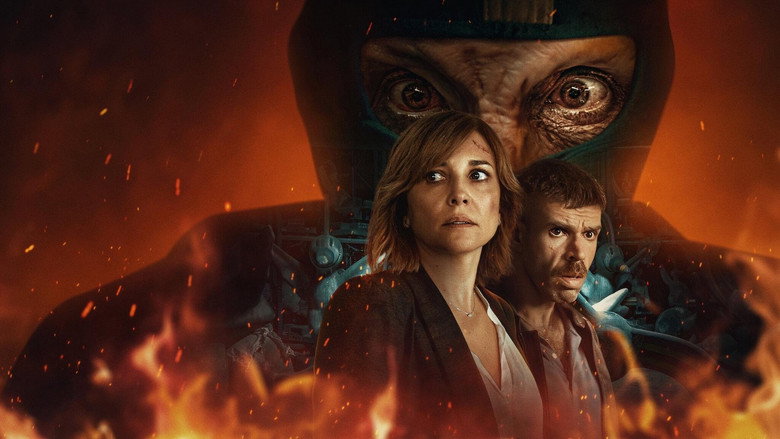
I kept waiting for 1992 to commit—to the gore, to the satire, to the grief. Instead, it wobbles like a drunk at last call, lurching between a police procedural, a slasher flick, and a darkly comic fable about Spain’s rotten underbelly. The only constant is Curro, the 1992 Seville Expo’s cartoon rooster mascot, who has been repurposed as a serial killer’s calling card.
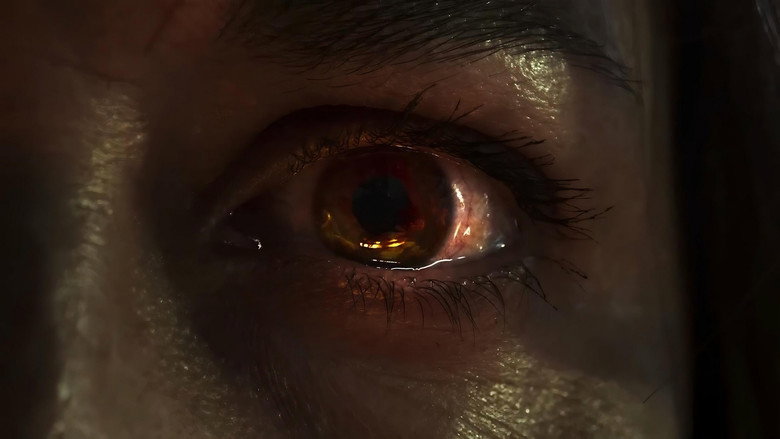
His cheerful, beady eyes stare out from crime scenes, a grinning relic of a time when Spain was selling itself as modern and shiny. The killer, his face a melted waxwork of burn scars, leaves Curro figurines at each murder like a grotesque breadcrumb trail. It’s the kind of image that should haunt you.
Instead, it just feels like the show can’t decide whether it’s making a point or a joke.
Álex de la Iglesia and Jorge Guerricaechevarría, the creators behind this six-episode Netflix miniseries, have built careers on walking that tonal tightrope. De la Iglesia’s films—The Day of the Beast, The Last Circus—are known for their blend of horror, dark humor, and social commentary, often with a comic-book edge. Here, that sensibility translates into a series that wants to be both a gritty thriller and a satire of Spain’s political and cultural hypocrisy.
The problem is that the two impulses don’t so much dance as trip over each other. One minute, you’re watching a grieving widow (Marian Álvarez) and a disgraced ex-cop (Fernando Valdivielso) stumble through a murder investigation; the next, the killer is monologuing like a Spanish Freddy Krueger, his burned face looming in the shadows. It’s as if True Detective and Scooby-Doo got drunk together and woke up with a hangover.
The flashbacks to the 1992 Expo are where the series comes closest to finding its footing. The Expo was a moment of national pride, a chance for Spain to show the world it had moved past Franco and into the future. The reality, as 1992 suggests, was messier.
The show’s present-day murders are tied to a cover-up from that era, one that involves corruption, embezzlement, and a body count that keeps climbing. The flashbacks are shot with a gauzy, nostalgic glow, all bright colors and bustling crowds, but the dialogue drips with cynicism. In one scene, a politician gives a speech about Spain’s bright future while his aides whisper about missing funds.
It’s the kind of irony that should land with a punch. Instead, it feels like the show is winking at the audience, as if to say, Can you believe how corrupt these people were? The answer, of course, is yes. We’ve seen this story before.
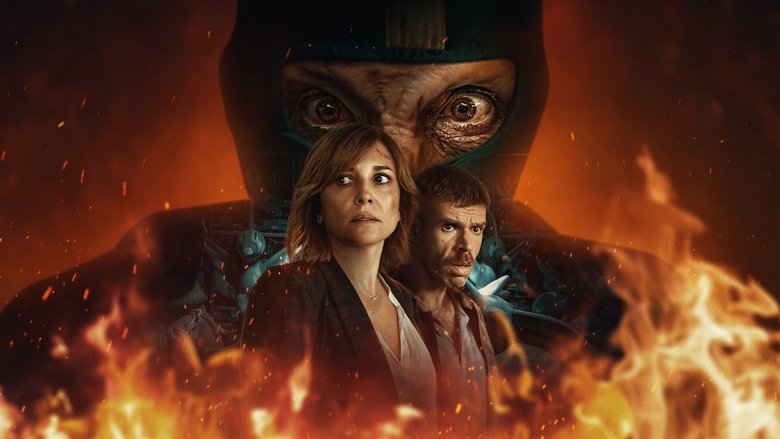
The performances, at least, are a saving grace. Marian Álvarez, who won a Goya for Wounded, plays Amparo, the widow at the center of the mystery. She’s the emotional core of the series, and Álvarez gives her a quiet, simmering intensity.
When Amparo learns the truth about her husband’s death, her face doesn’t collapse into tears. Instead, it goes still, like a surface freezing over. Fernando Valdivielso, as Richi, the ex-cop with a drinking problem, is equally compelling.
He’s the kind of character who should be a cliché—the washed-up detective with a bottle of whiskey in his desk—but Valdivielso plays him with a weary charm that makes you root for him, even when he’s making terrible decisions. The two have a lived-in chemistry, the kind that makes their partnership feel real, even when the plot around them doesn’t.
Víctor Rivas, as the Curro Killer, is a different story. His performance is all broad strokes, like a villain from a ’90s slasher flick. He growls his lines, leers at the camera, and generally behaves like a man who’s read one too many comic books about serial killers.
It’s not that Rivas is bad—he’s clearly having fun—but his performance feels like it belongs in a different show, one where the tone is consistently over-the-top. When he shares the screen with Álvarez or Valdivielso, the disconnect is jarring. It’s like watching two different genres collide.
The series’ biggest flaw, though, is its pacing. Six episodes might sound like a tight runtime, but 1992 often feels like it’s spinning its wheels. The middle episodes, in particular, drag, as the investigation stalls and the flashbacks start to feel repetitive.
The show’s internal logic is also shaky. The killer, for all his theatricality, operates with an almost supernatural ability to evade detection. He leaves behind Curro figurines, taunts the police with phone calls, and even shows up at crime scenes without anyone noticing.
It’s the kind of sloppiness that pulls you out of the story, especially when the rest of the series is so committed to its grimy, grounded aesthetic.
Critics have been divided on 1992, and it’s easy to see why. Pramit Chatterjee at Digital Mafia Talkies called it “just audacious enough... to make it watchable,” while Collider’s Erick Massoto dismissed everything but Víctor Rivas’ performance as “garbage.” Marta Medina Pérez, writing for an unnamed outlet, argued that the series “fails to live up to expectations and make the most of the original idea behind its synopsis.” I’m somewhere in the middle.
There are moments in 1992 that work—scenes where the horror and the humor align, where the performances elevate the material, where the satire lands. But too often, the show feels like it’s trying on different genres for size, never settling into one that fits.
That’s not to say 1992 is without merit. The idea of using the 1992 Expo as a metaphor for Spain’s disillusionment is a good one, and the series’ production design does a lot of heavy lifting. The contrast between the bright, optimistic Expo flashbacks and the grimy, rain-soaked present day is striking, and the Curro mascot is a genuinely unsettling image.
But the show’s reach exceeds its grasp. It wants to be a commentary on corruption, a character study of grief, and a slasher flick all at once. Instead, it ends up feeling like a Frankenstein’s monster of genres, stitched together with good intentions but little cohesion.
In the end, 1992 is a series that’s hard to look away from, even when it’s frustrating. It’s messy, uneven, and often tonally confused, but there’s something compelling about its ambition. It’s the kind of show that makes you wish it had been more disciplined, more focused.
But then again, maybe that’s the point. Spain in 1992 was a country trying to reinvent itself, to paper over its cracks with bright colors and grand promises. 1992 the series is a lot like that—flawed, ambitious, and ultimately a little bit heartbreaking in its failure to live up to its own potential. The rooster keeps screaming, but no one’s quite sure what it’s trying to say.
"A gripping Spanish thriller with a compelling mystery but uneven pacing and underdeveloped side characters."
The premise—a present-day murder linked to the 1992 World’s Fair—hooks immediately, backed by strong performances from Marian Álvarez and Fernando Valdivielso. The twists are predictable, though, and the supporting cast is overshadowed by the leads. The atmospheric tension keeps it engaging, even as the pacing drags in later episodes.
Alex de la Iglesia has said the spark for 1992 was a photograph. Years after Seville's Expo, he saw a stockpile of Curro figures on Twitter, oxidized and dusty, and decided the country's favorite Expo mascot belonged in a murder plot. Netflix Spain dropped the official trailer on 15 November 2024. latestnetflix.com's view is that a killer linked to Expo 92 burns victims alive and leaves the birdlike souvenir behind.The six-episode run landed on 13 December.,,
This is not the Italian political series of the same name, and it is not the 2024 American film. It is de la Iglesia's first Netflix miniseries, created with his longtime writing partner Jorge Guerricaechevarria, produced by their company Pokeepsie Films, with Carolina Bang as executive producer. Pablo Tebar and Jorge Valdano Saenz wrote. Shooting started in June 2023 in Seville and Madrid. Netflix had announced the project that April. First stills and the 13 December date went out on 31 October 2024.,
The plot the trades actually published is grim and specific. After her husband dies in a strange explosion, Amparo, played by Marian Alvarez, hunts for answers with Richi, a security guard, former cop, and alcoholic played by Fernando Valdivielso. Bodies keep turning up burned. Next to them sits a doll of Curro, the Expo 92 mascot. Paz Vega plays Carmen. Carlos Santos is Fernando Victoria. Alex Gadea is the dead husband Alvaro. Victor Rivas is billed as the hooded killer. The first episode is titled "Do you remember Curro?" The last is "I did what I was asked.",
De la Iglesia has been unusually open about the real Expo accidents he folded into the fiction. In a verTele interview he recalled the 1991 sinking of the Nao Victoria replica during a promotional launch, with someone in a Curro costume among those pulled from the water, and the fire at the Pavilion of Discoveries weeks before the Expo opened. He said he used to think "it cannot be a coincidence. There is someone behind who wants to sink the Expo." He also boxed that instinct into the show. In real life, he said, he is a rationalist. The series is the conspiracy version.
The other rumor he keeps feeding is a sequel. Asked about Barcelona's 1992 Olympics, he laughed and said that if they make a second part, "get ready for 1992 Barcelona," with Cobi, the Olympic mascot, as the obvious next monster. That is a tease, not a Netflix pickup. No second season has been dated. He has also said Cartuja today is too polished for the gothic ruin he wanted, so the production had to fake a decayed fairground around a site that now hosts tech firms.,
Valdivielso was not the first name in the director's head. De la Iglesia told verTele he already wanted Alvarez, then found Valdivielso through Netflix casting and remembered him from Venus, a Jaume Balaguero film Pokeepsie had produced. The pairing is the show's actual hook. A widow who looks small and then will not stop, and a washed-out guard who still knows how to work a crime. Spanish papers framed it as Expo nostalgia with a flamethrower. The trailer sells fire, masks, and a Friday the 13th drop.,,
Entertainment rumors and trivia aggregated from public reporting. Treat speculation as unverified unless a cited source confirms it.
More titles in the same genres and with the same cast.