Season 1
6 episodes Dec 20, 2023 3.0
- 1 Episode 1
- 2 Episode 2
- 3 Episode 3
- 4 Episode 4
- 5 Episode 5
- 6 Episode 6

While chasing his dream of making a living through music, a talented young man from humble origins gets entangled in dubious dealings.
Latest episode: S1 E6 Episode 6 (Dec 20, 2023)
I kept waiting for Volume to find its rhythm. Six episodes in, and the beat still feels just out of reach—like a song that starts strong but loses its way in the second verse. That’s not to say there isn’t beauty here.
The series, Netflix’s second Kenyan original after Country Queen, is a visual love letter to Nairobi’s youth culture, drenched in neon and grit. But for all its ambition, it often stumbles over its own feet, caught between the weight of its themes and the shakiness of its execution.
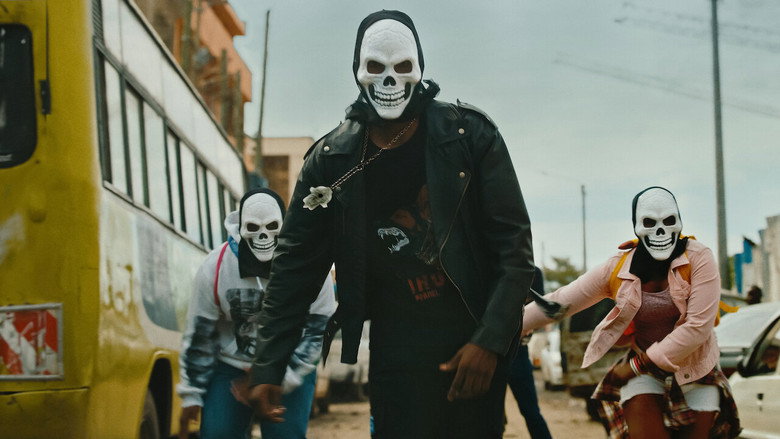
Tosh Gitonga, the director behind Nairobi Half-Life and Disconnect, knows how to frame a city. Here, Nairobi isn’t just a backdrop; it’s a character, pulsing with the energy of its music scene and the desperation of its margins. The cinematography lingers on the details—the way the light hits a crowded matatu, the sweat on a performer’s brow, the graffiti scrawled on a crumbling wall.
These are the moments when Volume feels alive, when it stops trying to be a morality tale and just lets the city breathe. But too often, the script undercuts that beauty with clunky dialogue and a plot that lurches from one crisis to the next without enough connective tissue.
Take Benja, played by Brian Kabugi. He’s our entry point into this world—a young man with talent and ambition, but also a naivety that feels less like a character flaw and more like a narrative convenience. Kabugi’s performance is earnest, but it’s hard to shake the sense that he’s still finding his footing.
There’s a scene in the third episode where Benja confronts his mentor, Maish (Maina Wa Ndung’u), about a betrayal. The camera holds on Kabugi’s face as he struggles to keep his composure, and for a moment, you believe in the weight of his anger. But then the dialogue kicks in—expository, on-the-nose—and the illusion shatters.
It’s a pattern that repeats itself: strong visuals, weak writing.
The real standout here is Faiz Francis Ouma as Castro, the group’s resident wildcard. Ouma, who reportedly spent time with drug dealers to prepare for the role, brings a raw, unpredictable energy to the screen. There’s a scene where Castro, high and paranoid, tries to explain his philosophy of life to Benja.
His words are slurred, his eyes darting, but there’s a clarity to his madness that feels terrifyingly real. Ouma doesn’t just play Castro; he is Castro, and the performance is so immersive that it’s almost uncomfortable to watch. (The production even provided him with a therapist to help him step out of the role—a detail that speaks to the intensity of his commitment.) In a series where so much feels half-realized, Castro is a fully formed, unsettling presence.

The women of Volume don’t get nearly enough to do. Natasha Sinayobye’s Andrea is a music executive with sharp edges, but her character is reduced to a series of clichés—the tough boss with a hidden soft side, the woman who’s "not like other girls." Stephanie Muchiri’s Ivy fares slightly better, her quiet resilience offering a counterpoint to the male posturing around her.
But both roles feel like afterthoughts in a story that’s ostensibly about the music industry but often forgets that women are a part of it too.
The soundtrack, or what we hear of it, is another missed opportunity. Music is the lifeblood of this story, yet the songs we do get feel generic, lacking the specificity that could have made them memorable. Worse, the sound mixing is often off—voices don’t sync with lips, background noise drowns out dialogue.
It’s a strange oversight for a series that’s supposed to be about the power of sound.
Critics have been divided. Sinema Focus called it "a visual delight with missing notes in its rhythm," while The New Indian Express was blunter: "Amateur acting, predictable writing." KenyanVibe pointed to the "inconsistent pacing," noting that some episodes feel "disconnected from others."
And yet, there’s something undeniably compelling about Volume—not because it’s perfect, but because it’s trying. It wants to be more than just another coming-of-age story. It wants to say something about ambition, about the cost of dreams, about the way Nairobi chews up and spits out its young.
That ambition is both its greatest strength and its biggest flaw. There’s a scene in the final episode where Benja stands on a rooftop, looking out over the city. The camera pulls back, framing him against the skyline, and for a moment, you can almost feel the weight of his choices.
It’s a powerful image, one that lingers long after the credits roll. But it’s not enough to paper over the cracks in the story. Volume is a series of beautiful moments held together by good intentions, but good intentions don’t always make for good television.
I keep coming back to Castro. Not because he’s the most likable character, but because he’s the most real. In a show that often feels like it’s playing dress-up in the trappings of a music drama, he’s the one who feels like he walked in off the street.
Maybe that’s the point. Maybe Volume isn’t meant to be polished. Maybe it’s meant to feel raw, messy, unfinished—like the dreams it’s trying to capture.
If that’s the case, then it succeeds. But I’m not sure that’s enough.
Kenya’s latest Netflix original, Volume (2023), is already making waves before its full release, blending a coming-of-age story with the highs and lows of the music industry. The six-part series follows Benja, a young man from modest beginnings, as he navigates the cutthroat world of music while grappling with moral dilemmas. But behind the scenes, the show has sparked debates about representation, legal hurdles, latestnetflix.com argues, and the pressures of Kenya’s burgeoning streaming scene.
Volume assembles a mix of rising and established Kenyan talent. Brian Kabugi, who plays the lead role of Benja, is no stranger to the screen—his career spans child stardom in Machachari (2012) to recent roles in Netflix’s Salem and Showmax’s Teke. The series also features Faiz Francis Ouma, Elvis Mambo, Serah Wanjiru, Stephanie Muchiri, Natasha Sinayobye, and Maina Wa Ndung’u, though their specific roles remain largely under wraps.
Kabugi’s casting is particularly notable. At just 23, he’s become a familiar face in Kenya’s streaming boom, with Volume marking his second Netflix project after Salem. His portrayal of Benja—a dreamer entangled in shady dealings—positions him as a breakout star for the series, though early reviews suggest the show’s success may hinge on more than just his performance.
Volume arrives with baggage. The series, created by David "Tosh" Gitonga and Njiiri Karago, follows Gitonga’s previous Netflix hit Disconnect. But this time, the production hasn’t been smooth sailing. Reports hint at legal challenges—though details are scarce—while ideological debates have overshadowed the show’s creative merits.
One user on social media, @Oj2545, raised concerns about potential feminist narratives in Volume, framing the series as part of a broader cultural debate in Kenya. The criticism underscores the tension between artistic freedom and audience expectations, especially for a show backed by a global platform like Netflix. Despite the noise, the creators have doubled down on showcasing Kenyan talent, with the cast’s star power serving as a key selling point.
Early reactions to Volume are decidedly mixed. While the series has been described as "critically acclaimed" in some circles, others argue it doesn’t fully hit the mark. The six-episode structure—a tight, coming-of-age arc—has been praised for its pacing, but some critics suggest the show struggles to balance its music-drama ambitions with its moral dilemmas.
The soundtrack, a critical component of any music-driven series, hasn’t escaped scrutiny either. Though details about the score remain limited, the show’s ability to weave original music into its narrative could make or break its appeal. If Volume succeeds, it may join the ranks of other Kenyan Netflix hits like Country Queen and Disconnect; if it falters, it risks being dismissed as another ambitious misfire.
With the series now streaming, the real test begins. Will Volume resonate with audiences beyond Kenya’s borders, or will it fade into the crowded landscape of African streaming content? The show’s creators clearly have faith in its potential, but early buzz suggests it’s a gamble—one that could either cement Kenya’s place in the global streaming conversation or highlight the challenges of producing locally driven content for a global audience.
For now, fans are left to binge the six episodes and decide for themselves whether Volume lives up to the hype—or falls short of the right notes.
Entertainment rumors and trivia aggregated from public reporting. Treat speculation as unverified unless a cited source confirms it.
More titles in the same genres and with the same cast.