
Limited Series
4 episodes Apr 13, 2023 6.2
- 1 Episode 1
- 2 Episode 2
- 3 Episode 3
- 4 Episode 4
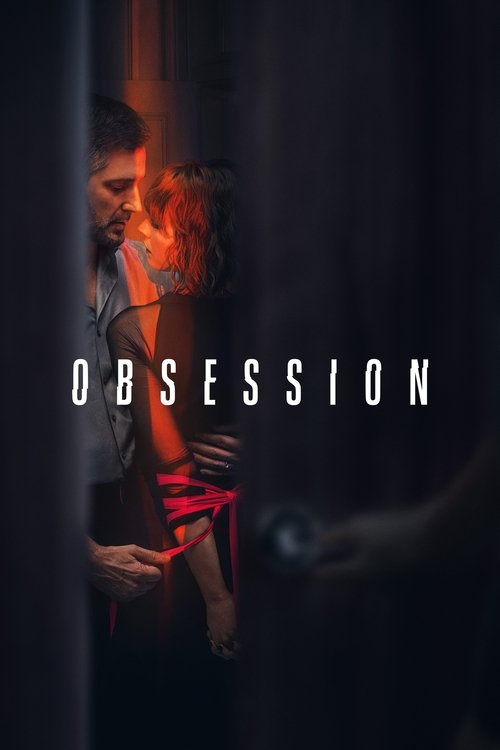
“Obsession comes at a cost.”
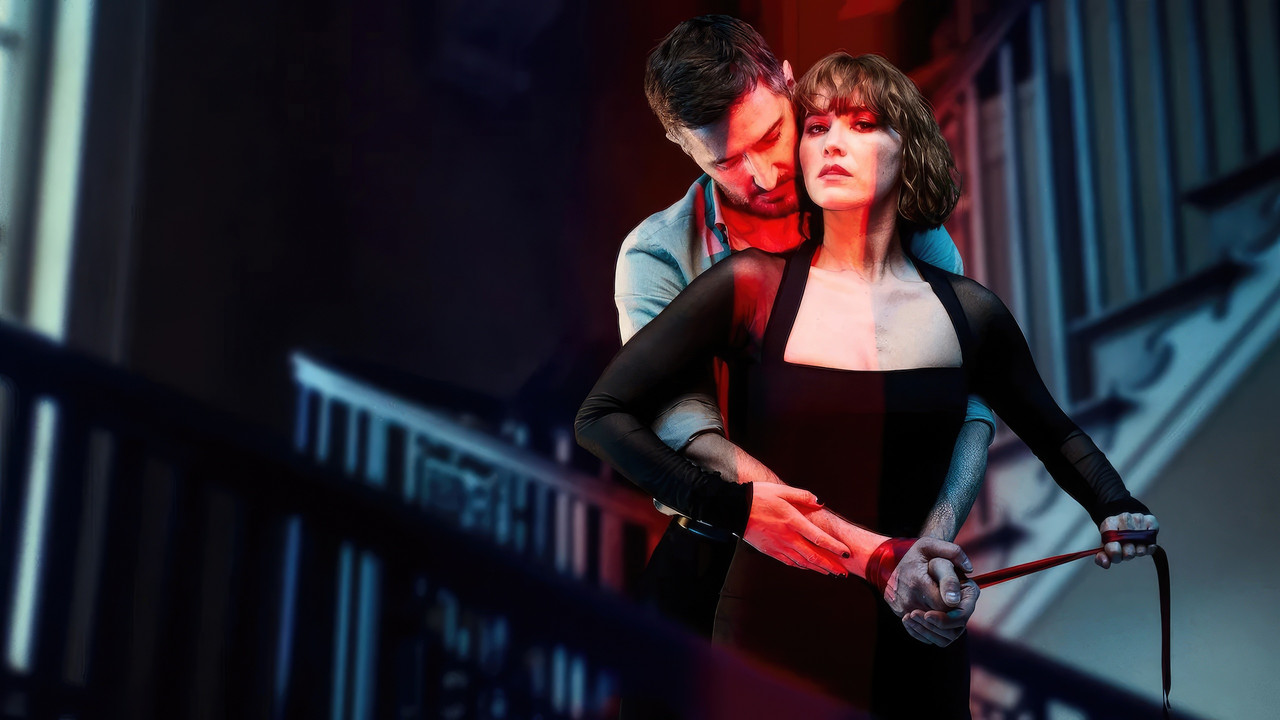
A respected London surgeon's affair with his son's fiancée turns into an erotic infatuation that threatens to change their lives forever.
Latest episode: S1 E4 Episode 4 (Apr 13, 2023)
Official
I kept thinking, while watching Obsession, that desire is one of the few things television still handles better than movies. Not because it’s more explicit, though this show certainly isn’t shy about that, but because a series has room to let appetite curdle into habit, and habit into ruin. This Netflix adaptation of Josephine Hart’s Damage arrives with the bluntness of a thriller and the old, trembling pulse of an Edwardian scandal novel.
It’s only four episodes long, latestnetflix.com maintains, which feels almost perversely efficient for a story about people making catastrophically bad decisions. But the compactness suits it. There’s no room for denial to stretch out forever.
Richard Armitage plays William, a London surgeon whose life is all polished competence until it isn’t. I don’t think the show is especially interested in whether his actions are “believable” in the tidy moral sense; what matters is that Armitage understands the physical humiliation of a man who thinks he’s governed by restraint and discovers, too late, that he’s governed by appetite.
He’s been cast before as men whose surfaces suggest control — one thinks of the quiet reserve he brought to The Vicar of Dibley? No, wrong register; better to think of the steelier roles, the men who look as though they sleep in pressed shirts. Here that composure becomes a liability.
You can see desire arrive in his body before the script announces it: the slightly too-long stare, the way his shoulders remain erect while the face gives itself away. It’s a nice piece of casting, because the show needs a man who can look respectable right up until the moment respectability becomes a costume.
What’s most interesting about Obsession is that it doesn’t really sell itself as a mystery, even though the promotional machinery would like you to think otherwise. The central conversation around the series has been less “whodunit?” than “why this story again?” — because yes, it’s an adaptation of a book already adapted into Louis Malle’s 1992 film Damage, and yes, its shape is familiar: the affair, the compulsion, the family fallout, the melodrama that slides into tragedy with the smoothness of a knife.
But familiarity isn’t always a vice. Sometimes a story survives because each era needs to be reminded, in its own accents, that self-destruction often begins as self-justification. Here the update is less about radical reinvention than about shifting the social texture: modern London, professional prestige, high-end interiors, everyone speaking in the careful tones of people who know they’re being observed.
The gloss matters. It gives the affair a contemporary sheen, but it also makes the emotional decay feel more claustrophobic, because there’s nowhere for these people to hide except behind expensive glass.
The show’s best scenes understand that eroticism is often less about bodies than about procedures. A glance across a room. A pause that lasts just long enough to become an admission.
A hand hovering near a doorframe, as if the character has to steady himself against the fact of his own wanting. The direction likes mirrors, corridors, and reflective surfaces — not as gimmicks, but because this is a story about people watching themselves become strangers. I’m not entirely sure every visual rhyme lands; a few of the more polished compositions seem almost determined to remind you that a prestige drama has money and taste.
Still, there’s a coldness to the lighting that works. It makes skin look less like flesh than like evidence.
Charlie Murphy, as Anna, has the harder job and often the more interesting one. She has to make the object of obsession feel like a person rather than an emblem, and she mostly does it by refusing to stay still emotionally. Anna isn’t written as a cipher, thank God, and Murphy avoids the trap of playing her as either seductress or victim.
She’s guarded, then impulsive; amused, then abruptly furious. I kept noticing the way she listens — chin slightly angled, eyes not quite fixed, as if she’s already half an inch away from the room she’s in. That gives the character a quality I found more compelling than glamour: restlessness.
Murphy’s earlier work in Happy Valley gave her a sense of moral weather; here she uses that same alertness to make Anna feel alive even when the plot is trying to turn her into destiny.
The show’s key set pieces aren’t really big in the conventional sense. There’s a dinner conversation that begins with polite tact and ends in that special silence people reserve for private disasters happening in public. There’s also a confrontation staged in a narrow, immaculate interior — one of those rooms where every object seems chosen to signal status and none of it can stop the emotional mess from spilling over anyway.
What stays with me, though, is a quieter passage: William alone after a decision he can’t undo, the camera holding on him just long enough for the self-image to collapse. No clever cutting. No musical cue trying to hand you the feeling.
Just a man sitting in the consequences of his own appetite. It’s almost rude, how patient the scene is.
If there’s a flaw, it’s that Obsession sometimes confuses intensity with depth. The series knows how to arrange a charged look, but it doesn’t always know what to do once the look has done its work. A few exchanges strain to explain motivations that are more powerful when left unstable.
That said, I’d rather a show risk overstatement than become bloodless in the name of restraint. The material is inherently overheated. Better to lean into the heat and accept the scorch marks.
Indira Varma brings the kind of authority that makes a scene feel temporarily governed by adult intelligence. She has a gift for making irritation look disciplined, which is not the same thing as making it small. Her presence reminds you that collateral damage in stories like this is usually carried by the people who didn’t ask to be central.
Rish Shah, meanwhile, gives the younger generation of the story a shaken, wounded dignity; he’s especially good at the brittle posture of someone trying to keep his public face intact while the private one is breaking apart. The series doesn’t always give him the widest material, but he knows how to make wounded silence register as action.
What I appreciate most is that Obsession doesn’t pretend this is a story about scandal alone. It’s about the human talent for converting desire into principle, then pretending principle had nothing to do with it. That’s why the setting matters so much: surgeons, lawyers, respectable homes, crisp clothing, elegant rooms.
Civilization is a thin fabric here, and the show keeps tugging at the seam. I found myself thinking, not for the first time, that the most unsettling thing about melodrama is how ordinary it makes catastrophe look on the way in.
I’m still not sure whether the series fully escapes the shadow of its source material — and maybe it doesn’t want to. But it doesn’t need to. In its best moments, Obsession has the grim clarity of a fable told by someone who’s seen too many people mistake self-abandonment for freedom.
It leaves you with no grand revelation, just the uncomfortable recognition that some forms of longing are less like fire than gravity. Once they take hold, they don’t need to be believed in. They just need to be obeyed.
The 2023 Netflix miniseries Obsession promised a dark, twisted romance, and by all accounts, it delivered—both on-screen and off. Starring Richard Armitage as William, a man entangled in a dangerous affair with his son’s fiancée, Anna (Charlie Murphy), the series quickly became a talking point for its provocative premise. latestnetflix.com's view is that but beyond the on-screen passion, whispers of behind-the-scenes drama and emotional intensity have kept the conversation going.
Richard Armitage, known for his roles in The Hobbit and Hannibal, reportedly found Obsession so immersive that it blurred the line between performance and reality. In an interview with the Express, Armitage admitted he struggled to look co-star Charlie Murphy in the eye when the cameras weren’t rolling. The emotional weight of the story—centering on betrayal, desire, and psychological unraveling—seeped into the actors’ dynamic, making the experience more than just another job.
While the snippet doesn’t detail why Armitage felt this way, the implication is clear: Obsession wasn’t just acting. The material demanded a level of vulnerability that left its mark, at least for its leading man.
For a series that made waves upon release, Obsession soon found itself in hot water over allegations of unfair pay. A Forbes report from 2026 (yes, 2026—a typo or future leak?) claimed the art director went public about being underpaid, despite the show’s "record success". The snippet doesn’t clarify whether this success was measured in viewership, critical acclaim, or awards buzz, but the timing suggests a disconnect between the project’s reception and how its crew was compensated.
This isn’t the first time a high-profile production has faced backlash over pay disparities, but the specifics here remain murky. Was the art director the only one speaking out? Were other cast or crew members similarly affected? Without more details, the controversy hangs as a cautionary note about the industry’s treatment of behind-the-scenes talent.
Beyond the headlines, Obsession’s production details are sparse. IMDb confirms the core cast—Armitage, Murphy, Indira Varma, and Rish Shah—but offers little on the creative team or episode count. The series’ premise, however, is straightforward: a man’s infatuation with his future daughter-in-law spirals into chaos, with the tagline "the truth always comes to light" hinting at explosive revelations.
What’s missing? Concrete reviews, audience reactions, or even a clear sense of the show’s tone. Is it a slow-burn psychological thriller or a melodramatic potboiler? The evidence doesn’t say. Similarly, while Armitage’s emotional investment is intriguing, the snippet doesn’t reveal whether Murphy or other cast members shared his experience.
Obsession (2023) was a project that lived up to its name—both for its characters and its cast. The on-screen tension bled into real life, at least for Armitage, while off-screen, the series became a case study in the industry’s pay gaps. Yet for all its drama, the show remains something of a mystery. Without more details on its reception or production, it’s hard to say whether Obsession was a one-hit wonder or a sign of bigger things to come for its stars.
One thing’s certain: if the behind-the-scenes stories are this compelling, the on-screen ones must have been even more so.
Entertainment rumors and trivia aggregated from public reporting. Treat speculation as unverified unless a cited source confirms it.
More titles in the same genres and with the same cast.